The five best contracts signed in 2026 NHL Free Agency so far

In a period of the NHL season where most general managers make their biggest mistakes, the best general managers are not only the ones who turn off their phones July 1, but the ones who comb the free agency market for the best deals they can find. Why pursue a big-name player who will cost $5-10 million in today’s climate when you can find marginally worse players for a fraction of the cost and invest the remaining money in locking up your core players to cost-certain contracts?
As the salary cap continues to rise, it’s easier to justify shelling out millions of dollars to middle-of-the-roster players, but investing in your core pieces and spending wisely around the margins is where teams will continue to find success. And it’s not just the cap hits; some teams are getting some term with these contracts too. The NHL is slowly shifting towards an NBA contract structure, where key players will want less term to maximize their profits, so nailing a player down to a good price for seven or eight seasons while you still can is all the more important.
The dust has settled on another interesting free agency period, and while we’ve given some GMs hell for the most egregious contracts of the summer, we have yet to give other GMs their flowers for signing smart contracts. So let’s look into the five best contracts signed so far this offseason. We’re including extensions handed out prior to July 1, contracts for restricted free agents and even offer sheets (since we’re actually getting those this summer). The only requirement for these deals is that they were inked after the signing team concluded play in the 2025-26 season – and that they’re great value contracts.
All contract information comes courtesy of PuckPedia, while all analytical data comes courtesy of Evolving Hockey.
Before we start, let’s look at a few honorable mentions:
Tyson Foerster ($7.1 million AAV x 8 years), Philadelphia Flyers – While I wasn’t a fan of the Flyers’ other big extension in Dan Vladar’s, I love Foerster’s extension. He’s a goal-scoring winger who has seen improvement every season, and had 13 goals in just 29 games, a 36-goal pace if he didn’t miss four months with an arm injury. Additionally, he has a stellar defensive game with a -0.19 5v5 regularized adjusted plus-minus expected goals against per 60 minutes. We’ll see if he can maintain last year’s scoring pace in a full season, but if he rounds out as a defensively responsible winger good for 30-40 goals, the Flyers got amazing value on a contract which doesn’t start until next season, and keeps him at $7.1 million until he’s 33.
Dylan Holloway ($7.75 million AAV x 5 years), St. Louis Blues – In the alternate universe where the Edmonton Oilers matched the offer sheet to Holloway, this might be the point where they get off the ride. But then again, part of the reason why Holloway has taken leaps and bounds in the past two seasons is because he got a role in St. Louis which he never would have gotten in Edmonton. On top of his increased production, he’s become a strong play-driving winger, and has provided immense overall value to the Blues, as he’s tied for 35th among forwards with 29.1 expected goals above replacement. Like with Foerster, to have this kind of value locked up for Holloway’s age 25-29 seasons in a rising cap at less than $8 million is a great move by St. Louis.
Kailer Yamamoto ($1.75 million AAV x 2 years), Utah Mammoth – Speaking of former Oilers wingers, Yamamoto is one of the more surprising mentions, but when you break down his recent play, it shouldn’t be shocking. Before the start of the 2025-26 season, I had his league-minimum contract as the fourth-best cap hit in the league, even when he was coming off of a season primarily spent in the AHL. This was because of his elite scoring rates and high-end defensive play, even if it came in easy minutes. But he added a scoring touch again this season in the NHL with his most points since leaving Edmonton with 23 in 59 games. So to lock him up again for two more seasons at only $1 million more is great work from Utah.
Olen Zellweger ($3.1 million AAV x 3 years), Buffalo Sabres – The Sabres may have made one of the smartest blueline pivots of the summer. They may have sold the highest on a player since the New Jersey Devils shipped Adam Larsson to the Oilers for Taylor Hall in moving Bowen Byram for the fourth-overall pick plus an additional second-round pick and a depth defenseman in Louis Crevier instead of paying Byram $12.5 million a year for six seasons. But to then flip the second and Anton Wahlberg to bring in Zellweger and sign him to a quarter the price of Byram is excellent asset management. If you want to compare Zellweger to the other disgruntled young defenseman on the Anaheim Ducks in Pavel Mintyukov, the Sabres get a similar player for half the price while they figure out what they have in Zellweger.
5. Eetu Luostarinen, Florida Panthers
$5 million AAV x 8 years
I know what you’re thinking. “Scott, didn’t you just berate teams for giving depth players term in your worst contracts piece? Why would you then praise the Panthers for signing their third-line forward for eight years?” While Luostarinen is a “depth” player on the Panthers by regularly playing in the bottom six, he is not a depth player in terms of his quality of play. If he played on most other NHL teams, he’s at least a second-liner. While he’s not a core player, he’s a secondary-core player whom a team is comfortable locking up long term if the price is right, which is exactly what happened here.
The Panthers were probably going to retain Luostarinen regardless of what happened last season, but he stepped up amidst all the injuries Florida dealt with in the 2025-26 season, particularly the massive void left by Aleksander Barkov’s year-long injury. Luostarinen was their most-used penalty killer and was third in the league in defensive xGAR with 6.7, a total which Barkov has surpassed once in his career. Luostarinen was also tied for the second-toughest quality of competition on the Panthers with a 0.031 RAPM xGA+-/60. There’s a legitimate case he should have gotten Selke Trophy votes for how good he was defensively this season. To lock up a defensively responsible second-line center for eight years at just $5 million a season is a great contract for the Panthers, especially if he’ll be deployed as a third liner on a healthy team.
4. Jordan Spence, Ottawa Senators
$5 million AAV x 4 years
I still find it hard to believe the Senators were close to moving on from Spence this summer. Yes, the sellers market for trades was high, so I’d imagine Ottawa just wanted to shop him and see what they could get in return. But the truth is, they were never going to find a return which would match the value of what he already brings to the table, because he still doesn’t get proper recognition for how good he has become. Instead, the Sens hung on to Spence, and now they have him at a very reasonable $5-million cap hit for the next four seasons.
For starters, Spence fits a positional need for the Senators as a right-shot defenseman to play alongside Jake Sanderson or Thomas Chabot, which Spence will have a better chance of doing so this season after spending most of his season on the bottom pair with Tyler Kleven. Spence is also stellar defensively, as his 8 defensive xGAR was seventh in the league, and it didn’t come at the expense of offense with an 11.2 offensive xGAR, which was 15th. Overall, he was 12th in the league in xGAR with 18.8. And while he wasn’t playing the toughest minutes on the Sens blueline, he was fourth in QoC RAPM xGA+-/60 among the seven regular defensemen in Ottawa, so there’s plenty of room to grow. The contract would have been even better if the Senators could have gotten more years on it, even if it meant the cap hit was a bit higher, but this is a great deal which locks up Spence for most of his prime years.
3. Zach Benson, Buffalo Sabres
$7.5 million AAV x 7 years
I’ve waxed poetic about Benson for quite some time, but no more than this season when I was confident in his breakout. Need proof? I labelled him as one of Buffalo’s best bets to replace JJ Peterka’s production in my season preview going into last season. Benson’s had the defensive prowess in his game ever since he surprised the hockey world and made the Sabres out of training camp in his first post-draft season, and he had the skill to produce in a better role in the lineup. So it’s no surprise he took the next step after finally getting a prominent role in the Sabres’ top-six forward group. If anything, 43 points in 65 games didn’t feel like enough, so there may be further room to grow.
Making the Benson deal even better: the decisions made surrounding this deal. Entering this summer, the Sabres’ most pressing contract negotiations were with him and pending-UFA Alex Tuch (who was poised to make far more money than he needed to). It felt like the more forward-thinking move was to invest in Benson long-term than to re-sign Tuch and bridge Benson, and Buffalo went the smart route. Now they have Tage Thompson, Josh Doan and Benson locked up for at least the next four seasons with no one making more than $8 million a year, not to mention Ryan McLeod signed to $5 million a year for three more years, and they’ll have plenty of cap space to build around this group. My only complaint with this contract is the Sabres didn’t try to jump the gun before last season and get Benson at an even smaller cap hit before his breakout, but who’s to say he was even interested in signing then?
2. Brandt Clarke, Los Angeles Kings
$7.4 million AAV x 5 years
Yes, another defenseman from the Kings’ system entering their mid-20s has cracked this list. While Los Angeles gave up on Spence a bit too prematurely (evaluating defensemen hasn’t been Ken Holland’s forte for quite some time), they were smart to hang on to Clarke, and since he’s seen a larger role on the Kings, he’s lived up to the pedigree he had when he was selected eighth overall in the 2021 NHL Draft. Now, some of his larger role was born out of necessity, because again, Holland can’t evaluate defensemen, so Clarke is one of their only puck-movers. But he’s earned it regardless with his play.
Clarke’s career started off as expected, as his smarts and skills allowed him to excel offensively right out of the gate. It was just what the Kings needed in the 2024-25 season, as a long-term injury to Drew Doughty meant they were short a power-play quarterback, and Clarke fit right in. But last season saw a continued evolution in his game, where he became much more comfortable in his own end. Yes, the Kings are known for their defensive structure, so in theory everyone should thrive in it. But Clarke’s -0.48 5v5 RAPM xGA/60 (which isolates his impact from factors like quality of teammates) shows he has plenty of defensive ability on his own, and at only 23, there’s still room to grow. Not only is Clarke on a path to become the future of Los Angeles’ blueline, he may have a future on Canada’s blueline as well.
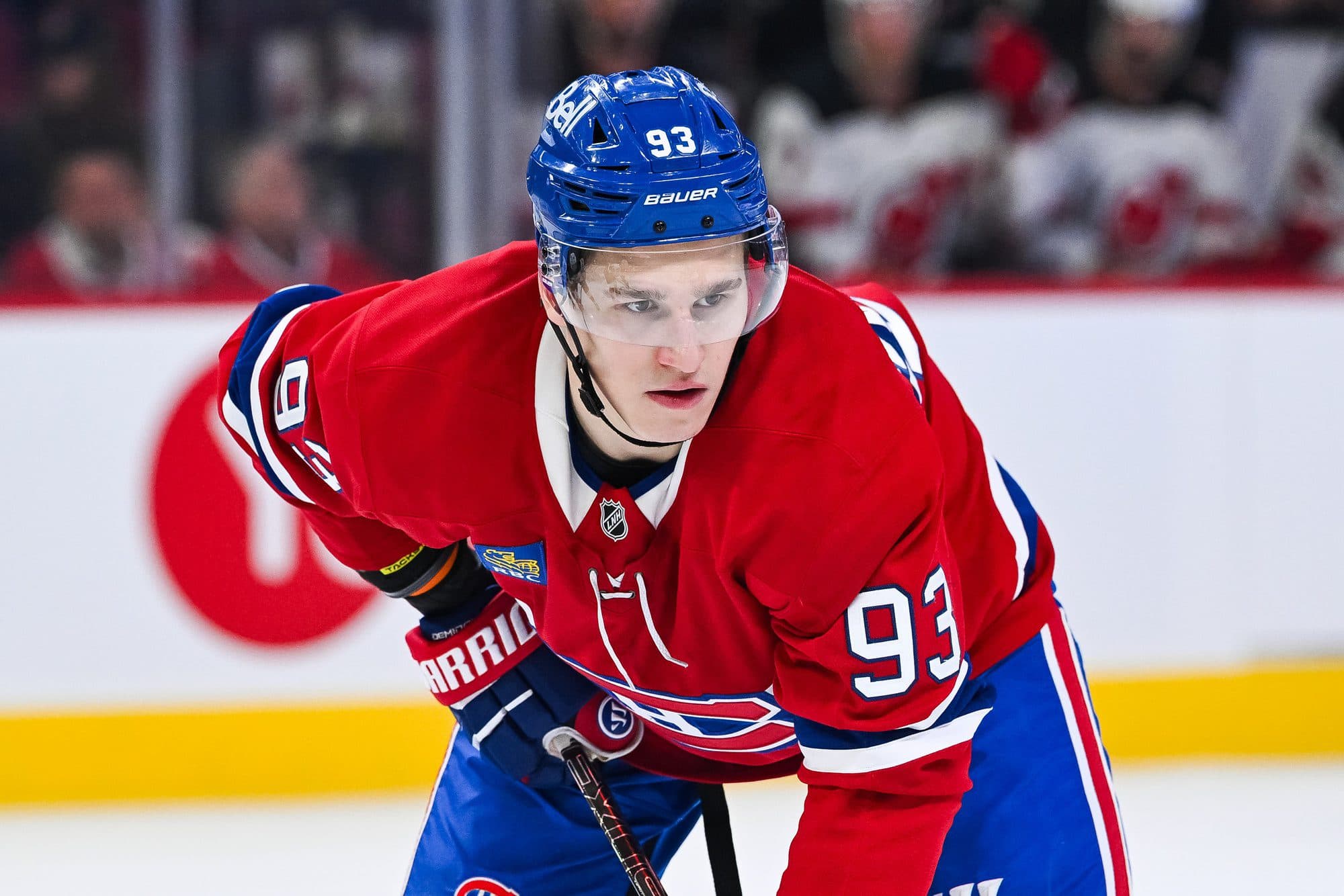
1. Ivan Demidov, Montreal Canadiens
$9.15 million AAV x 8 years
Even in a rising-salary-cap world, some teams have shown us how easy it is to mismanage cap space when they’re young and ascending. The Ducks are the best example of this right now, as throwing money at aging veterans because they had space to do so has bitten them in the butt, as now that they tied down $25.2 million to Leo Carlsson and Pavel Mintyukov, they need to make room for Cutter Gauthier. Locking up your core to team-friendly deals is hard work, especially in the current cap climate which sees some young players already making north of $10 million.
But the Canadiens have navigated it to near perfection. They already had Nick Suzuki ($7.875 million AAV for four more years), Cole Caufield ($7.85 million AAV for five more years), Juraj Slafkovsky ($7.6 million AAV for seven more years), Noah Dobson ($9.5 million AAV for seven more years) and Lane Hutson ($8.85 AAV million for eight more years) locked up, and now the final piece to their core is in place with their extension to Demidov. He’s fresh off a season where he led all rookies in scoring and was second in Calder voting. Perhaps more impressively, he was solid defensively with a -0.06 5v5 RAPM xGA/60 when most rookie scoring wingers enter the league struggling in their own zone. The future is bright for Demidov, and the Habs were smart to secure him now before the market went any higher.
SPONSORED BY bet365
Recently by Scott Maxwell
- The five worst contracts signed in 2026 NHL Free Agency so far
- Buyer Beware: Which UFAs might get too much money and term this summer?
- The biggest bust selected at each top 20 NHL Draft spot
- Five lessons other NHL teams can learn from the Hurricanes
- Seven players who took major steps in the 2026 Stanley Cup Playoffs