Daily Faceoff is a news site with no direct affiliation to the NHL, or NHLPA

NHL Scratches & Line Changes

-- Look for Sanford to get lots of action now the rest of training camp. With Dekanich out for an undetermined length, the Blue Jackets will need to decide if Sanford is a guy they can trust to be Mason's back-up.

Sanford should see a few games before Mark Dekanich returns but no reason to invest in the journeyman goaler. Last season he played 40 games for the Hamilton Bulldogs, posting a 1.93 GAA and .930 SV%. He could be relatively reliable if called upon.

Arniel indicated that Nash - Carter and Prospal would comprise the first line. Kubalik got a shot, then Umberger and Prospal. Odds on who's next: Brassard or Vermette? Or Atkinson?

Prospal is not tied to the top line but could find himself playing there over the course of the season. Prospal displayed sneaky fantasy value last season, scoring 9 goals and 23 points in 29 games while playing mostly with Marian Gaborik. Playing with the team's most talented players, the 36-year-old should be able to replicate those numbers.

If a star can be born in the preseason, then Chicago Blackhawks nation is witnessing the event. Brandon Saad could just be the real deal.

Saad is certainly impressing his organization with some strong preseason play. Last season, the 18-year-old scored 27 goals and 55 points in 59 games with the Saginaw Spirit of the OHL. If he makes the team, he could be a high-end sleeper.

Brandon Saad
The Winnipegger is one of a handful of players locked in a battle to be the seventh or eighth blue-liner, with a chance to work himself into the regular rotation.

Meech played all of last season in the AHL but broke out offensively with 10 goals and 37 points. If he makes the team, he could show that potential at the AHL level but would need extensive injuries to his defensive counterparts in order to get offensive minutes.

For a team lacking size down the middle, the second-year forward might be able to help fill the void. A second-round pick of the New Jersey Devils in 2008, he was a key piece of the Ilya Kovalchuk trade and this might be the season the organization starts reaping the rewards.

As a relatively high-end prospect, the 21-year-old still holds a high upside. Cormier scored a goal and an assist in 21 games with the Thrashers last season. Expect him to produce more offensively in his second season.

Patrice Cormier
On a team looking for possible players to contribute to a third-line scoring line, the fourth-year pro is among the candidates trying to lay claim to the job. The Vancouver product has produced at the AHL level (scoring 22 goals as a rookie in 2008-09) and has the versatility to be able to play both centre and wing.

Maxwell scored his first NHL goal last season in his 12-game tryout for the Thrashers. If he makes the team, he will face tough competition for playing time on the bottom two lines.

He’s flown under the radar, but is one of the guys on the periphery right now. He brings a nice combination of grit and has the potential to chip in with some offence as well. Went pointless in 10 NHL games last season, but is coming off a season that saw him produce career highs with 21 goals, 32 assists and 53 points in 67 AHL games with Chicago Wolves.

Machacek may make the team but will probably play on the bottom lines. A third liner who pots 20 goals should be his ceiling.

After Tuesday’s virtuoso performance (two goals, four points), everyone is curious what the seventh overall pick is going to do for an encore. Can he keep up his high level of play? The 18-year-old has met every challenge so far, so it would be tough to bet against him right now.

Scheifele scored 22 goals and 75 points in 66 games with the Barrie Colts of the OHL. If he makes the team, expect him to play a relatively prominent role on a scoring line.

Mark Scheifele
“It’s definitely going to be tough to make this team. There is so much depth,” Frattin said. “You can’t just put up offensive numbers. You also have to worry about the defensive game and play a two-way game.

Sounds like Frattin has a good shot at making the team this season. The 2011 Hobey Baker Memorial Award Candidate got a taste of NHL duty with the Leafs last season; sounds like he remains determined to stick with the Leafs. As a senior at the University of North Dakota, Frattin potted 36 goals and finished the season with 60 points in 44 games.

Matt Frattin
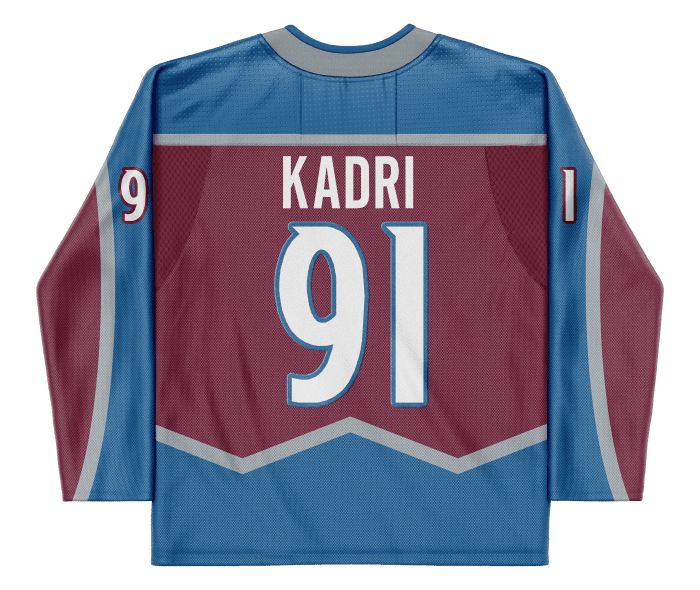
“I really can’t worry about how others play. I have to worry about what I do,” Kadri said. “I’ve got to focus on myself and make sure I bring it every shift so I can contribute to the team.

Kadri should start the season with the big club centering their revamped third line. The 20-year-old managed 17 goals and 41 points through 44 games with the Toronto Marlies of the AHL. Despite his limited playing time, Kadri should become a scorer at the NHL level in a few years.

Nazem Kadri
The team should know more about Staal's status by tomorrow, Tortorella said.

Staal may not make the trip to Europe, making it clear he will miss the first two games of the season. With a career high of 29 points (attained last season) Staal won't help your fantasy team as much as help Henrik Lundqvist and his teammates' plus/minus. Look for Tim Erixon to step right into a prominent role with Staal out.

Marc Staal
The defenseman said he recently had mononucleosis, but managed to get through it with the loss of only a few pounds. He said he had been skating on his own at Raleigh Center Ice, but today's practices at the RBC Center were his first of training camp.

Joslin will compete for one of the last defensive pairings on the team. Joslin fit in well last season in his 17-game tryout, scoring one goal and five points.

“I just have to take my opportunity and play,” Gilroy said. “I don’t want to force things, just let it come naturally.”

Gilroy probably makes the team as a spare defenseman. Gilroy scored seven goals over his 127-game NHL career. He could improve under coach Guy Boucher but likely will not become the hyped offensive defenseman that won the Hobey Baker three seasons ago, at the NHL level.

Da Costa is going to be given every chance to open the season in Ottawa.

The Frenchman will battle Mike Zibanejad and Peter Regin for a chance to center the second line. Da Costa scored 14 goals and 45 points with Merrimack College last season, earning an entry-level contract. Despite his undrafted status, the 22-year-old will be given every opportunity to stick in the NHL.

Emmerton, 23, must earn a spot on the Red Wings roster in the preseason or he will be waived and likely claimed by another organization. He has the inside track because he has paid his dues in the system, but there are no guarantees.

In his third full AHL season, Emmerton scored 12 goals and 38 points. The former second round pick should make the team out of camp and provide some energy to a bottom line.

"We know he's going to play games with us this year," said Granato, the assistant coach who oversees the Penguins forwards. "Whether it's the first one or the 15th ... he's a guy who can play in our league."

Certainly lofty praise coming from the former NHLer Granato. The Calgary, Alberta native scored 20 goals and 39 points last season for the Wilkes-Barre / Scranton Penguins. Look for him to possibly fill in on a scoring line should the Pens have more injuries.

Forward Joe Vitale is proving that he’s an NHL player and other GM are likely taking notice. Vitale’s who’s eligible for waivers for the first time in his career, according to agent Allain Roy, could be playing in another NHL city come October.

Vitale is currently up against tough competition for an extra forward job with the Pens. Last season he managed to score nine goals and 30 points in 60 games with Wilkes-Barre Scranton and found his way into nine games with the Pens. His upside probably goes no higher than a third line.

Joe Vitale
Toffoli isn’t expected to make the Kings’ roster out of camp — he has one more season of junior eligibility, and skating and conditioning still need some improvement — but Toffoli did well for himself in the Kings’ 3-2 victory over the Coyotes last night, according to Terry Murray…

Toffoli should be returned to Juniors shortly. The right wing dominated the OHL last season, posting 57 goals and 108 points with the Ottawa 67s. Keep an eye out for him in a few years.

Tyler Toffoli
“Angelo’s going to come in here, and he’s going to get a real good look to show what he can do,''

Esposito makes less than a million dollars which may not qualify him to make the team. Last season, the former 20th overall pick scored three goals and 13 points in 57 games with the Chicago Wolves. In all reality he remains a longshot to make the team.

Angelo Esposito

NHL Line Changes

NHL line changes are essential in keeping a team’s players fresh on the ice over the course of a hard-fought 60-minute matchup. With shift changes occurring rapidly throughout any given game, we are here to provide you with everything you need to know regarding line changes.

Making sure a team is efficiently making line changes can be essential to their success within a matchup, as it ensures that the players needed on the ice to gain the upper hand are ready to spring into action at a moment’s notice. For NHL daily fantasy hockey players, knowing how to track line changes can be important as you look to keep tabs on the players you’ve drafted to your lineup and their production.

On The Fly

Unlike other sports where play must come to a stop in order to make a player substitution, in hockey, players can switch in-and-out of play on the fly. This helps in keeping the breakneck pace of the contest going, increasing the amount of action from whistle-to-whistle and avoiding any unnecessary stoppages.

On the fly changes are generally done when a team is in possession of the puck and are looking to make a transition play from their own end to their opponent’s side of the rink. Players must be aware of the action around them when making an on the fly substitution as a poorly timed switch could leave themselves vulnerable to an odd-man rush on the other end.

In order to make successful line changes on the fly it is up to the team coaching staff to keep players informed on when their line matchups are due to hit the ice. Generally, with both forwards and defensive pairings, line changes go from the first line trickling its way down to the fourth. Depending on the situation of the game, coaches may opt to give a particular line more playing time, increasing the amount of shifts they receive.

Play Stoppages

NHL line changes can also be made during stoppage of play, with both sides being given the chance to put fresh bodies on the ice ahead of the upcoming faceoff. Examples of a play stoppage that would allow teams to make line changes are after minor or major penalties, offsides, icing, and puck out of play calls. These line changes are often much more calculated as each coach has time to survey the other team and decide what would be the most advantageous line combination that will provide them with a competitive advantage.

Bench Configuration

It may seem like a confusing and unorganized area of the game, but in hockey there is a fair amount of strategy put into the bench configuration within a matchup. With both benches positioned in the neutral zone, making sure that players can quickly hop the boards and get into the game is key to making successful line changes. Benches are generally set so that players entering into the game on the fly are in the best possible position on the ice to fulfill their role.

Generally, a bench in hockey will have the forwards positioned closest to the attacking zone, whereas the defenceman will be situated closest to their defensive zone. This separates the forward lines and defence pairings from on another on each end of the bench so that groups can easily stay together. From here the rested forwards ready to enter into the game will be placed in the centre of the bench, positioned near the coaches so they can easily receive instruction before hitting the ice. This is also advantageous as players coming off the ice for a line change will often enter from the opposite side they came onto the ice from, preventing any unnecessary traffic or confusion when making a change. While each team may have their own preferences on how to configure their bench, these are the most common ways they are run.

Line Change Rules

Understanding the rules of NHL line changes in hockey is an understated part of the game and when used correctly can swing the tide of a matchup in your favour. Without in-depth understanding of line changes in hockey, this can cause costly mistakes that can result in minor penalties, lengthy shifts, or mismatches off a faceoff.

Last Line Change

The last line change rule exists so that the home team is able to make an adjustment to whatever lineup the visiting team decides to roll out after a stoppage in play. This rule was designed to make NHL line changes efficient, as well as provide both sides with the chance to strategically place their players based on the lines sent out by their opponents.

For example, after the whistle, the home team’s coach can elect to make a line change to the personnel on the ice. After that, the visiting coach will send out any new players into the game off of a line change. Thanks to the last line change rule, the home team coach is now granted the opportunity to make one last line change before play resumes to counter whatever line changes were made by the opposing team.

For daily fantasy sports bettors this is where having ample knowledge of each NHL team can come in handy. You can envision how each team may look to gain a competitive advantage over their opponent during a possession, drafting players who are set up for success within a matchup.

Penalties & Infractions

While NHL line changes are meant to be an efficient and simple way to keep the game being played at a fast-pace with minimal interruptions, there is still room for serious error during these substitutions. It’s not uncommon to see teams assessed for a penalty due to a botched line change, resulting in a power play opportunity for the opposing team.

A common penalty called as a result of a poorly executed line change is “too many men on the ice”. This penalty results when the offending team has six or more skaters (including the goaltender) on the ice at any given time and comes in physical contact with the puck. While players entering in the game during a shift change are eligible to hop the boards and get in on the action once their teammate is within five feet of the bench, they must time this correctly or they could be hit with a premature substitution infraction. When a bench minor penalty such as too many men on the ice is assessed, it is up to the team’s head coach to decide who serves the penalty based on the players currently on the ice at the time of the penalty.

Another line change infraction to be aware of is in the case of an icing call. Icing is called when a team plays a puck from their own side of the red centre line across the red goal line in their opponents end. When icing is called, a faceoff will be taken from the end of the team that committed the infraction. During an icing call the team that was called for icing is not able to make any line changes, meaning they are forced to keep all players who were on the ice at the time of the infraction in the contest. Their opponents however are allowed to make any line change they desire, making this an incredibly beneficial call if they can strategize correctly.

How Line Changes Impact Fantasy Hockey

NHL line changes can come fast and suddenly so it can be challenging to keep track of certain players over the course of a matchup. This can make it difficult for avid fantasy hockey managers and sports bettors to know when the players they’ve wagered on are on the ice. Some broadcasts now incorporate various display mechanics that allow for you to see who is on the ice at any given time, making shift change tracking much simpler than ever before. Be sure to stay up-to-date on the jersey numbers of any players on your fantasy roster or that you bet on as a failsafe so that you can find them quickly while watching the action unfold.

Knowing how long a typical shift for a player entering into a matchup is can be an advantageous piece of knowledge for fantasy managers and bettors alike. The longer a player’s shift lasts, the higher their chances of registering a point or other statistical milestone which can help you in winning your fantasy matchups and/or bets placed on a game.