Daily Faceoff is a news site with no direct affiliation to the NHL, or NHLPA

NHL Scratches & Line Changes

Finally, Mika Zibanejad’s battle for the 2nd line centre position certainly took a turn for the better with last night’s OT winner.

Sounds like Zibanejad could beat out Peter Regin and Stephane Da Costa for the second-line role. In 26 games for Djurgardens IF Stockholm of the SEL, Zibanejad scored five goals and nine points. He most likely sticks with the big club.

Mika Zibanejad
Torts: One of next LW experiments with Gaborik-Richards tandem: Brian Boyle

Boyle probably gets a look on that line before returning to centering Brandon Prust and Ruslan Fedotenko on the third line. Last season, the hulking center scored 21 goals and 35 points in his breakout campaign. His production could be a fantasy mirage but he was quite relevant last season.

Brian Boyle
Bailey-Comeau-Parenteau

With El Nino presumably playing on the top line, Parenteau takes a drastic hit in his fantasy value. The former 9th round pick scored 20 goals and 53 points last season while flanking Tavares most of the season. Considering 20 of those points came on the PP, keep track of his time with the man advantage.

P.A. Parenteau
Cracknell made his NHL debut at age 25 last year and gave the Blues quite a boost when the club went through a rash of injuries. He had three goals and seven points in 24 games, but most important, didn't look out of place.

Despite playing for the team last season, Cracknell is not guaranteed a roster spot. The former 9th round pick scored 23 goals over two seasons in the AHL and likely will fill a bottom-line role.

Adam Cracknell
In the third year of a four-year, $18.8 million contract, and playing the Blues' top line with Backes, McDonald realizes that he'll have to be one of the team's top point-producers again this season.

McDonald will start the season on the top line. Although he only played 58 games last season, he finished with 20 goals and 30 points -- good for fourth on the team. Feel free to draft the versatile forward in deeper leagues with mixed league value above replacement level.

Then the team signed another veteran defenseman, Mike Commodore, on July 1, and Kindl was back to where he started 2010-11 -- having to beat out someone for a spot.

Look for Commodore to challenge the youngster Kindl but likely only play due to injuries or against more physical teams. The rugged blueliner scored two goals and six points in 20 games for the Columbus Blue Jackets last season. He likely holds no fantasy value.

Then the team signed another veteran defenseman, Mike Commodore, on July 1, and Kindl was back to where he started 2010-11 -- having to beat out someone for a spot.

Kindl has a chance to stick following four years between the AHL and NHL. His competition for playing time will mostly consist of Mike Commodore but if he displays his offensive capabilities he could challenge Ian White and/or Jonathan Ericsson for playing time.

Jakub Kindl
Too young to serve beer. Not too young to have a shot at cracking the Ducks' roster.

Right now it sounds like Peter Holland has the inside track of making the team. In fact, most OHL pundits expect Smith-Pelly to return to Mississauga St. Michael's Majors of the OHL. Through 67 games, the powerforward scored 36 goals and 66 points. Keep an eye on him for the future.

Devante Smith-Pelly
As long as Drew Doughty remains unsigned — and there's no telling when the restricted free-agent defenseman's dispute with the Kings will be resolved — Thomas Hickey and Viatcheslav Voynov will continue to dream their NHL dreams.

The former fourth overall pick scored 6 goals and 24 points in 77 games with the Manchester Monarchs -- not exactly lighting the lamp at an elite level. Nevertheless, Hickey could be one of those late bloomers who perform better at the higher level. After last night, however, he probably is behind at least Voynov.

Thomas Hickey
As long as Drew Doughty remains unsigned — and there's no telling when the restricted free-agent defenseman's dispute with the Kings will be resolved — Thomas Hickey and Viatcheslav Voynov will continue to dream their NHL dreams.

Should Doughty remain out, Voynov remains the favorite to replace him. The Russian expatriate scored 15 goals and 51 points last season with the Manchester Monarchs of the AHL. Watch him very closely as those points could translate very well if given the opportunity.

Slava Voynov
"Camp's always going to be competitive. That's something that, mentally, I have to be ready for every year because that's the way it's going to be."

Letestu should make the team, helping them on the bottom lines and killing penalties. The pivot scored 14 goals and 27 points last season. He likely holds limited fantasy value when Sidney Crosby, Evgeni Malkin and Jordan Staal are all healthy.

Mark Letestu
Postma is what they call a "bubble guy" — he could land on the big club, or fall back to the farm.

Postma could make the roster as a spare defender as he has little left to prove at the AHL level. The former WHL standout scored 12 goals and 45 points last season for the Chicago Wolves. With Tobias Enstrom and Zach Bogosian ahead of him on the depth chart, don't expect too much production from the 22-year-old.

Paul Postma
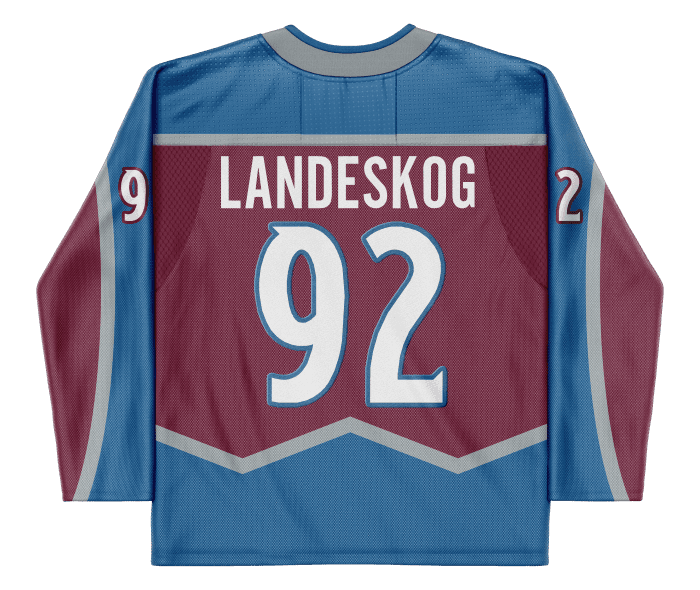
He’s still just 18, but Landeskog has a man’s body, the demeanor to use it to push opponents off the puck, and the elite skills to create offense. He’s set to play on Colorado’s second line – but easily could jump to the first forward unit – and is a lock to be in the Calder mix all season long.

Last season, the three Calder Trophy finalists scored 30 goals -- which would be a great season for the former Kitchener Ranger. In leagues with deeper rosters, the 18-year-old would definitely make a solid addition to your fantasy roster. The 2011 second overall pick also is a must-have in any dynasty league.

Gabriel Landeskog
Here’s the update from Colin Fraser, who has yet to participate in a full practice after undergoing foot surgery during the offseason, as part of his highly disputed trade from Edmonton. Fraser has been doing conditioning skating since Saturday but said he’s making progress

Fraser probably will not be ready for the start of the season. The 26-year-old scored three goals and five points last season while mostly playing on the fourth line. He is guaranteed to have no fantasy value.

Colin Fraser
Entering training camp, Richardson would seem to be in line for a spot on the third or fourth line — he’s been practicing with Trevor Lewis and Kevin Westgarth, mostly — but everyone knows that in a pinch, Richardson is the default fill-in player for almost any situation

Richardson has filled in admirably on the top two lines but probably is behind Scott Parse on the depth chart. Last season, the versatile forward scored seven goals and 19 points. He probably won't make an impact in fantasy hockey with a career high of 14 goals.

Brad Richardson
He says he isn’t getting antsy that he hasn’t made the NHL yet, just getting the eight-game taste. The truth is, Plante looks like a guy who’ll be a No. 5 or No. 6 defenceman, a stay-at-home guy, if he does make an NHL roster.

Plante probably starts the season in Oklahoma City but could see some NHL playing time due to injuries. The stay-at-home defender scored two goals and 17 points in 73 games in the AHL last season. If he makes the NHL, he would likely be deployed in a shutdown role and won't affect your fantasy team unless you own an Edmonton goalie.

If Kessel is a pure sniper, and if Connolly is the kind of playmaker who can feed him, perhaps Lupul, who has a track record of being a goal scorer, albeit a streaky one, doesn’t mind doing the dirty work.

Lupul will get the first crack at the top line but could be replaced by any of the team's top prospects. The former 7th overall pick scored nine goals and 18 points in his first 28 games as a Leaf. He could be an interesting pickup in deeper leagues as he has three 20-goal seasons on his resume.

Joffrey Lupul
Trotz liked the improvements of defenseman Ryan Ellis last night: “Ellis was 100 times better than he was in game one,” Trotz said. “He didn’t turn the puck over like he did. His first game he was a turnover machine early, then he started stabilizing. I thought he played a pretty good game.”

With Roman Josi injured, Ellis has a good chance of making the team. The former 11th overall pick scored 24 goals and a resounding 100 points last season in the OHL. He could replace Cody Franson nicely on the bottom pairing.

Ryan Ellis
“Viktor has had a very good start to camp,” Coyotes Assistant General Manager Brad Treliving said. “He looks stronger and really has some tempo to his skating. Most importantly, he has that competitive, determined look of a player who wants a roster spot.”

With four seasons in North America, Tikhonov should be more-than-ready. Last season, the former 28th overall pick only scored 10 goals and 33 points with the San Antonio Rampage of the AHL. At this point he seems slated for a bottom-line role.

Viktor Tikhonov
Ryan Murphy remains in Raleigh.

The slick, puck-moving defenseman continues to tease the hockey world by staying with the big club. While we believe he certainly is a very talented youngster, the numbers game in Carolina could eventually lead to his demotion. Regardless, a 9-game tryout would not be unexpected.

Ryan Murphy

NHL Line Changes

NHL line changes are essential in keeping a team’s players fresh on the ice over the course of a hard-fought 60-minute matchup. With shift changes occurring rapidly throughout any given game, we are here to provide you with everything you need to know regarding line changes.

Making sure a team is efficiently making line changes can be essential to their success within a matchup, as it ensures that the players needed on the ice to gain the upper hand are ready to spring into action at a moment’s notice. For NHL daily fantasy hockey players, knowing how to track line changes can be important as you look to keep tabs on the players you’ve drafted to your lineup and their production.

On The Fly

Unlike other sports where play must come to a stop in order to make a player substitution, in hockey, players can switch in-and-out of play on the fly. This helps in keeping the breakneck pace of the contest going, increasing the amount of action from whistle-to-whistle and avoiding any unnecessary stoppages.

On the fly changes are generally done when a team is in possession of the puck and are looking to make a transition play from their own end to their opponent’s side of the rink. Players must be aware of the action around them when making an on the fly substitution as a poorly timed switch could leave themselves vulnerable to an odd-man rush on the other end.

In order to make successful line changes on the fly it is up to the team coaching staff to keep players informed on when their line matchups are due to hit the ice. Generally, with both forwards and defensive pairings, line changes go from the first line trickling its way down to the fourth. Depending on the situation of the game, coaches may opt to give a particular line more playing time, increasing the amount of shifts they receive.

Play Stoppages

NHL line changes can also be made during stoppage of play, with both sides being given the chance to put fresh bodies on the ice ahead of the upcoming faceoff. Examples of a play stoppage that would allow teams to make line changes are after minor or major penalties, offsides, icing, and puck out of play calls. These line changes are often much more calculated as each coach has time to survey the other team and decide what would be the most advantageous line combination that will provide them with a competitive advantage.

Bench Configuration

It may seem like a confusing and unorganized area of the game, but in hockey there is a fair amount of strategy put into the bench configuration within a matchup. With both benches positioned in the neutral zone, making sure that players can quickly hop the boards and get into the game is key to making successful line changes. Benches are generally set so that players entering into the game on the fly are in the best possible position on the ice to fulfill their role.

Generally, a bench in hockey will have the forwards positioned closest to the attacking zone, whereas the defenceman will be situated closest to their defensive zone. This separates the forward lines and defence pairings from on another on each end of the bench so that groups can easily stay together. From here the rested forwards ready to enter into the game will be placed in the centre of the bench, positioned near the coaches so they can easily receive instruction before hitting the ice. This is also advantageous as players coming off the ice for a line change will often enter from the opposite side they came onto the ice from, preventing any unnecessary traffic or confusion when making a change. While each team may have their own preferences on how to configure their bench, these are the most common ways they are run.

Line Change Rules

Understanding the rules of NHL line changes in hockey is an understated part of the game and when used correctly can swing the tide of a matchup in your favour. Without in-depth understanding of line changes in hockey, this can cause costly mistakes that can result in minor penalties, lengthy shifts, or mismatches off a faceoff.

Last Line Change

The last line change rule exists so that the home team is able to make an adjustment to whatever lineup the visiting team decides to roll out after a stoppage in play. This rule was designed to make NHL line changes efficient, as well as provide both sides with the chance to strategically place their players based on the lines sent out by their opponents.

For example, after the whistle, the home team’s coach can elect to make a line change to the personnel on the ice. After that, the visiting coach will send out any new players into the game off of a line change. Thanks to the last line change rule, the home team coach is now granted the opportunity to make one last line change before play resumes to counter whatever line changes were made by the opposing team.

For daily fantasy sports bettors this is where having ample knowledge of each NHL team can come in handy. You can envision how each team may look to gain a competitive advantage over their opponent during a possession, drafting players who are set up for success within a matchup.

Penalties & Infractions

While NHL line changes are meant to be an efficient and simple way to keep the game being played at a fast-pace with minimal interruptions, there is still room for serious error during these substitutions. It’s not uncommon to see teams assessed for a penalty due to a botched line change, resulting in a power play opportunity for the opposing team.

A common penalty called as a result of a poorly executed line change is “too many men on the ice”. This penalty results when the offending team has six or more skaters (including the goaltender) on the ice at any given time and comes in physical contact with the puck. While players entering in the game during a shift change are eligible to hop the boards and get in on the action once their teammate is within five feet of the bench, they must time this correctly or they could be hit with a premature substitution infraction. When a bench minor penalty such as too many men on the ice is assessed, it is up to the team’s head coach to decide who serves the penalty based on the players currently on the ice at the time of the penalty.

Another line change infraction to be aware of is in the case of an icing call. Icing is called when a team plays a puck from their own side of the red centre line across the red goal line in their opponents end. When icing is called, a faceoff will be taken from the end of the team that committed the infraction. During an icing call the team that was called for icing is not able to make any line changes, meaning they are forced to keep all players who were on the ice at the time of the infraction in the contest. Their opponents however are allowed to make any line change they desire, making this an incredibly beneficial call if they can strategize correctly.

How Line Changes Impact Fantasy Hockey

NHL line changes can come fast and suddenly so it can be challenging to keep track of certain players over the course of a matchup. This can make it difficult for avid fantasy hockey managers and sports bettors to know when the players they’ve wagered on are on the ice. Some broadcasts now incorporate various display mechanics that allow for you to see who is on the ice at any given time, making shift change tracking much simpler than ever before. Be sure to stay up-to-date on the jersey numbers of any players on your fantasy roster or that you bet on as a failsafe so that you can find them quickly while watching the action unfold.

Knowing how long a typical shift for a player entering into a matchup is can be an advantageous piece of knowledge for fantasy managers and bettors alike. The longer a player’s shift lasts, the higher their chances of registering a point or other statistical milestone which can help you in winning your fantasy matchups and/or bets placed on a game.