Daily Faceoff is a news site with no direct affiliation to the NHL, or NHLPA

NHL Scratches & Line Changes

Still, there is some concern about how the Blues' No. 1 netminder will respond in his second season with the club after a preseason performance that won't show up on any of his personal highlight reels. He was 1-2 with a 2.68 GAA and .869 save-percentage.

Halak starts the season as the undisputed starting goalie. Last season he posted decent stats as a member of the Blues finishing with a 27-21-7 record with a 2.48 GAA and .910 SV%. Look for him to improve on those totals in his second full season in St. Louis.

Jaroslav Halak
The hard work paid off for Boedker, who was awarded a spot on the Coyotes roster as the team prepares for Saturday’s opening game of the season in San Jose.

Boedker could be primed for a more offensive role following a few years of shuffling between the AHL and NHL. Last season he scored four goals and 14 points through 34 points. Look for around 30-40 points over a full season.

Mikkel Boedker
PRESCOTT VALLEY - Returning to Tim's Toyota Center for two days of practice with the Coyotes was surreal for defenseman David Schlemko, one of the few players to work his way from the Central Hockey League to the NHL.

With defensemen Oliver Ekman-Larsson and Maxim Goncharov knocking on the doorstep, Schlemko will need to fight for a roster spot this season. Last year he scored four goals and 14 points through 43 games which would put him around 30 points over a full season. If he finds a regular shift, he should be fantasy relevant.

David Schlemko
“I think he wants to change something to get something to happen,” Johansson said. “He wants to try something new. He's the coach, so he decides.”

Doesn't sound like Johansson has fallen completely out of favor. Last season he scored 13 goals and 27 points last season, moving between the first and third line pivot. He should at least climb to the 40-point level this season.

Marcus Johansson
One familiar unit, that wasn’t used during the preseason at all, seems to be the way Boudreau is leaning for the top line: the combination of Alex Ovechkin with Nicklas Backstrom and Mike Knuble. Granted, this line may depend on when Ovechkin returns from Moscow following the death of his uncle, and his frame of mind as well.

Knuble looks like the early favorite on Alex Ovechkin's RW. Last season he scored 24 goals and 40 points while rotating between the top two lines. Despite his age he should be able to pot 25 goals.

Ott with Benn and Vincour.

Moving into a scoring role certainly helps Ott's value while hurting Vincour and Benn. Expect at least 10 goals, 30 points and well above 150 PIM if you draft him, making him quite a valuable player for deeper leagues.

Steve Ott
Loui on a line with Fiddler and Dvorak today.

Eriksson practiced on the third line today, skating with two defensive specialists. Last season he scored 27 goals and 73 points over 79 while playing mostly next to Brad Richards. While the Stars are aiming to even out their top three lines, it certainly hurts his fantasy hockey worth.

Loui Eriksson
That means defenseman Philip Larsen is expected to stay on the roster when the Stars open the season against Chicago Friday at American Airlines Center.

The Stars have big plans for their Danish defenseman. Last season he scored four goals and 21 points over 54 games with the Texas Stars and two assists over six games with the Stars. If he makes the team, expect him to see plenty of offensive minutes and PP time.

Philip Larsen
For now, is it possible that Scott Parse has gone from being on the roster bubble to being on the first line? Seems plausible, according to what Terry Murray said last night.

Parse was removed from the third line after his mediocre play. Relegated to only five games last season, the 27-year-old likely needs more time to get his timing down. He should be one of the front-runners to take Dustin Penner's job should he miss a significant amount of playing time.

So Talbot looks like #Flyers 4th line C.

With Blair Betts getting claimed by the Montreal Canadiens, the Flyers will move Talbot down to the fourth line. Last season he scored eight goals and 21 points through 82 games with the Pittsburgh Penguins. He should come near those totals while playing a similar role with the Flyers.

Max Talbot
"It's his defense. He's the guy in charge," McLellan said. "He knows that. Because Brent came in doesn't mean Danny Boyle's going to take a back seat. That's not how it works. The pecking order is well-established, and we'll go from there."

Boyle will continue to man the top defensive pairing as well as the top PP unit. Last season he scored nine goals and 50 points -- his lowest goals forced since he became a Shark. Look for him to bounce back with the aid of another excellent offensive forward.

Dan Boyle
Forwards Chad LaRose and Pat Dwyer returned to practice today after missing Tuesday's practice. If LaRose is cleared to play Friday, it's likely forward Riley Nash would be assigned to the Charlotte Checkers (AHL).

Dwyer is listed as day-to-day and should return to the lineup in time for the season opener. Last season he added nine goals and 18 points on the third line. He probably starts the year on the fourth line.

Pat Dwyer
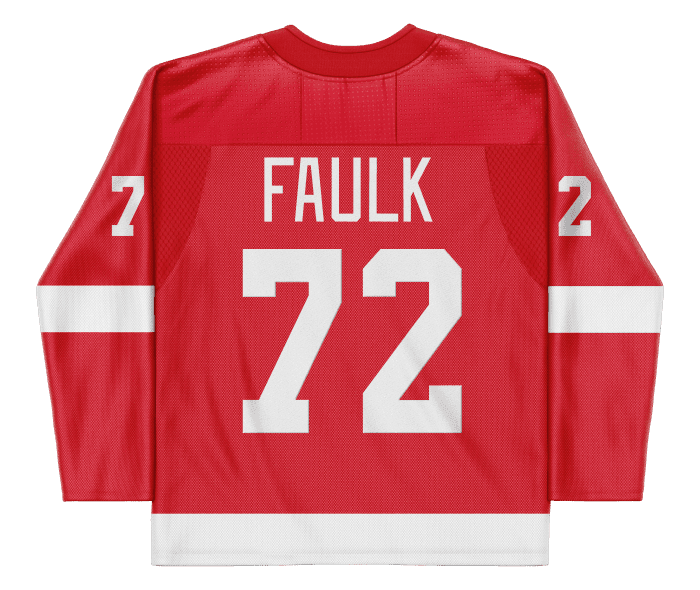
Canes general manager Jim Rutherford was discussing personnel and roster decisions to be made today when a question was raised about Justin Faulk and whether Rutherford would consider him one of the team's top six defensemen. "No," Rutherford said, "in the top four."

Faulk seems likely to make the team out of camp if the above quotes are any indication. Last season, at the University of Minnesota-Deluth, he scored eight goals and 33 points over 39 games. Expect him to be eased into NHL play.

Justin Faulk
Ruslan Fedotenko moves to the Rangers' second line, filling Dubinsky's place along with Artem Anisimov and Ryan Callahan. "I’m very comfortable with Feds playing with Arte and Cally," Tortorella said. "He ccored a goal the other night. He's a similar player to Duby. So we’ll try it that way."

Fedotenko scored 10 goals and 25 points through 66 games with the Rangers last season. He should be able to at least replicate those totals as he rotates between the lines.

Ruslan Fedotenko
"I want to try it that way," Tortorella said. "I think with Gaby, Richard and Duby, it seemed to work with Duby. I am robbing Peter to pay Paul here - I think Dubinsky, Anisimov and Callahan is a very good line. We’ll see how it plays out."

Dubinsky will start the season on the team's top line. Last season the Anchorage, Alaska scored 24 goals and 54 points through 77 games -- all career highs. Expect him to break the 60-point plateau if he sticks for a full season.

Brandon Dubinsky
TORONTO - Cody Franson thought he came here to make a difference on defence, not to sit on the bench.

Moving Franson to the bench should make him play with a chip on his shoulder. Last season he scored eight goals and 29 points through 80 games with the Nashville Predators. He could match those totals if given significant ice time,

Cody Franson
The way things have shaped up in training camp, Yemelin is the No. 7 defenceman on the depth chart. That means there's a spot on the roster for him, but it means he won't play a lot unless someone ahead of him is injured, screws up or gets tired. And if none of those things happen, he'll slip another notch when Andrei Markov completes his rehabilitation from knee surgery.

Predicted by some to play on the top pairing, Yemelin slips to a depth role. Last season he scored 11 goals and 26 points through 52 games in the KHL so the offense is certainly there. At this point wait until he has a full spot before rostering the Russian blue-liner.

Alexei Emelin
COLLINGWOOD, Ontario | Erik Cole is clearly intended to start the season in the third line with David Desharnais and Mathieu Darche.

Cole starts the season on the third line which should be a slight hit in his fantasy hockey value. Last season he scored 26 goals and 52 points while playing almost exclusively on the first and second line. Expect him to drop back down to the 40-point range should he remain a third liner.

Erik Cole

NHL Line Changes

NHL line changes are essential in keeping a team’s players fresh on the ice over the course of a hard-fought 60-minute matchup. With shift changes occurring rapidly throughout any given game, we are here to provide you with everything you need to know regarding line changes.

Making sure a team is efficiently making line changes can be essential to their success within a matchup, as it ensures that the players needed on the ice to gain the upper hand are ready to spring into action at a moment’s notice. For NHL daily fantasy hockey players, knowing how to track line changes can be important as you look to keep tabs on the players you’ve drafted to your lineup and their production.

On The Fly

Unlike other sports where play must come to a stop in order to make a player substitution, in hockey, players can switch in-and-out of play on the fly. This helps in keeping the breakneck pace of the contest going, increasing the amount of action from whistle-to-whistle and avoiding any unnecessary stoppages.

On the fly changes are generally done when a team is in possession of the puck and are looking to make a transition play from their own end to their opponent’s side of the rink. Players must be aware of the action around them when making an on the fly substitution as a poorly timed switch could leave themselves vulnerable to an odd-man rush on the other end.

In order to make successful line changes on the fly it is up to the team coaching staff to keep players informed on when their line matchups are due to hit the ice. Generally, with both forwards and defensive pairings, line changes go from the first line trickling its way down to the fourth. Depending on the situation of the game, coaches may opt to give a particular line more playing time, increasing the amount of shifts they receive.

Play Stoppages

NHL line changes can also be made during stoppage of play, with both sides being given the chance to put fresh bodies on the ice ahead of the upcoming faceoff. Examples of a play stoppage that would allow teams to make line changes are after minor or major penalties, offsides, icing, and puck out of play calls. These line changes are often much more calculated as each coach has time to survey the other team and decide what would be the most advantageous line combination that will provide them with a competitive advantage.

Bench Configuration

It may seem like a confusing and unorganized area of the game, but in hockey there is a fair amount of strategy put into the bench configuration within a matchup. With both benches positioned in the neutral zone, making sure that players can quickly hop the boards and get into the game is key to making successful line changes. Benches are generally set so that players entering into the game on the fly are in the best possible position on the ice to fulfill their role.

Generally, a bench in hockey will have the forwards positioned closest to the attacking zone, whereas the defenceman will be situated closest to their defensive zone. This separates the forward lines and defence pairings from on another on each end of the bench so that groups can easily stay together. From here the rested forwards ready to enter into the game will be placed in the centre of the bench, positioned near the coaches so they can easily receive instruction before hitting the ice. This is also advantageous as players coming off the ice for a line change will often enter from the opposite side they came onto the ice from, preventing any unnecessary traffic or confusion when making a change. While each team may have their own preferences on how to configure their bench, these are the most common ways they are run.

Line Change Rules

Understanding the rules of NHL line changes in hockey is an understated part of the game and when used correctly can swing the tide of a matchup in your favour. Without in-depth understanding of line changes in hockey, this can cause costly mistakes that can result in minor penalties, lengthy shifts, or mismatches off a faceoff.

Last Line Change

The last line change rule exists so that the home team is able to make an adjustment to whatever lineup the visiting team decides to roll out after a stoppage in play. This rule was designed to make NHL line changes efficient, as well as provide both sides with the chance to strategically place their players based on the lines sent out by their opponents.

For example, after the whistle, the home team’s coach can elect to make a line change to the personnel on the ice. After that, the visiting coach will send out any new players into the game off of a line change. Thanks to the last line change rule, the home team coach is now granted the opportunity to make one last line change before play resumes to counter whatever line changes were made by the opposing team.

For daily fantasy sports bettors this is where having ample knowledge of each NHL team can come in handy. You can envision how each team may look to gain a competitive advantage over their opponent during a possession, drafting players who are set up for success within a matchup.

Penalties & Infractions

While NHL line changes are meant to be an efficient and simple way to keep the game being played at a fast-pace with minimal interruptions, there is still room for serious error during these substitutions. It’s not uncommon to see teams assessed for a penalty due to a botched line change, resulting in a power play opportunity for the opposing team.

A common penalty called as a result of a poorly executed line change is “too many men on the ice”. This penalty results when the offending team has six or more skaters (including the goaltender) on the ice at any given time and comes in physical contact with the puck. While players entering in the game during a shift change are eligible to hop the boards and get in on the action once their teammate is within five feet of the bench, they must time this correctly or they could be hit with a premature substitution infraction. When a bench minor penalty such as too many men on the ice is assessed, it is up to the team’s head coach to decide who serves the penalty based on the players currently on the ice at the time of the penalty.

Another line change infraction to be aware of is in the case of an icing call. Icing is called when a team plays a puck from their own side of the red centre line across the red goal line in their opponents end. When icing is called, a faceoff will be taken from the end of the team that committed the infraction. During an icing call the team that was called for icing is not able to make any line changes, meaning they are forced to keep all players who were on the ice at the time of the infraction in the contest. Their opponents however are allowed to make any line change they desire, making this an incredibly beneficial call if they can strategize correctly.

How Line Changes Impact Fantasy Hockey

NHL line changes can come fast and suddenly so it can be challenging to keep track of certain players over the course of a matchup. This can make it difficult for avid fantasy hockey managers and sports bettors to know when the players they’ve wagered on are on the ice. Some broadcasts now incorporate various display mechanics that allow for you to see who is on the ice at any given time, making shift change tracking much simpler than ever before. Be sure to stay up-to-date on the jersey numbers of any players on your fantasy roster or that you bet on as a failsafe so that you can find them quickly while watching the action unfold.

Knowing how long a typical shift for a player entering into a matchup is can be an advantageous piece of knowledge for fantasy managers and bettors alike. The longer a player’s shift lasts, the higher their chances of registering a point or other statistical milestone which can help you in winning your fantasy matchups and/or bets placed on a game.