Daily Faceoff is a news site with no direct affiliation to the NHL, or NHLPA

NHL Scratches & Line Changes

The Hawks never have valued Seabrook's variety of contributions more. They rewarded his steadiness last winter with a five-year, $29 million contract extension that squelched trade rumors and showed Seabrook the type of respect that matters most. He returns from his most productive offensive season (9 goals, 39 assists) aware of but unfazed by the pressure to earn every penny.

Fresh off his best offensive season, Seabrook will remain on the second defensive pairing in a shutdown role. Considering he played that same role most of last season, expecting 8 goals and 40 points are not out of the question.

Brent Seabrook
Patrick Sharp will be on the right side when they line up with Jonathan Toews Friday in Dallas.

Sharp will suit up for opening night, on the right side of Jonathan Toews. Last season he scored 34 goals and 71 points while centering the second line and manning the point on the PP. Expect similar results this season as he opens the season close to 100 percent.

Patrick Sharp
It doesn’t appear as if Peter Regin will be ready for Friday’s season opener. Regin was more active during Wednesday’s practice in London, Ont., but was still wearing a blue ‘no contact’ sweater. “He didn’t take any contact, but I thought he was more of a participant, which is a good sign,” said MacLean. “We’ll get a better read on it and see where he is (Thursday).”…

Sounds like Regin is close to returning but might miss the first couple of games. Last season he only scored three goals and 17 points as he battled through inconsistency and injury. While the Sens have an insurance plan in Mika Zibanejad, they likely hope their Danish playmaker can return to the 15 goal, 30+ point range.

Peter Regin
Gonchar freely acknowledges he had a terrible 2010-11 season, along with the rest of the team. After signing a three-year, $15.5 million contract as a free agent, he never found his feet, finishing the year with seven goals and 20 assists. With the exception of 2008-09, when he played only 25 games due to injuries, it was his lowest offensive output since 1997-98 season with Washington.

With a new defensive partner and a new coach, Gonchar could return to respectability in Ottawa. His 11 goals over 62 games just two seasons ago indicate he has some offense left in the tank. Nevertheless, expect him to play a mentor role to Jared Cowen and David Rundblad.

Sergei Gonchar
Gonchar freely acknowledges he had a terrible 2010-11 season, along with the rest of the team. After signing a three-year, $15.5 million contract as a free agent, he never found his feet, finishing the year with seven goals and 20 assists. With the exception of 2008-09, when he played only 25 games due to injuries, it was his lowest offensive output since 1997-98 season with Washington.

With a new defensive partner and a new coach, Gonchar could return to respectability in Ottawa. His 11 goals over 62 games just two seasons ago indicate he has some offense left in the tank. Nevertheless, expect him to play a mentor role to Jared Cowen and David Rundblad.

Sergei Gonchar
Goalie Josh Harding skated in a track suit Wednesday to test his twisted left ankle.

Sounds like Harding is at least healthy enough to backup Backstrom. His .915 career save percentage indicates he may be worth a look if he ever stays healthy and earns a starting goalie gig.

Mike Yeo said he believes Marco Scandella will be a top defenseman in the NHL for a long time. The Wild coach said since the start of training camp that Scandella is good enough to be a top-four defenseman.

Scandella gets his first legitimate shot at a top-6 assignment due to Lundin's injury. Last season he produced two assists in his first NHL campaign. Look for Scandella to improve those point totals in his first full season.

Marco Scandella
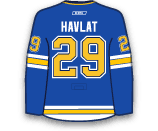
Am told Havlat (shoulder) will miss opener for Sharks on Saturday. Team has week off between games 1-2. Could be ready for Game 2

Havlat could be back for Game 2, so not all is lost. The winger scored 22 goals and 62 points in 78 games with the Wild last season. Tommy Wingels will take his place on the second line.

Martin Havlat
Forward Sergei Kostitsyn did not practice Wednesday, though I did see him walking around the Predators’ training facility at Centennial Sportsplex. Coach Barry Trotz said Kostitsyn had a “maintenance day” for an “upper-body tweak” and didn’t sound worried that the forward would miss any time.

Fresh off a 23-goal, 50-point campaign, Kostitsyn is a go-to scorer on the Preds. Expect him to at least hit those totals in his second full season under coach Barry Trotz.

And while it’s not surprising that teenagers Ryan Murphy and Justin Faulk made the cut, it is eyebrow-raising that the team will carry nine defensemen to start the season.

Murphy made the squad but does not yet have a full-time spot. Last season he scored 26 goals and 79 points through 63 games with the Kitchener Rangers of the AHL.

Ryan Murphy
Both Niemi and Havlat were “non-roster” players on the official roster that Wilson had to file with the NHL by noon. But that allows for day-to-day movement, the GM said, and either could be in the lineup Saturday night.

Havlat should be fully healthy, or close to it, to start the season. The winger scored 22 goals and 62 points in 78 games with the Wild last season. He should be able to improve those numbers with a much improved supporting cast.

Martin Havlat
Both Niemi and Havlat were “non-roster” players on the official roster that Wilson had to file with the NHL by noon. But that allows for day-to-day movement, the GM said, and either could be in the lineup Saturday night.

At this point consider Niemi close to fully healthy, ready to start the season as the Sharks' starting goalie. Last season, Niemi won 35 games while sporting a 2.38 GAA and .920 SV%. With Antero Niittymaki already out, the two options for the Sharks would be Thomas Greiss or Harri Sateri if Niemi suffers a setback.

Antti Niemi
Mills, the undrafted 28-year-old forward who started his professional career in the East Coast Hockey League, also earned a spot on the Devils' roster by beating long odds.

Last season the 27-year-old made his NHL debut and scored a goal over four games. He should start the season centering the fourth line.

Elliott deserved to stay, mostly because he’s just a better player than half the guys already on the Avs’ defensive roster. He has much more offensive upside than anyone, and he moves the puck around the ice very quickly. He did all the right things in training camp.

Elliott failed to make the roster but should be on the Avs by the end of the season. Last season the younster potted 31 goals and 81 points, establishing himself as one of the WHL's top defensemen. He should quickly take over the role as go-to, puck-moving defender on the Avs blue line.

Stefan Elliott
It’s another for the 25-year-old grad from Bemidji State to play knowing that TSN senior hockey analyst Bob McKenzie picked him to win the Calder Trophy as rookie of the year.

Good news for Read, who proved himself ready with a strong preseason. Last season the versatile forward scored 22 goals and 35 points through 37 games at Bemidji State University before finishing the season strongly with the Adirondack Phantoms. Expect him to add some grit and offense to the bottom two lines.

Matt Read
“I’m feeling like I’m playing well,” the Ducks’ No. 1 goaltender — again — said. “I’m very excited to get the season started. Exhibitions get a little boring after awhile. Really, I can’t wait for the season to start.”

Hiller's play will stay under the magnifying glass for most of the season but his strong preseason is certainly a welcome sign. Last season the Swiss 'tender posted a 2.56 GAA and .924 SV% through 49 games played. Feel safer drafting/keeping the Swiss 'tender.

Jonas Hiller
But after an impressive rookie season, Brodie never quite found his place at Flames camp, especially in Penticton for the second annual Canucks Young Stars Tournament. As a result, he was dispatched back to Abbotsford, back to the minor leagues.

Brodie failed to make the team but remains one of the team's top prospects. Last season he scored five goals and 34 points through 68 games with the Abbotsford Heat of the AHL -- finishing second on the team. Look for him to eventually make the team.

T.J. Brodie
Parise, 27, becomes the ninth captain in Devils’ history. The captaincy had been vacant since Jamie Langenbrunner was traded to Dallas on Jan. 7.

Parise should certainly score more than last years totals where he produced only three goals and six points through 14 games. The Devils hope he remains a big part of their roster and return to the form that saw him score 30+ goals and 80+ points. Look for him to approach those totals, if healthy, over a full season.

Zach Parise
Last season, Bergeron compiled a 22-35-57 line and looks to continue his dominance of the face-off circle. He also wants to continue to grow as a leader, especially after the B’s lost veteran Mark Recchi.

Following a Cup victory, Bergeron is now a leader and the clubhouse. The second line center scored 22 goals and 57 points through 80 games and should be expected to at least replicate those totals. In deeper leagues, look for Bergeron to be quite useful, especially if your league counts faceoff wins.

Patrice Bergeron

NHL Line Changes

NHL line changes are essential in keeping a team’s players fresh on the ice over the course of a hard-fought 60-minute matchup. With shift changes occurring rapidly throughout any given game, we are here to provide you with everything you need to know regarding line changes.

Making sure a team is efficiently making line changes can be essential to their success within a matchup, as it ensures that the players needed on the ice to gain the upper hand are ready to spring into action at a moment’s notice. For NHL daily fantasy hockey players, knowing how to track line changes can be important as you look to keep tabs on the players you’ve drafted to your lineup and their production.

On The Fly

Unlike other sports where play must come to a stop in order to make a player substitution, in hockey, players can switch in-and-out of play on the fly. This helps in keeping the breakneck pace of the contest going, increasing the amount of action from whistle-to-whistle and avoiding any unnecessary stoppages.

On the fly changes are generally done when a team is in possession of the puck and are looking to make a transition play from their own end to their opponent’s side of the rink. Players must be aware of the action around them when making an on the fly substitution as a poorly timed switch could leave themselves vulnerable to an odd-man rush on the other end.

In order to make successful line changes on the fly it is up to the team coaching staff to keep players informed on when their line matchups are due to hit the ice. Generally, with both forwards and defensive pairings, line changes go from the first line trickling its way down to the fourth. Depending on the situation of the game, coaches may opt to give a particular line more playing time, increasing the amount of shifts they receive.

Play Stoppages

NHL line changes can also be made during stoppage of play, with both sides being given the chance to put fresh bodies on the ice ahead of the upcoming faceoff. Examples of a play stoppage that would allow teams to make line changes are after minor or major penalties, offsides, icing, and puck out of play calls. These line changes are often much more calculated as each coach has time to survey the other team and decide what would be the most advantageous line combination that will provide them with a competitive advantage.

Bench Configuration

It may seem like a confusing and unorganized area of the game, but in hockey there is a fair amount of strategy put into the bench configuration within a matchup. With both benches positioned in the neutral zone, making sure that players can quickly hop the boards and get into the game is key to making successful line changes. Benches are generally set so that players entering into the game on the fly are in the best possible position on the ice to fulfill their role.

Generally, a bench in hockey will have the forwards positioned closest to the attacking zone, whereas the defenceman will be situated closest to their defensive zone. This separates the forward lines and defence pairings from on another on each end of the bench so that groups can easily stay together. From here the rested forwards ready to enter into the game will be placed in the centre of the bench, positioned near the coaches so they can easily receive instruction before hitting the ice. This is also advantageous as players coming off the ice for a line change will often enter from the opposite side they came onto the ice from, preventing any unnecessary traffic or confusion when making a change. While each team may have their own preferences on how to configure their bench, these are the most common ways they are run.

Line Change Rules

Understanding the rules of NHL line changes in hockey is an understated part of the game and when used correctly can swing the tide of a matchup in your favour. Without in-depth understanding of line changes in hockey, this can cause costly mistakes that can result in minor penalties, lengthy shifts, or mismatches off a faceoff.

Last Line Change

The last line change rule exists so that the home team is able to make an adjustment to whatever lineup the visiting team decides to roll out after a stoppage in play. This rule was designed to make NHL line changes efficient, as well as provide both sides with the chance to strategically place their players based on the lines sent out by their opponents.

For example, after the whistle, the home team’s coach can elect to make a line change to the personnel on the ice. After that, the visiting coach will send out any new players into the game off of a line change. Thanks to the last line change rule, the home team coach is now granted the opportunity to make one last line change before play resumes to counter whatever line changes were made by the opposing team.

For daily fantasy sports bettors this is where having ample knowledge of each NHL team can come in handy. You can envision how each team may look to gain a competitive advantage over their opponent during a possession, drafting players who are set up for success within a matchup.

Penalties & Infractions

While NHL line changes are meant to be an efficient and simple way to keep the game being played at a fast-pace with minimal interruptions, there is still room for serious error during these substitutions. It’s not uncommon to see teams assessed for a penalty due to a botched line change, resulting in a power play opportunity for the opposing team.

A common penalty called as a result of a poorly executed line change is “too many men on the ice”. This penalty results when the offending team has six or more skaters (including the goaltender) on the ice at any given time and comes in physical contact with the puck. While players entering in the game during a shift change are eligible to hop the boards and get in on the action once their teammate is within five feet of the bench, they must time this correctly or they could be hit with a premature substitution infraction. When a bench minor penalty such as too many men on the ice is assessed, it is up to the team’s head coach to decide who serves the penalty based on the players currently on the ice at the time of the penalty.

Another line change infraction to be aware of is in the case of an icing call. Icing is called when a team plays a puck from their own side of the red centre line across the red goal line in their opponents end. When icing is called, a faceoff will be taken from the end of the team that committed the infraction. During an icing call the team that was called for icing is not able to make any line changes, meaning they are forced to keep all players who were on the ice at the time of the infraction in the contest. Their opponents however are allowed to make any line change they desire, making this an incredibly beneficial call if they can strategize correctly.

How Line Changes Impact Fantasy Hockey

NHL line changes can come fast and suddenly so it can be challenging to keep track of certain players over the course of a matchup. This can make it difficult for avid fantasy hockey managers and sports bettors to know when the players they’ve wagered on are on the ice. Some broadcasts now incorporate various display mechanics that allow for you to see who is on the ice at any given time, making shift change tracking much simpler than ever before. Be sure to stay up-to-date on the jersey numbers of any players on your fantasy roster or that you bet on as a failsafe so that you can find them quickly while watching the action unfold.

Knowing how long a typical shift for a player entering into a matchup is can be an advantageous piece of knowledge for fantasy managers and bettors alike. The longer a player’s shift lasts, the higher their chances of registering a point or other statistical milestone which can help you in winning your fantasy matchups and/or bets placed on a game.