The Sabres’ magic run is over. How do they sustain it going forward?

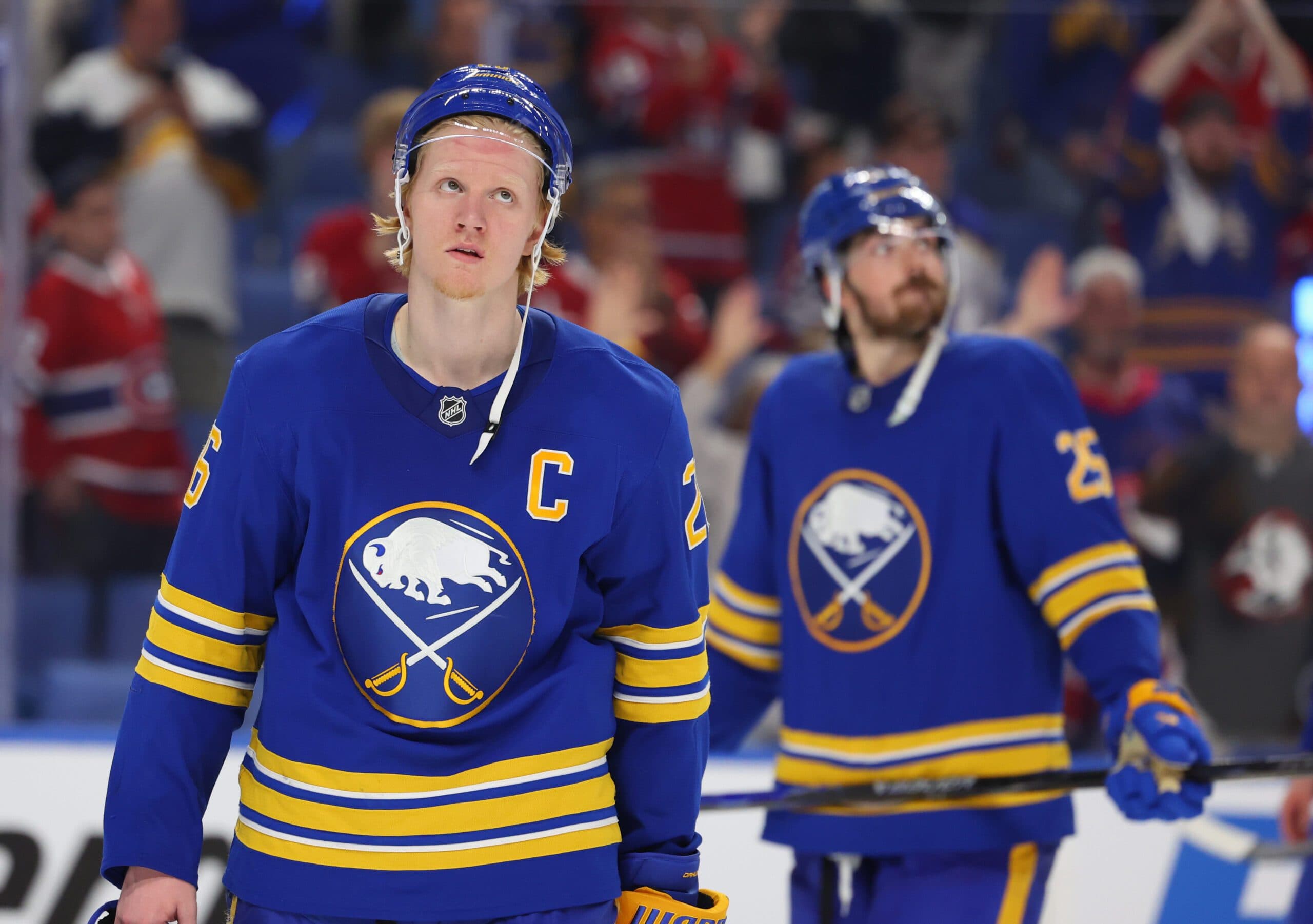
BUFFALO – It was a season of miracles. But they finally ran out for the Buffalo Sabres.
It’s hard to believe they were the laughingstock of the NHL just five months ago, seemingly doomed to miss the playoffs for a 15th consecutive season and extend their NHL-record drought. When a team is bad enough to fire its GM, in this case Kevyn Adams, in December, it usually means that team is in such disarray that the postseason is impossibly far away.
But Buffalo persevered. It won 10 games in a row to vault itself into the playoff hunt. It posted the NHL’s best record from the beginning of that streak onward. The Sabres landed their first playoff berth since 2010-11. Then it was their first division title since 2009-10. In Game 1 of the postseason, they wouldn’t be denied that first playoff win in 15 years, either, making a wild, emotional third-period rally from 2-0 to beat the Boston Bruins 4-3. Then they pushed the Bruins aside in six games for the first Buffalo playoff series win since 2007.
Time and again this season, the Sabres gave us team-of-destiny vibes. They fell behind by multiple goals in Game 6 of their second-round matchup against the Montreal Canadiens only to come back and force Game 7. And in Monday night’s series finale at KeyBank Center, the Sabres pulled off yet another feat of magic, as goals from Jordan Greenway and Rasmus Dahlin erased a 2-0 deficit to force overtime.
It seemed like the Sabres would will their way to victory again, but Alex Newhook had other ideas, his wrist shot solving goaltender Ukko-Pekka Luukkonen in overtime, sending the Habs to the Eastern Conference Final.
Buffalo’s dream-come-true campaign ended in a flash when it seemed at times like it would keep going until June. And the result leaves behind a whirlwind of mixed emotions.
On one hand: crushing acceptance that it’s finally over.
“One shot decides the whole season,” Dahlin told reporters after the game. “It sucks.”
On the other hand: the pride in how this team, over and over and over, peeled itself off the mat and built one of the most inspiring stories in recent pro sports memory. Relevant hockey is truly back in a market that has deserved it and craved it for so darned log.
“The energy in the city, the energy around our team again, I’m so proud of our fans,” said Sabres coach Lindy Ruff after Monday’s defeat. “I know this hurts them as much as it hurts us, but the energy around our team and around the city, in this building, outside the building, it’s the first time our players have experienced something like this. I couldn’t be more proud of the way our city represented themselves with our play.”
Another sensation will trickle in over the coming days for the Sabres and their fans: uncertainty. Can we trust what we saw all season long? Will the Sabres build on what they accomplished this season, or did they capture precisely the right juju for a one-and-done year? What will become of them if they lose right winger Alex Tuch as an unrestricted free agent? And what about Ruff, whose contract is up?
It’s true that the Sabres’ salary-cap breakdown brings question marks. Even with the cap jumping to a whopping $104 million for 2026-27, they project to have a modest $12.9 million in space. With the UFA market so thin and Tuch possessing a coveted blend of size, skill and scoring ability, he alone could command an AAV close to that number on the open market. It won’t be easy for the Sabres to keep him despite repeated expressions of interest in a new deal throughout the year on both sides; if it was a sure thing, it would’ve happened already. Tuch’s teammates certainly want him around, even if he struggled in the second round against Montreal.
“I can tell you that I’d love to have him back,” star center Tage Thompson told reporters. “He’s an ultimate teammate. He’s a leader on this team. He drives the bus for us. Guys in this room look to him. He’s vocal. He plays the game the right way. He’s a big, big reason we were where we were.”
With or without Tuch, the Sabres also have defensemen Logan Stanley and Luke Schenn and checking forwards Beck Malenstyn and Josh Dunne becoming UFAs as well, with scrappy, dynamic young left winger Zach Benson and Peyton Krebs, who spent some of this season on the first line, becoming RFAs. General manger Jarmo Kekalainen has some serious gymnastics to execute, particularly when it comes to Tuch and Benson. Keeping Tuch in the fold would probably mean Benson has to sign a bridge contract, which would Band-Aid the cap problem in the short term but cost Buffalo a lot more money in a couple years given Benson’s rapid improvement.
That said: The Sabres have a lot of their core locked up. Thompson is signed through 2029-30, middle-six pivot Ryan McLeod through 2028-29, captain Dahlin through 2031-32 and fellow top-four blueliners Owen Power and Mattias Samuelsson through 2030-31 and 2029-30, respectively.
It’s debatable whether oft-injured center Josh Norris, under contract four more seasons for $7.95 million per, is part of that core or not; Buffalo may be better off finding a way to get out from under his deal. And Kekalainen has a goaltending surplus to sort through, four deep between ‘UPL,’ Alex Lyon, Colten Ellis and prospect Devon Levi. But the meat of the roster is around to stay, and the Sabres have a crucial reinforcement ready to make a major impact next season in Konsta Helenius. He impressed once he joined the lineup partway through this postseason and seems poised to become a major component of the top-six forward group for years to come.
Zooming out and examining all the pieces: the Sabres still have most of their vital organs intact. We should see many of the same faces who helped them go 39-9-4 from Dec. 9 onward as the league’s most unstoppable force. But the offseason will be complicated. If Kekalainen wants his very good team to become a great one, to improve its power play and two-way play driving and become a sustainable juggernaut year after year, he’ll have to make some prudent decisions in the coming weeks and months.
_____
POST SPONSORED BY bet365
_____
Recently by Matt Larkin
- Canadiens are playoff giant killers thanks to two underdogs who refuse to quit
- Leafs head coach candidates: a tiered list of names to know
- NHL Trade Board: Will Leafs’ new regime sell Matthews on staying in Toronto?
- 10 star NHLers in salary-cap era who found playoff glory after changing teams
- Is it finally time to trust the Hurricanes in Round 3?