Daily Faceoff is a news site with no direct affiliation to the NHL, or NHLPA

NHL Scratches & Line Changes

Last season, Selanne had 31 goals and 80 points in 73 games, combining consistency with individual brilliance. Late in the season, he became the first player at his age to record five points in an NHL game (three goals, two assists), against Colorado.

Selanne continues to be one of the feel-good stories of the NHL. His totals last season put him in the top 10 in scoring. Expect him to give plenty of value at his current 13th - 14th round price.

Teemu Selanne
Center Daymond Langkow, in his second tour with the Coyotes, is looking for a bounce-back year after missing most of 2010-11 due to a fractured vertebra he suffered late in the preceding season. With the Coyotes, he scored 68 goals and had 166 points in three seasons. He played in only four games with the Flames last season and was traded to the Coyotes for Lee Stempniak in a contract swap. Langkow, 35, will be an unrestricted free agent at the end of this season.

Langkow should start the season on the top line with Kyle Turris still infamously holding out. In the past, Langkow was referred to as "instant chemistry" with his linemates, so expect him to once again mesh with Shane Doan. Could be a nice depth pick for deeper leagues as Dave Tippett should play him in all situations.

High praise, for sure, but Yandle, 25, is coming off a year in which he scored 11 goals and recorded 59 points, third among NHL defensemen. He led the team with 24:22 minutes of ice time per game. He also has shown his durability by being the only Coyotes player to appear in all 82 regular-season games the past two seasons.

Yandle is well on his way to becoming an elite defender following a season where only Lubomir Visnovsky and Nicklas Lidstrom scored more. If he continues his solid offensive production, he should put to rest any stigmas of playing in a defensive system or on the lowly Coyotes. This season should be a good test for the Boston native.

Keith Yandle
"Knowing Shane and the type of body he has, there is no question in my mind he can play at a high level for another three, four, five years," he said.

In Dave Tippett's system, Doan's offensive production has been a bit scaled back -- dropping from 73 and 78 points under Gretzky to 60 and 55 points. Regardless, the Halkirk, Alberta native certainly feels comfortable in Phoenix and should be good for 55+ points, 60 PIM and a bonus if your league matriculates hits.

Shane Doan
That means the Caps start with six healthy defensemen and John Erskine and that Mathieu Perreault was the winner of the battle for the final roster spot.

Perreault made the big club but will need to compete for his playing time. Last season he scored seven goals and 14 points over 35 games with the Capitals. He should center the third line at some point this year.

Mathieu Perreault
That means the Caps start with six healthy defensemen and John Erskine and that Mathieu Perreault was the winner of the battle for the final roster spot.

Erskine made the team but remains sidelined. He played a career high 73 games last season but failed to eclipse 100 PIM and holds close to no fantasy value outside of some PIM and possibly a decent plus/minus.

(Colaiacovo) is a guy who's going to see power-play time. But we looked at some units today that came out of our game against Colorado that were fairly effective.

Colaiacovo should eventually return to the top PP unit but will be pushed to earn the time. Last season he scored six goals and 26 points through 65 games with the Blues, but will face heavy competition behind Kevin Shattenkirk and Alex Pietrangelo. Considering 11 of those points came via PP, expect a slight decrease in his production.

Carlo Colaiacovo
"This is a situation that we've talked about," Payne said. "(Colaiacovo) is a guy that is effective there. But you look at a scenario where a guy (Oshie) gets in and does the job, that's where the internal pressure exists.

Oshie will start the season on the point of the top PP unit. Last season he scored 12 goals and 34 points through 49 games including nine PP. Expect all of those totals to improve with a full season with Patrik Berglund and Chris Stewart.

T.J. Oshie
Playing in all 82 games, D'Agostini had 21 goals and 25 assists and finished a plus-8. A speedy 24-year-old winger with a wicked shot, he became more than anticipated when the Blues bartered prospect Aaron Palushaj in exchange. D'Agostini's previous high-water mark had been 12 goals and nine assists with Montreal in 2008-09.

The Blues made a thrifty move when they traded for D'Agostini -- a versatile forward capable of playing all three forward positions and chipping in a few goals. If he continues to play on the top two lines and earns PP minutes, expect a repeat of last season's numbers. However, the additions of Jamie Langenbrunner and Jason Arnott will push him out of that role if he falters.

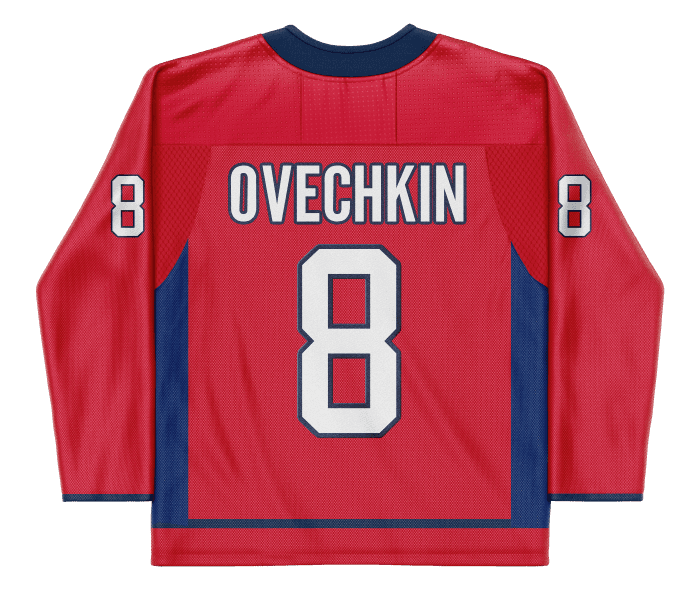
Alex Ovechkin will be returning to Moscow to attend to his family after the death of a close relative in Moscow, Russia

Early reports indicate Ovechkin will not miss the season opener. Last season, the consensus fantasy hockey first overall pick scored 32 and 85 points -- both the lowest totals of his career. Expect him to return to the 50-goal, 100-point range this season.

Alex Ovechkin
Slava Voynov will also play, but Murray indicated that Voynov more than likely will be headed to Manchester, but that a final decision hasn’t been made

Voynov would have made a big impact if he played in place of Doughty. Last season he managed to score 15 goals and 51 points with the Manchester Monarchs, proving his NHL readiness. Look for him to fill in for any wounded d-man and possibly playing on one of the two PP units.

Slava Voynov
Per agreement with the Hamburg team, both teams will dress 22 players. That allows the Kings to play eight defensemen and ease Drew Doughty back into the lineup. Doughty said he had been skating five days a week back home and feels ready.

Expect Doughty to take a couple shifts with the team as he gets back to NHL speed. Starting the season in Europe probably won't help him get acclimated either. Regardless, his totals of last season -- 11 goals, 40 points -- should be his absolute floor.

Drew Doughty
A door opened for the the 20-year-old Rundblad on Monday when general manager Bryan Murray announced that Matt Carkner had had surgery on his right knee that morning and would be out indefinitely, at least four to six weeks.

With Rundblad reportedly threatening to return to Europe, the Sens were forced to keep in on the 23-man roster; the injury to Carkner now solidifies his spot with the team. Last season he posted incredible stats -- 11 goals. 50 points over 55 games played. He figures to go through plenty of growing pains learning defense in his first North American season.

David Rundblad
Lots of power play and penalty kill work today in practice. Of note is that rookie David Savard took shifts with the No. 1 power play unit, taking James Wisniewski's spot on the right side point opposite Fedor Tyutin.

Savard continues to impress following a strong training camp. Through 72 games with the Springfield Falcons last season, the 20-year-old scored 11 goals and 43 points. Expect him to get a long look from the team before James Wisniewski returns.

David Savard
As one of the National Hockey League's star players, St. Louis is confident in life's returns, because he always has "put in" more than the next player.

At age 36, there is no reason to believe St. Louis cannot still perform. Last season he posted 31 goals and 99 points while flanking mostly Steven Stamkos. Expect a similar output from the diminutive, undrafted forward as he's only missed a game in seven of his last eight seasons.

Martin St. Louis
“This was the first time I skated in four days,” Taormina said. “I woke up yesterday and felt 100 percent, but it was (a day off). So, they wanted me to come out (today) and stretch out everything and give it a test to see how it is and I felt good to practice. I felt good.”

With Mark Fraser on waivers, Taormina may have earned a spot on the team's blue line. Last season, Taormina scored three goals to go along with five points in 17 games before missing the rest of the season to an ankle injury. The offensive-minded defenseman fits into the team's system and should be a player to watch for in the future.

Matt Taormina
BUFFALO — Right now, there’s a forgotten man on arguably the NHL’s deepest blue line. Never mind he just scored 13 goals, led the team in ice time and enjoyed a career season. The Sabres have newer, shinier and younger defensemen grabbing all the attention.

Leopold scored 10 goals through last January but faded down the stretch, conceding offensive minutes to Andrej Sekera and Marc-Andre Gragnani. Expect him to approach 30 points this season but he will need to now compete with Christian Ehrhoff, Tyler Myers, Gragnani and Sekera for offensive minutes.

Jordan Leopold

NHL Line Changes

NHL line changes are essential in keeping a team’s players fresh on the ice over the course of a hard-fought 60-minute matchup. With shift changes occurring rapidly throughout any given game, we are here to provide you with everything you need to know regarding line changes.

Making sure a team is efficiently making line changes can be essential to their success within a matchup, as it ensures that the players needed on the ice to gain the upper hand are ready to spring into action at a moment’s notice. For NHL daily fantasy hockey players, knowing how to track line changes can be important as you look to keep tabs on the players you’ve drafted to your lineup and their production.

On The Fly

Unlike other sports where play must come to a stop in order to make a player substitution, in hockey, players can switch in-and-out of play on the fly. This helps in keeping the breakneck pace of the contest going, increasing the amount of action from whistle-to-whistle and avoiding any unnecessary stoppages.

On the fly changes are generally done when a team is in possession of the puck and are looking to make a transition play from their own end to their opponent’s side of the rink. Players must be aware of the action around them when making an on the fly substitution as a poorly timed switch could leave themselves vulnerable to an odd-man rush on the other end.

In order to make successful line changes on the fly it is up to the team coaching staff to keep players informed on when their line matchups are due to hit the ice. Generally, with both forwards and defensive pairings, line changes go from the first line trickling its way down to the fourth. Depending on the situation of the game, coaches may opt to give a particular line more playing time, increasing the amount of shifts they receive.

Play Stoppages

NHL line changes can also be made during stoppage of play, with both sides being given the chance to put fresh bodies on the ice ahead of the upcoming faceoff. Examples of a play stoppage that would allow teams to make line changes are after minor or major penalties, offsides, icing, and puck out of play calls. These line changes are often much more calculated as each coach has time to survey the other team and decide what would be the most advantageous line combination that will provide them with a competitive advantage.

Bench Configuration

It may seem like a confusing and unorganized area of the game, but in hockey there is a fair amount of strategy put into the bench configuration within a matchup. With both benches positioned in the neutral zone, making sure that players can quickly hop the boards and get into the game is key to making successful line changes. Benches are generally set so that players entering into the game on the fly are in the best possible position on the ice to fulfill their role.

Generally, a bench in hockey will have the forwards positioned closest to the attacking zone, whereas the defenceman will be situated closest to their defensive zone. This separates the forward lines and defence pairings from on another on each end of the bench so that groups can easily stay together. From here the rested forwards ready to enter into the game will be placed in the centre of the bench, positioned near the coaches so they can easily receive instruction before hitting the ice. This is also advantageous as players coming off the ice for a line change will often enter from the opposite side they came onto the ice from, preventing any unnecessary traffic or confusion when making a change. While each team may have their own preferences on how to configure their bench, these are the most common ways they are run.

Line Change Rules

Understanding the rules of NHL line changes in hockey is an understated part of the game and when used correctly can swing the tide of a matchup in your favour. Without in-depth understanding of line changes in hockey, this can cause costly mistakes that can result in minor penalties, lengthy shifts, or mismatches off a faceoff.

Last Line Change

The last line change rule exists so that the home team is able to make an adjustment to whatever lineup the visiting team decides to roll out after a stoppage in play. This rule was designed to make NHL line changes efficient, as well as provide both sides with the chance to strategically place their players based on the lines sent out by their opponents.

For example, after the whistle, the home team’s coach can elect to make a line change to the personnel on the ice. After that, the visiting coach will send out any new players into the game off of a line change. Thanks to the last line change rule, the home team coach is now granted the opportunity to make one last line change before play resumes to counter whatever line changes were made by the opposing team.

For daily fantasy sports bettors this is where having ample knowledge of each NHL team can come in handy. You can envision how each team may look to gain a competitive advantage over their opponent during a possession, drafting players who are set up for success within a matchup.

Penalties & Infractions

While NHL line changes are meant to be an efficient and simple way to keep the game being played at a fast-pace with minimal interruptions, there is still room for serious error during these substitutions. It’s not uncommon to see teams assessed for a penalty due to a botched line change, resulting in a power play opportunity for the opposing team.

A common penalty called as a result of a poorly executed line change is “too many men on the ice”. This penalty results when the offending team has six or more skaters (including the goaltender) on the ice at any given time and comes in physical contact with the puck. While players entering in the game during a shift change are eligible to hop the boards and get in on the action once their teammate is within five feet of the bench, they must time this correctly or they could be hit with a premature substitution infraction. When a bench minor penalty such as too many men on the ice is assessed, it is up to the team’s head coach to decide who serves the penalty based on the players currently on the ice at the time of the penalty.

Another line change infraction to be aware of is in the case of an icing call. Icing is called when a team plays a puck from their own side of the red centre line across the red goal line in their opponents end. When icing is called, a faceoff will be taken from the end of the team that committed the infraction. During an icing call the team that was called for icing is not able to make any line changes, meaning they are forced to keep all players who were on the ice at the time of the infraction in the contest. Their opponents however are allowed to make any line change they desire, making this an incredibly beneficial call if they can strategize correctly.

How Line Changes Impact Fantasy Hockey

NHL line changes can come fast and suddenly so it can be challenging to keep track of certain players over the course of a matchup. This can make it difficult for avid fantasy hockey managers and sports bettors to know when the players they’ve wagered on are on the ice. Some broadcasts now incorporate various display mechanics that allow for you to see who is on the ice at any given time, making shift change tracking much simpler than ever before. Be sure to stay up-to-date on the jersey numbers of any players on your fantasy roster or that you bet on as a failsafe so that you can find them quickly while watching the action unfold.

Knowing how long a typical shift for a player entering into a matchup is can be an advantageous piece of knowledge for fantasy managers and bettors alike. The longer a player’s shift lasts, the higher their chances of registering a point or other statistical milestone which can help you in winning your fantasy matchups and/or bets placed on a game.