Top 10 ‘small guy’ prospects for the 2026 NHL Draft

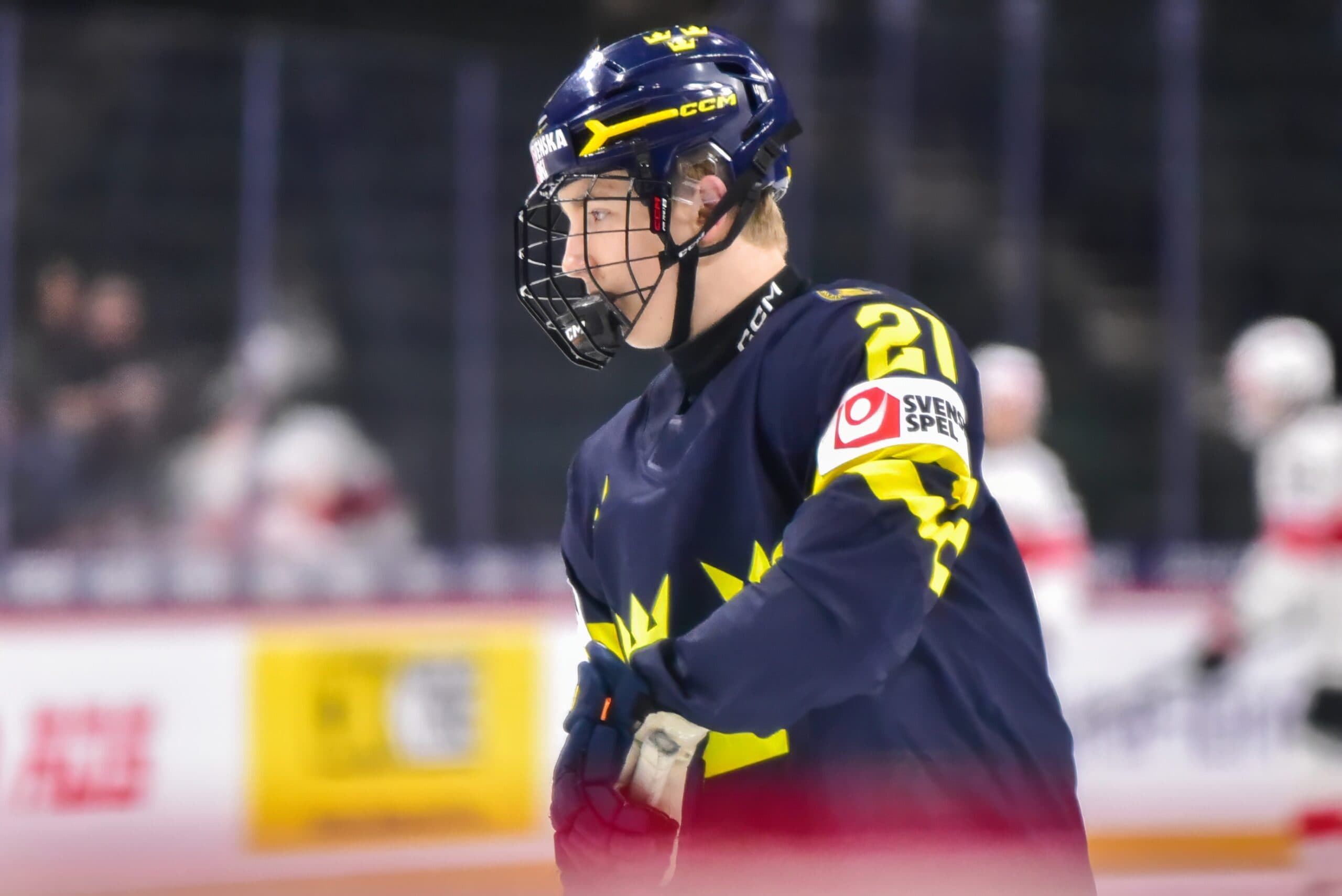
Did you know two players standing 5-foot-9 or shorter had over 40 goals this year?
Cole Caufield showed everyone what’s possible by scoring 51 goals and 88 points with the Montreal Canadiens. Alex DeBrincat had 41 goals and 85 points himself, continuing his streak as one of the most consistent smaller forwards in the NHL. Brad Marchand and Mats Zuccarello both had over 50 points as well, while Logan Stankoven started the playoffs on an absolute tear.
But they’re the exception, not the rule. A total of 40 players 5-foot-9 and shorter played at least one NHL game this year, and 10 had 30 or more points. For now, the game still favors players with muscle and size, and that’s something players have had to adapt to over time.
Today, we’re going to look at some of the smaller players worth keeping an eye on for the 2026 NHL Draft. The concept is simple: the player must be shorter than 5-foot-10. There isn’t a huge contingent of them this year, but we’re still looking at the possibility of two or three getting selected in the first two rounds at the very least.
Here’s a look at 10 of the better small players at this year’s draft. All heights are taken from NHL Central Scouting’s final rankings before their updated measurements at the draft combine.
1. Viggo Björck, C (Djurgardens, SHL)
Björck definitely lacks the size teams crave in a center. But that hasn’t slowed him down – he’s absolutely fearless. He didn’t find a player he wasn’t afraid to go up against at the World Championship. We’ve seen him win battles against guys like Stanley Cup champion Ryan O’Reilly (6-foot-1, 216 pounds), David Tomasek (6-foot-2, 209 pounds) and even 6-foot-8 monster Malte Setkov. It’s like watching a younger Zach Benson. Björck’s shot is incredibly deceptive, especially on the power play. He doesn’t give you much to work with if you’re a goalie – and it’s because he doesn’t need to. Sure, he’s small at 5-foot-9, but I don’t think there’s a single scout worried about his potential right now.
2. Adam Valentini, C (University of Michigan, NCAA)
Scouts were worried the 5-foot-9 Valentini would struggle the second he jumped up to play college competition at 17. But by all accounts, the transition seemed quite painless as he hopes to land in the first round. Valentini is so energetic that he can chase the whole game without losing much pace. He can be a bit of a pain in the ass around the net because you can almost never keep up with his footwork. I like how his game has progressed in college, but he needs to add more muscle. With the puck, though, Valentini brings so much to the table. I’m not worried about his ability to create damage with the puck on his stick. I could see the team that takes him pushing him to the wing in the future, but I think he has the raw talent to be one of the few small forwards who can handle the center role.
3. Victor Plante, LW (USNTDP)
Plante is a bit undersized at 5-foot-9, and he lacks the muscle to really rely on him along the boards. But he processes the game at such a high level. His brothers were two of the best playmakers in the NCAA this year – and Victor is set to join the family party at the University of Minnesota-Duluth next year, too. The two-way winger makes up for his smaller frame by being consistently engaged in the offensive zone. He never stops moving, and often force opponents into giving the puck away by always applying pressure. Plante doesn’t have many glaring flaws, but he doesn’t truly excel anywhere, either, and that might be what pushes him down draft boards. I have liked the majority of my viewings of Plante the past two years, though.
4. Mikey Berchild, LW (USNTDP)
The University of Denver commit is skilled, battles hard along the boards and wins most individual battles. But at 5-foot-9, it’ll be hard to get himself higher on draft boards. If he can spend the next few years bulking up, he might be able to outplay the size concerns. I want to see him keep getting pucks on net because when he’s on his game, he can be so lethal. Game-to-game consistency and play-reading remain issues here, but I could see him being one of the guys who head to college, bulks up a bit, and makes the jump to pro hockey after 2-3 years and start to really impress thanks to his hockey IQ.
5. Lars Steiner, RW (Rouyn-Noranda Huskies, QMJHL)
Steiner was once seen as a potential first-round pick. I could see him going higher than 65th, but I’m not sure scouts love him as much as they used to. He was excellent on the power play at the World Juniors, but scouts wanted to see him do a bit more at 5-on-5. A shoulder injury prior to the WJC really seemed to slow him down. He still took a ton of shots after that, but he missed a bit of the velocity that made him so lethal. Offensively, Steiner has proven he’s capable of causing damage, and he has the team’s love. He’s on the smaller side, and I’m not sure he’ll be enough of a game-breaker to overcome that. But I appreciate that Steiner typically plays with a boatload of energy.
6. Casper Juustovaara Karlsson, C (Lulea, SHL)
I, like many scouts, was surprised to see him on the Swedish World Junior team. But it became clear watching him that he might be one of the smaller forwards who actually finds a way to crack an NHL bottom-six in an energy role. Juustovaara Karlsson never stops moving under any circumstance – it’s his mission to make life miserable for everyone around him. He’s as intense as you’re going to find at this point in the draft, and he thrives on the penalty kill. I could also see teams ignoring him altogether and letting him go undrafted, but I like him. I think there’s a long road for him to become an NHLer because he lacks the high-end offense to help separate him from someone who is, say, quick at 6-foot-3. But I like his potential.
7. Aleksei Vlasov, LW (Victoriaville Tigres, QMJHL)
Vlasov had an explosive QMJHL rookie season with 44 goals with Victoriaville. The University of Connecticut forward can be very difficult to contain, especially through open ice. He’s also fearless – he’ll hit anybody who gets close to him. For someone his size, it’s nice seeing him look to absolutely obliterate opponents. His teammates seem to love him, though. There’s no question he can score. But his below-average skating and unimpressive playmaking attributes will make it tough for him to carve out a top-six role in the NHL. But I absolutely wouldn’t count him out in a checking-line role, though.
8. Andrei Molgachev, C (Calgary Hitmen, WHL)
The 5-foot-9 forward is very intriguing. He was downright dominant at the AAA level a year ago, and that continued in the WHL, where he had 59 points in 61 games. The University of Connecticut commit is so skilled, pulling off highlight-reel moves around the net with relative ease. Molgachyov does a good job of maintaining puck possession and I think he’s capable of bringing a ton of energy – although he needs to do it more consistently. For now, I can see a team taking a chance with him in the later rounds based on his raw offensive talent. But without much defensive awareness and average skating, he’ll have a tough road to the NHL.
9. Jonas Woo, RHD (Medicine Hat Tigers, WHL)
Bryce Pickford received all the love on Medicine Hat’s blueline thanks to a 45-goal season. But Woo actually outproduced him, giving the Tigers a high-end, playmaking blueliner who could dominate on the power play. He was always a decent puck-mover, but he had just 77 points combined in the two prior seasons. So to finish with nearly 90 this year was absolutely bonkers. At 19, he’s an older prospect and currently in his last year of draft eligibility. Being 5-foot-9 and 175 pounds doesn’t help (his brother, Jett, is also an undersized defender), which is why Jonas hasn’t been selected yet. But given how smaller blueliners have seen some more prominence in recent years, you have to think a team will take a chance on him in the latter rounds… right?
10. Philippe Veilleux, LW (Val-D’Or Foreurs, QMJHL)
Offense has never been an issue for Veilleux. He had 87 points in his draft year and followed that up with 43 goals and 96 points in his third QMJHL campaign. At 5-foot-9, Veilleux’s smaller frame has definitely not helped his case to get drafted. He’s just simply not physically built to take on tougher competition. But with the puck, he’s smart and continues to find ways to exploit defensemen with his quick decision-making. His shot is clearly dangerous, given his 80+ goals over the past two years. There’s an argument to be made that his puck play deserves to get him drafted in one of the later rounds this year – we’ll see.
Recent Articles by Steven Ellis
- 2026 NHL Draft Hub: Scouting reports, rankings, interviews and so much more
- 2026 NHL Draft Rankings: May Top 100
- 2026 NHL Mock Draft: Post-draft lottery top 32
- Which teams are most likely to trade first-round picks at the 2026 NHL Draft?
- ‘Unflinching’ Viggo Björck’s isn’t too small for the NHL – period
- World Championship is a passing of the torch from Crosby to Celebrini