Day-after reaction: Hockey Hall of Fame’s Class of 2026 (mostly) gets it right

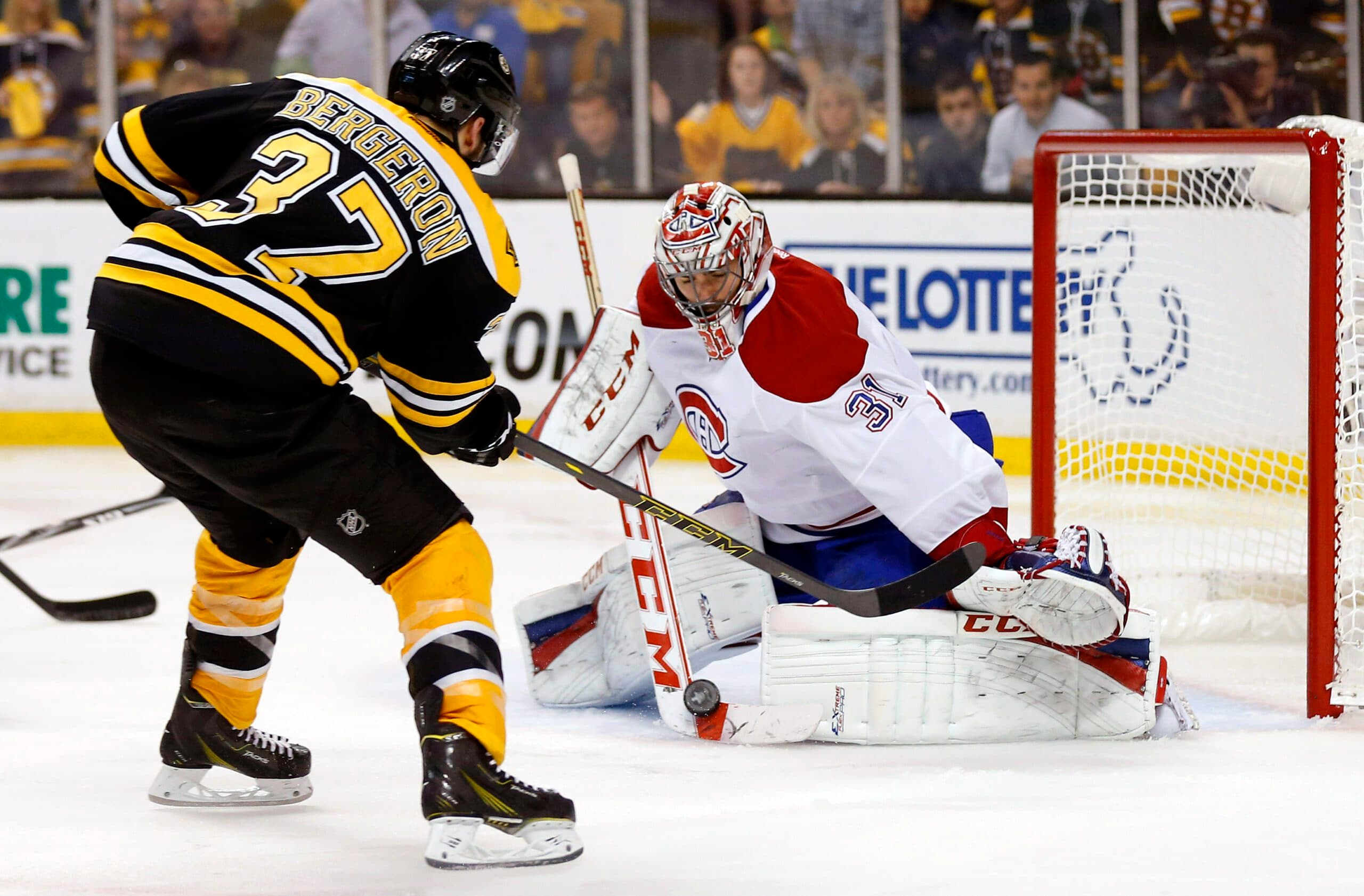
Six new members of the Hockey Hall of Fame were revealed on Monday afternoon as the Class of 2026.
One year ago, I called the Class of 2025 ‘perfect,’ a cohort of eight honorees that encompassed slam dunk legends and overdue omissions, offering a wonderful blend of all that is good about hockey. Without the same sensational first-ballot menu options, the Selection Committee had much tougher decisions to make this year.
As a longtime Hall of Fame enthusiast — with a Hall worthiness metric as a go-to public sniff test — this time of year is like Christmas in June. I’m always reluctant to scrutinize new members. Anyone so much as considered for induction had an immeasurable impact on the sport we love. Yet, it’s also critical that the right people are receiving these life-altering phone calls.
This is the day-after response to the Class of 2026. How did the Selection Committee do? What will the inductions tell us about the future of hockey immortality? And what might improve the process to offer a glimmer of transparency?
The Class of 2026
- MALE PLAYERS (maximum four):
- Patrice Bergeron (Year of Eligibility: 1st)
- Carey Price (2nd)
- Pekka Rinne (3rd)
- Keith Tkachuk (14th)
- FEMALE PLAYERS (maximum two):
- Cindy Curley (17th)
- BUILDER (maximum one):
- Brian Burke
- Brian Burke
👊🏻 Keith Tkachuk’s induction is not from having famous sons
By virtue of having two sons occupying a lot of NHL air space these days, Tkachuk, 54, has been in the news a lot. But any suggestion that his election was a token to a borderline candidate back in the public eye would be unequivocally false. Tkachuk was one of the headliners on my All-Snub team last week — easily in the qualified tier of PPS.
The power forward’s postseason record is a sight for sore eyes: 3-13 series record, 56 points in 89 games. But his scoring credentials were always Hall-worthy. Adjusted to era, Tkachuk’s sniping goes from great to exceptional: 584 goals (28th all-time); 10th all-time in goals per game (min. 1,000 games). He also had five goals in USA’s landmark 1996 World Cup title and Olympic Silver in 2002.
Future Considerations: Once Jeremy Roenick was elected in 2024, Tkachuk’s induction felt like a formality as the American duo profiled similarly. Could this help open the door for fellow overlooked Dead Puck Era snipers Peter Bondra and John LeClair?
🧩 Pekka Rinne’s selection is puzzling
Rinne was a good goaltender for most of 11 seasons, securing a Vezina Trophy at age 36, and retiring an icon in Nashville. He was a four-time Vezina finalist, an exclusive feat, albeit one voted on by the league’s GMs that vote for workload and wins. You’ll hear that Rinne is 14th all-time in save percentage (.917). But that’s more a function of when he played, not how. Tuukka Rask is fourth (.921). Ben Bishop is fifth (.921). Cory Schneider is 10th (.918). Yes, really.
If we filter to 200-plus games since 2007, Rinne is 75th out of 90 goalies in Goals Saved Above Expected (GSAx) per HockeyStats.com. That’s 22 goals below expected. Of these 90 goalies, only late-career Martin Brodeur had an easier workload than the Preds’ defense-first system. It’s notable that David Poile, who has served on the Selection Committee for 12 years, was Rinne’s GM spanning his entire career.
Future Considerations: Rinne’s selection makes induction open season for modern goalies. If you want a steady Vezina winner without a Cup as a starter, why not Ryan Miller? Or Tuukka Rask? Or John Vanbiesbrouck? Or Olaf Kolzig? Or Miikka Kiprusoff? Ron Hextall added a Smythe. Rinne was just 12th in PPS among eligible goalies in 2026.
🏆 Winning the Stanley Cup isn’t important anymore
Each of Tkachuk, Rinne, and Price retired without lifting the Stanley Cup. Back to 2020, that’s 14 of the last 23 NHL players inducted without a ring. This year’s trio joins: Joe Thornton (2025); Roenick, Shea Weber (2024); Henrik Lundqvist, Pierre Turgeon (2023); Daniel Alfredsson, Roberto Luongo, Daniel and Henrik Sedin (2022); Jarome Iginla, Doug Wilson (2020). Poile (2024) was elected as a Builder sans Stanley as well.
This is the natural evolution in a league with 32 teams, with many repeat champions and more than 1,000 players suiting up annually. As a percentage of the NHL’s population, increasingly fewer players are lucky enough to sip from Stan.
Future Considerations: Next year’s two biggest names eligible on the male player side: Ilya Kovalchuk and Joe Pavelski. Neither has a Cup ring, but both are solid candidates. A generation ago, this might have been a severe penalty. Not anymore.
🥅 The wrong Finnish goaltender was inducted
While the Hall of Fame’s player categories are separated by gender, Noora Räty’s exclusion was surprising. The five-time best goaltender at the IIHF World Championship never officially retired but was listed on the Hall’s site under 2026 eligible players. Unlike Price last year, there were no numbers games involved as the Committee only used one of two female player spots.
Future Considerations: Curley’s induction makes a total of 15 female players in the Hall of Fame. Curiously, a dozen are forwards versus just two defenders and one goaltender. Räty felt like an easy call to double the women’s goalie count.
👏🏻 Patrice Bergeron and Carey Price were special players
There’s rightfully no beef online with Bergeron or Price entering the Hall this November. While Bob Gainey might be the best defensive forward to past generations, Bergeron is a different animal. His 1,040 points are more than double Gainey’s — a two-way star for the modern game. The only first-ballot selection of 2026 retired with six Selke Trophies and 12 turns as a finalist. Both will be very difficult records to break.
As for Price, a quick glance and you’ll find this interesting comparison to Rinne:
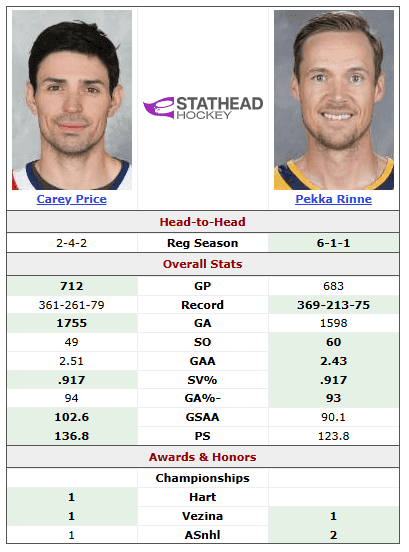
But there are major differences with proper context. For one, Price is fourth in GSAx (+112) over the last 20 years, the simplest public data point in goalie analytics. That’s a stunning 134 goals better than Rinne’s -22 GSAx. For the no-numbers crowd, Price was irrefutably the Best Goalie in The World for at least a four-year stretch, winning a Hart Trophy and playing in a state of nirvana in best-on-best international competition.
Future Considerations: Bergeron is one of one, a special archetype, so there is no ‘next Bergeron’ on a future ballot. As for the goalies, the Hall has shrewdly caught up its backload by electing six in five cycles. But the curious inductions of Rinne and Mike Vernon (2023) will inevitably lead to 30 years of hollow cases made for similar goalies.
🚀 Cindy Curley was a star before women had a global hockey platform
The Hall of Fame started inducting female players in 2010. Angela James, part of that first women’s duo with Cammi Granato, remained the eldest female player inducted. The Selection Committee had always looked forward, electing players post-James, if you will. These players had full careers in the IIHF World Championship era, which first became sanctioned in 1990 as a biennial event.
Curley, a 1980s collegiate star at Providence, dominated that 1990 Championship with 23 points in five games, still a record. By the fourth Worlds in 1997, Curley was 33 years old and out of hockey, never playing in an Olympics. It will be nice when one day, whether its Sarah Fillier or Caroline Harvey in 2043, female superstars won’t have partial careers from league instability, short schedules, or lack of funding.
Future Considerations: 2026 breaks a two-year streak using both female player slots. Did the Committee intentionally dial it back? Is Curley a one-off induction from her era? Or will more players who dominated before the 1998 Olympics get considered?
👔 Brian Burke’s unique 40-year NHL career deserves recognition
Burke, now 70, is best remembered by some for his sound bites (“truculence”), or tie-as-a-scarf look, or yes, challenging a rival GM to a barn fight. But Brian Burke was a fundamental character in building the modern NHL, both on and off the ice. His résumé reads likes the Forrest Gump of NHL history, and I mean that as a sincere compliment. Burke was permanently at the center of everything, an enduring, uber-confident, Ivy League-educated force that cares about hockey like few others.
Consider this hockey life: college/AHL player; player agent; executive with six NHL teams; NHL league executive; Stanley Cup GM (Anaheim, 2007); Silver medalist GM (USA, 2010 Olympics); TV analyst; WHL owner; PWHL executive.
Future Considerations: Executive inductions like Burke’s can feel random, absent public nominations or eligibility thresholds. But Burke’s life has been about bettering hockey. His voice in the advancement of the LGBTQ+ community, women’s hockey, and player rights — areas the NHL has long been a day late and a dollar short — forms a critical part of his legacy.
💪🏻 Rod Brind’Amour has a better shot next year
Many on social media were frustrated by not seeing Brind’Amour’s name today. But a couple of caveats are important. First, the Hall does treat on-ice and off-ice careers separately. So, by letter of the law, he’s probably not a Hall of Fame player or builder in isolation. But I do feel like the public pressure has dialed up to perhaps force the Hall to blur some lines. It’s more likely to happen as a player in the short-term, since eight years a head coach is a brief run for Builder consideration.
But what many may not realize is that the Selection Committee’s secret nominations are done in April. Brind’Amour was not a Cup-winning coach that captured national attention back then. So, he likely wasn’t nominated and therefore not on the docket. A nomination is more likely in 2027 given the added attention and momentum from the Cup win.
💡 A simple suggestion on the road to transparency
Lastly, I offer one simple suggestion for the Hall of Fame: Disclose the nominees.
Don’t say who nominated who, or even report the vote totals. Just let the public know who the candidates are once they are submitted in April. No one’s feelings will be hurt — it’s the toughest sport in the world, remember? Doing so will build interest. It allows for a public forum for discussion that can only help with decision-making. It’s free public research and input that can always be ignored if each individual Committee member so chooses. It’s free advertising. Fans will feel like some small part of the process.
The PWHA has transparency in award voting. But the sport’s highest honor remains in the shadows.
Past Hall of Fame Content by Paul Pidutti
- Projecting the 2026 Hall of Fame Class: Bergeron, Price, Räty and endless possibilities
- Who makes the Hockey Hall of Fame All-Snub Team?
- Hall of Fame tiers: Which NHL stars are destined for immortality?
- The 2025-26 season is critical for these 10 Hall of Fame cases
_____

Off The Roster is Toronto sports. Hosted by Cabbie Richards, Lindsay Dunn, and Dan Riccio, this is the go-to morning conversation for everything happening in the 6ix – Hockey, Baseball, Basketball and everything in between. From breakout performances and questionable trades to throwback jerseys, viral moments, and the stories fans are actually talking about – it’s smart, sharp, and never scripted. Live weekday mornings on the Nation Network YouTube channel and available wherever you stream podcasts, the show delivers real opinions, real chemistry, and real Toronto energy. Missed an episode? Catch up anytime. Off The Roster—The new sound of the 6ix.