Five storylines to watch as PWHL returns from Olympic break

Aaaaaaaaaaaaaaaaaaand we’re back!
Well, that was fun, wasn’t it? This year’s Olympic tournament was one to remember, with plenty of upsets and relentless underdogs fighting for the bronze medal in women’s hockey. But as usual, Canada and the United States faced off in the gold-medal game, and it was the U.S. who came away with it.
Now the action ramps up again in the PWHL as we enter the second half of the 2025-26 regular season. Can the Boston Fleet stay at the top of the standings? Will the Minnesota Frost three-peat? Can the Toronto Sceptres climb out of the hole they’ve dug?
We ask all that and more in our five storylines to watch in the second half.
Can Fleet continue first-half dominance?
One of the biggest surprises through the first half of the season was the sheer dominance of the Boston Fleet, a team that missed the playoffs last spring and who most pundits predicted would finish near the bottom of the standings. In fact, in our Daily Faceoff 2025-26 forecast, Tyler Kuehl and I had Boston in seventh and eighth, respectively, while Ben Steiner had them falling just short of a playoff spot.
But with an 8-2-2-2 record through 14 games, the Fleet enter the second half ranked first in the standings. Aerin Frankel led the U.S. to a gold medal in Italy, finishing with five shutouts and posting a jaw-dropping .980 save percentage (I still can’t believe I typed that sentence), and Boston fans hope she’ll carry that momentum back into the PWHL. A big reason for Frankel’s stats were how talented her blue line was, and Fleet defenders Megan Keller and Haley Winn were at the center of it. The talented pairing are averaging nearly 30 minutes a night, and there’s nothing to suggest that will slow down as we get closer to the Walter Cup Playoffs.
While Boston doesn’t have the scoring ability of a team like the Minnesota Frost, they can defend as well as anyone, which may come in handy when the checking gets tighter in the postseason. Speaking of the Frost…
Will the Frost three-peat?
There’s something eerie about how routine it’s become for Minnesota to just dominate. The league’s top-four point producers all wear purple, and six of their players just won Olympic gold for the U.S. team.
It’s impossible to overstate how good they are, scoring at least four goals in six of their 15 games so far. Kendall Coyne Schofield, already one of the best players in recent memory, is on pace to shatter the PWHL career highs she set last season and could become just the second player in league history to reach the 20-goal mark (so is New York Sirens’ forward Kristyna Kaltounkova, but that’s another story).
While there’s more competition at the top this season with the Fleet racking up wins and the Montreal Victoire right there in the standings, the amount of depth Minnesota possesses and the championship pedigree they carry both on the domestic and international stage should make them the easy favorites for the Walter Cup as we gear up for the second half.
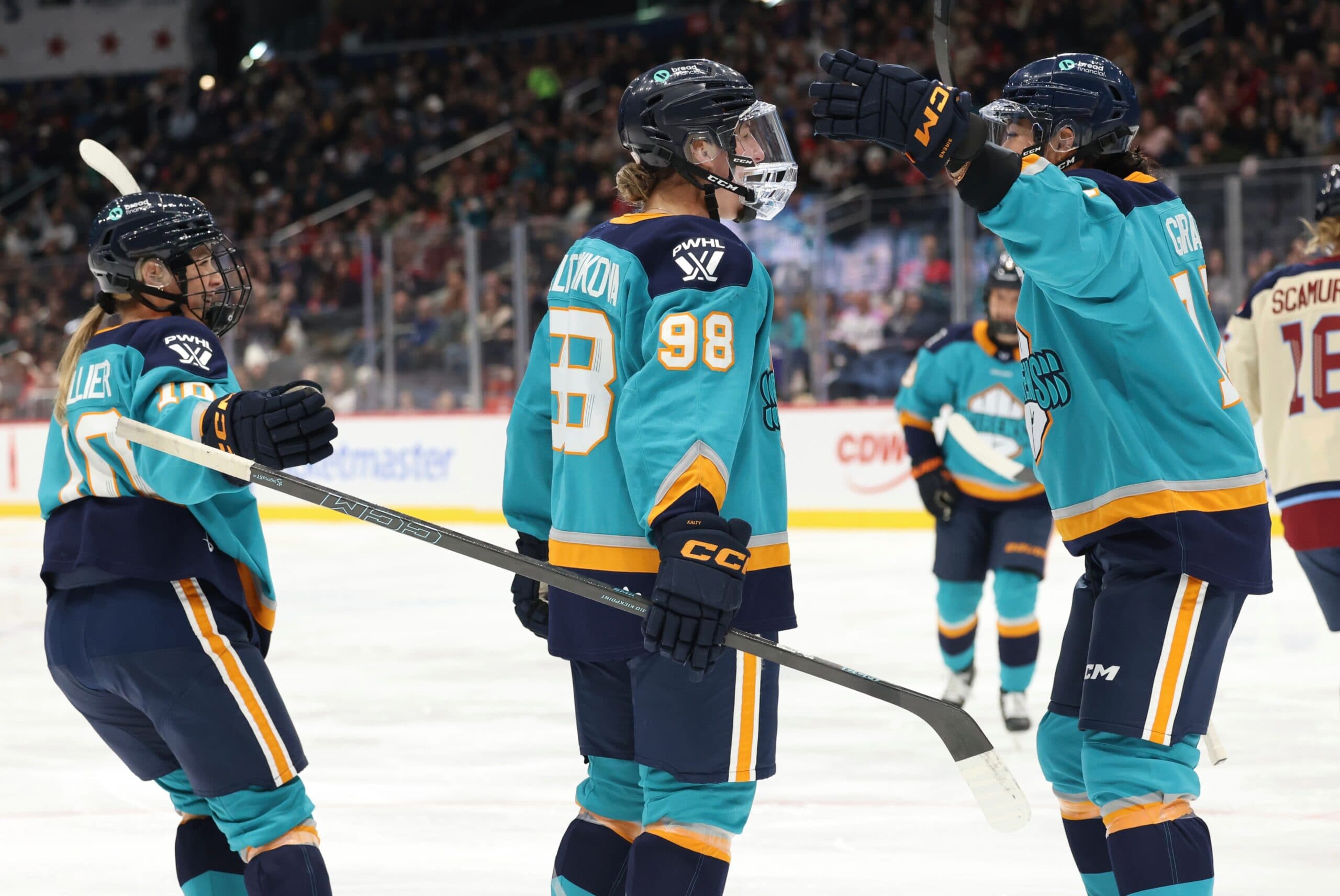
How good are the Sirens?
The Sirens have made a habit of finishing last in the standings through the first two years of their existence, resulting in them drafting No. 1 overall two years in a row and landing both Sarah Fillier and Kaltounkova. Fillier finished the 2024-25 season tied for the most points in the league with 29 and was named Rookie of the Year (and probably should have been a Billie Jean King MVP finalist).
While that first season was no doubt impressive, Kaltounkova’s 2025-26 rookie campaign has been spectacular, as the 23-year-old Czech forward has dominated the PWHL, scoring a league-leading 11 goals and dominating her opponents in terms of physicality, possession and net presence on a nightly basis. While she only scored once for Czechia at the Olympics, she’ll be motivated to continue her PWHL dominance upon return, and may end up finishing as the league’s top goal scorer.
As for how good they really are … there’s pieces on this team that are very talented, and we’ve seen pockets of that from Casey O’Brien, last spring’s No. 3 overall pick. While Fillier has just one goal this season, expect her to bounce back after an impressive Olympic run for Canada. Another thing to watch is the impressive goaltending we’ve seen from Kayle Osborne, who despite a 7-6-1-1 record through 15 games, still has a .921 SV% and three shutouts, and has provided New York enough stability to compete on a nightly basis.
New York currently holds onto the No. 4 spot in the standings, and while there’s teams right behind them in the playoff race, expect the Sirens to be right in the thick of it through the end of April.
Which expansion team will rise in the second half?
Both the Vancouver Goldeneyes and Seattle Torrent struggled to start the season, with the Goldeneyes unable to score more than two goals in all but four of their first 16 games, and the Torrent having just four wins in regulation.
But the return of a healthy and motivated Sarah Nurse saw Vancouver earn points in three of their last four games, and Seattle has shown life in their last handful of games, outshooting or staying within a few chances of their opponents and playing as close to a full 60 minutes as you can get (minus the final five minutes against the Charge on Jan. 28 … whadda ya gonna do?)
Emerance Maschmeyer looked strong for Canada at the Olympics (and probably should have gotten more starts in the medal round) and the Goldeneyes hope she can carry that momentum into the second half. As for the Torrent, two of their top forwards — Hannah Bilka and captain Hilary Knight — were major reasons for the U.S. earning their first Olympic gold medal since 2018. If they can bring some of that magic from Milan back to Seattle, they could string together some wins in the second half.
Sceptres need strong second half to salvage season
It’s been a difficult 2025-26 campaign for the Toronto Sceptres, coming out of the Olympic break with a 4-1-3-8 record and 17 points, seventh in the league standings. It’s even more frustrating when you add on that head coach Troy Ryan and general manager Gina Kingsbury were the architects behind the Canadian women’s team and their disappointing silver-medal finish in Italy. After combining all that, you’re left wondering: What’s next in Toronto?
The Sceptres have talented forwards in Daryl Watts and Jesse Compher, along with all-world defenders in Renata Fast and Ella Shelton. But what became clear in both the first half of the regular season and at the Olympics is that veteran forwards like Blayre Turnbull and Natalie Spooner can’t generate production at the same rate they used to.
If Ryan continues to deploy them as they have, Toronto will fall short of the playoffs for the first time in franchise history. The Sceptres need to decide if they’re going to prioritize youth in the second half, or if Kingsbury can make some moves ahead of the March 18 Trade Deadline. Otherwise, they might as well prioritize landing Caroline Harvey in next year’s draft.