2026 Stanley Cup Final: Hurricanes vs. Golden Knights series preview

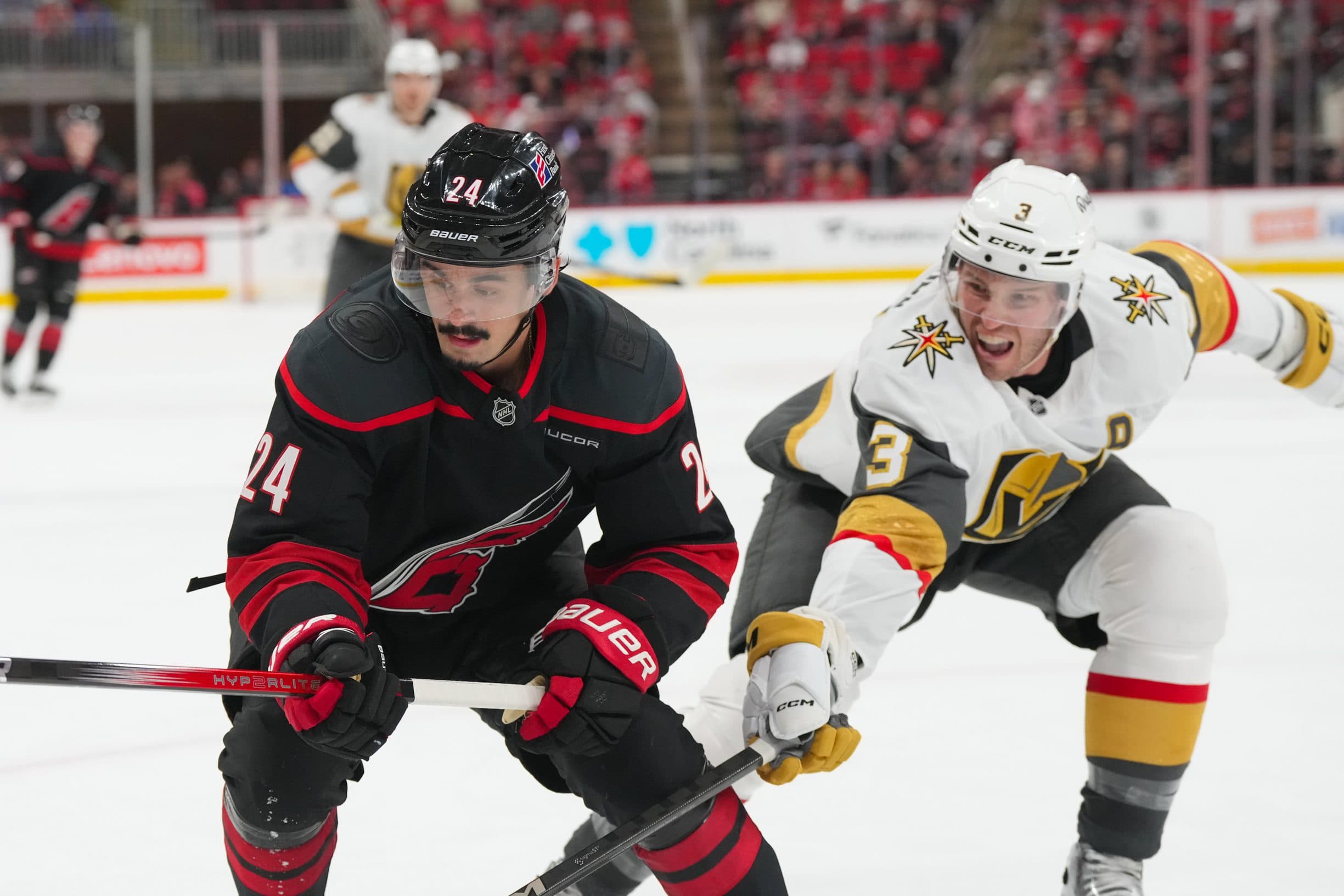
Carolina Hurricanes: 1st in Metropolitan Division, 113 points
Vegas Golden Knights: 1st in Pacific Division, 95 points
Schedule (ET)
| Date | Game | Time (ET) |
| Tuesday, June 2 | 1. Vegas at Carolina | 8:00 PM |
| Thursday, June 4 | 2. Vegas at Carolina | 8:00 PM |
| Saturday, June 6 | 3. Carolina at Vegas | 8:00 PM |
| Tuesday, June 9 | 4. Carolina at Vegas | 8:00 PM |
| *Thursday, June 11 | 5. Vegas at Carolina | 8:00 PM |
| *Sunday, June 14 | 6. Carolina at Vegas | 8:00 PM |
| *Wednesday, June 17 | 7. Vegas at Carolina | 8:00 PM |
The Skinny
It would be difficult for any Stanley Cup Final to achieve the level of animosity we saw in last year’s rematch between the Florida Panthers and the Edmonton Oilers, a heavyweight slugfest a year in the making between two teams that really did hate each other. But the lack of built-in rivalry doesn’t make this year’s meeting between two clubs with polar opposite philosophies any less exciting.
The Carolina Hurricanes have built themselves into a juggernaut in the near-decade since franchise hero Rod Brind’Amour returned to Raleigh as head coach. A forward-thinking front office that emphasizes good drafting and better contract values has continually found hidden gems like crafty winger Jackson Blake and blueline stopper Jalen Chatfield who fit seamlessly into Brind’Amour’s philosophy of doing the hard things well to make the fun things easy. No team has had as consistent a floor since Rod the Bod’s hiring.
The jury’s out on the Canes’ ceiling, but, given how thoroughly they pummeled the Montreal Canadiens to erase a long stretch of Eastern Conference Final woes, the Canes might not have one. And pummel Montreal they did, even if a flat-footed Game 1 performance after an NHL record 11-day rest between Rounds 2 and 3 and two subsequent trips to overtime imply a close battle; after the first period of the initial contest, Carolina out-chanced its young foes by a crushing 129-65 margin at 5-on-5. After one defeat in three series, can any team provide more than a speed bump in the path of the Hurricanes’ war machine?
The Vegas Golden Knights, champions of the West for the third time in their nascent existence, are no strangers to playing spoiler after sweeping the Presidents’ Trophy-winning Colorado Avalanche in an all-time shocker. While the Hurricanes have faith that their uber-patient approach will yield contending teams year after year, the Knights throw caution to the wind, hunting for every star that’s known to be on the trade block and some that aren’t.
Trades for skilled, cerebral winger Mitch Marner and big-minute blueliner Rasmus Andersson were McCrimmon’s big swings on the ice this season. Perhaps his boldest move, though, was to replace 2023 Stanley Cup winner Bruce Cassidy with feisty 700-game winner John Tortorella behind the bench with only eight games remaining in a dreary regular season. The Knights responded to the surly swagger of ‘Torts’ by charging to a 7-0-1 record, winning a weak division and seizing home ice for two rounds. They’ve only become more impressive since then.
Marner shredded the Anaheim Ducks (and his reputation as a playoff choker) to send the Golden Knights to round 3, where his defensive acumen and that of fellow two-way aces Jack Eichel and William Karlsson helped Vegas smother Nathan MacKinnon (0 points at 5-on-5) and Colorado’s brilliant attack. The Knights’ championship pedigree was especially apparent late in games, when they won the third-period battle by a combined score of 8-3.
So, what really is the “right” way to build a winner? With McCrimmon’s reckless abandon or his counterpart Eric Tulsky’s analytic approach? With Tortorella’s fire-breathing passion or Brind’Amour’s even-keeled dedication to the process? With a roster dedicated to stockpiling stars or one determined to erase any weak links? We’ll have our answer when one of these dominant clubs, neither of whom has faced elimination this spring, lifts the Stanley Cup.
Head to Head
Carolina: 0-2-0
Vegas: 2-0-0
It’s standard practice to preface this section with a reminder of how long ago the regular season was. This time, we really mean it: the Metropolitan and Pacific Division champs last played before Halloween.
It’s nonetheless notable that Vegas rolled by a combined score of 10-4, with three goals apiece from Eichel and high-volume sniper Pavel Dorofeyev. The Canes were burned by weak goaltending a few times in the regular season, but that excuse doesn’t get them off the hook for the one-sided nature of their early-season matchups with the Golden Knights; Vegas was one of just three teams to win the Corsi battle (unblocked shot attempts) against Carolina and dominated dangerous looks (66.51 xGF%) in a way we don’t often see against Brind’Amour-coached teams. A pair of anomalous, East-West results, or a precursor of the Final? We’ll soon find out.
Top Five Scorers
Carolina
Taylor Hall, 16 points
Jackson Blake, 15 points
Logan Stankoven, 12 points
Nikolaj Ehlers, 9 points
Seth Jarvis, 8 points
Vegas
Mitch Marner, 21 points
Jack Eichel, 18 points
Pavel Dorofeyev, 14 points
Ivan Barbashev, 12 points
Brett Howden, 12 points
Offense
Blake’s 53 regular-season points set the high-water mark for an efficient if not dominant second unit with Logan Stankoven and Taylor Hall during the regular season, but he and his linemates have kicked it into gear this spring; the trifecta combined for at least a goal per game in each of the first three rounds, with diminutive pivot Stankoven (9 G) emerging as a lethal triggerman and the fleetfooted Hall turning back the years to author the unlikeliest of Conn Smythe bids. All three players found the board during Friday’s shellacking of the worn-out Canadiens.
Though Hall, Stankoven, and Blake’s production in the early rounds was necessary to cover for an absence of firepower from top-line stars Seth Jarvis, Sebastian Aho, and Andrei Svechnikov, Carolina’s big guns showed signs of life in the Eastern Conference Final. The snakebitten Svechnikov (7 S%, down from 13.2% in his playoff career) will have been especially relieved to get off the mark with an overtime winner; his disruptive power game will be crucial against the burly defense of Vegas.
On the third line, Nikolaj Ehlers’s pair of goals in Game 2 was crucial to keeping Montreal from establishing itself in the Eastern Conference final. Veteran checkers Jordan Staal and Jordan Martinook will do whatever grunt work is required to ensure that Ehlers continues to get chances to create magic with the puck on his stick, even if they don’t do much scoring themselves. For Ehlers to really bust out, though, the Carolina power play, where he collected 29 regular-season points (T-20th most), will need to get up to speed after continuing to struggle (10% in ECF) against the oft-penalized Habs.
While Carolina relies on a committee approach helmed by the sizzling Stankoven unit, who have caved in the opposition to the tune of a 12-3 on-ice score and equally impressive 70.34% xGF%, Vegas’s attack is all about the big names. The biggest, Marner, Eichel, and captain Mark Stone, are split across three lines. Eichel’s unit, where the superstar playmaker (league-leading 16 A) centers Dorofeyev (10 G, T-most) and bludgeoning power forward Ivan Barbashev (league-leading 83 hits), is downright scary, a line that can go around you or, in Barbashev’s case, through you.
While Marner (league-leading 21 P) and breakout star Brett Howden (10 G, T-most) have filled up the scoresheet on the second unit, perhaps the greatest strength of the line they share with original Golden Knight ‘Wild Bill’ Karlsson is its pestering play off the puck, where Howden’s willingness to throw the body and his Selke-caliber linemates’ active sticks keep defenses constantly on edge.
That Tortorella has been able to bury Stone and hulking 24-goal center Tomas Hertl on what is nominally Vegas’ third line could be a championship-winning luxury. The duo combined for a quick-strike goal to complete a backbreaking comeback from 3-0 down in Game 3 against Colorado. The brawny veterans remain dangerous, even if a career of netfront battles has whittled away Hertl’s footspeed (Stone never had wheels to begin with). They’re also key cogs on a white-hot power play (25%), where Stone has scored four of his five goals and Hertl has six helpers.
Defense
Team-wide commitment to defense has long been the bread and butter of both these teams. For Carolina, that means frenetic forechecking at one end of the ice and loading up the blue line to stop zone entries at the other. Martinook, Staal, Jarvis, and a towering fourth line of Eric Robinson, Mark Jankowski, and former Golden Knight William Carrier are the keys to the first part of that strategy. Their hounding physicality is crucial to Brind’Amour’s ‘D,’ which is built around the premise that you can’t give up goals if you never lose the puck. When Carolina does lose it, it relies on Jaccob Slavin, whose reputation as a shutdown defender is unmatched, and his partner Chatfield to put out fires in the neutral zone.
No one on Carolina (or anywhere else) is quite as adept at gapping up and killing plays as Slavin, but it’s do-it-all lefty K’Andre Miller and burner Sean Walker who have most excelled at toting the rock up ice for the Hurricanes. Miller and Walker have been too quick and too calm to let their opponents sustain any offense, and their ability to keep the Canes moving in the right direction has helped them bury the opposition by a staggering 13-3 game score with an accompanying xGF% north of 66%.
With power-play ace Shayne Gostisbehere and physical rookie Alexander Nikishin mopping up the few leftover minutes with aplomb, Carolina has among the most balanced, effective bluelines in the sport with a smothering, aggressive penalty kill (92.5%) to match.
Vegas’ willingness to include high-motor stars Eichel and Marner on its own PK has led to similar results (87.5%). Their No.1 defensive pair has been less impressive. Andersson and his old Flames partner Noah Hanifin are logging major minutes (league-leading 261:35 as a pair at 5-on-5) but have had to soak up a ton of pressure (VGK has been outshot 97-129 and controls just 41.9% of xG during their minutes) against the litany of high-powered offenses they’ve faced so far. Neither man is sporting a minus rating (combined +7), but Carolina’s relentless pressure will provide a heck of a stress test for their bend-not-break mantra.
Puckmover Shea Theodore and throwback defensive defenseman Brayden McNabb’s results have been far more encouraging, with Vegas winning the scoring-chance battle 102-83 during their minutes. The pairing has been the Golden Knights’ bedrock for as long as they have been a franchise. Their willingness to block everything in sight will have quickly endeared them to Tortorella, whose defenses spend as much time sprawled out to cover shooting lanes as they do upright. Theodore, in particular, has been a stud, with eight even-strength points (3 G) to go along with his 46 blocked shots (most among remaining players).
Perhaps the most important aspect of the Golden Knights’ defense will come from the forward ranks. The stickwork of Stone, Marner, and Karlsson and the physicality of Barbashev, Howden, and veteran matchup center Nic Dowd’s fourth line will be crucial for disrupting the Hurricanes’ lightning-quick breakouts.
Goaltending
After two rounds of uninterrupted dominance, some traumatic flashbacks must have struck the fans in Raleigh when Frederik Andersen was hung out to dry for five tallies against Montreal in Game 1. Would the 37-year-old Andersen, who has always been brilliant through two rounds in Carolina only for the ravages of time to catch up with him later on, come crashing down to earth again?
The answer, to the relief of thousands of Carolinians, was no. The Andersen who totally extinguished the Senators and Flyers quickly returned to the Canes’ crease (.925 SV%, 5 GA in last 4 GP) as his teammates smothered the Canadiens’ high-flying attack in the subsequent contests. The Dane’s workload has been (almost) as light as possible given how few tries the Hurricanes have needed to dispatch their opponents, so his durability concerns can, for now, move to the back burner. Without a Hall-of-Famer like Igor Shesterkin, Andrei Vasilevskiy, or Sergei Bobrovsky as his opposite number, this may be the big, positionally sound shotstopper’s best chance to establish his own playoff legacy.
Carter Hart was at one time a very different goalie than Andersen, one who relied heavily on excellent skating and explosive athleticism to compensate for a tendency to lose his posts and give up a soft one. After a rocky, injury-riddled start to his return to the NHL after a two-year layoff stemming from the Hockey Canada sexual assault trial, Hart needed the faith of his old Flyers coach, Tortorella, to gain enough runway to establish himself in the Vegas net.
Hart, 27, has rebuilt his game with better angles and less need to make showstopping saves. That he still can make those 10-bell stops means he is a netminder who is living up to his immense potential at the best possible time for Vegas. After a so-so start to the postseason against the Utah Mammoth, Hart has been lights out (.939 SV% in last 10 GP).
Injuries
The Hurricanes had a clean bill of health by Game 3 against the Flyers and did not suffer any setbacks against the Canadiens. They should be one of the fresher finalists in recent memory given how few injuries they have suffered and the lengthy rests they enjoyed after the first two rounds.
With oft-injured veteran leaders Karlsson and Stone back healthy, Vegas’s only listed injury is to physical defenseman Jeremy Lauzon, who’s missed each of the past two rounds with an upper-body issue. Dylan Coghlan has been excellent as the Knights’ fifth defenseman in his stead, racking up an impressive +8 rating and using his huge shot to collect three points in eight games. If Lauzon does become available, his best bet to get back in the lineup would be to partner the right-shot Coghlan rather than replace him.
Intangibles
The Hurricanes emphatically exorcized their ECF demons, quieting at least some questions of whether a team that does things so unconventionally on and off the ice can win the big one. There’s no time to take a breath now, though. Even the staunchest Carolina homer could acknowledge that the Eastern Conference bracket took shape very favorably for the Canes. It will never get this good again, so there is plenty of pressure for the Hurricanes to finish the job and silence their detractors once and for all before the Tampa Bay Lightning, the Florida Panthers, or some other sleeping giant corrects course.
The Golden Knights will battle external pressures of their own. Their capsheet is a mess, and, with RFA Dorofeyev and UFA Andersson unsigned, they will surely cut bait on certain key players in the offseason. Off-ice drama like Tortorella’s stonewalling of the media and subsequent punishment and the team’s refusal to allow the deposed Cassidy to pursue work elsewhere has drawn the ire of the hockey world.
For any other team, those factors would be unnecessary distractions ahead of a momentous clash. For McCrimmon’s Knights, every week is like this. Vegas’s players knew how cutthroat their employers were and all the bad press their ruthless ways garnered when they signed up. They did it anyway for opportunities like this one. It’s tough to rattle a group that already knows everyone is against them, and tougher still to rattle a core of leaders that lifted the Cup just three years ago.
X-Factor
After a sloppy performance in the opener against Montreal saw his men get burned by the high-powered trio of Canadiens’ stars Cole Caufield, Nick Suzuki, and Juraj Slafkovsky for three even-strength goals, Brind’Amour went back to the time-tested method of tasking his captain, Staal, with making the other team’s best forward line miserable. Suzuki’s unit did not tally at 5-on-5 again, as Staal held the Habs to a whopping .45 expected goals in the 29 minutes he shared the ice with their captain.
Tortorella has taken a similar approach with McNabb and Theodore, siccing them first on Clayton Keller and Utah’s top line, against whom they acquitted themselves well, and later sending them after MacKinnon, whose unit caved them in territorially but could not score.
A decision awaits both coaches. For Brind’Amour, it’s whether Staal is best off trying to contain Eichel on the top line or attempting to disrupt the dangerous chemistry Marner and Howden have developed. For Tortorella, it’s whether his top pair should cover Carolina’s top unit, centered by Aho and due for a breakout, or its best, the blistering Stankoven line. The game within the game is on.
Series Prediction
It’d be incredibly uncharitable to say the Hurricanes have all the same issues as in years past and are merely waiting for the right opponent to expose them. This is an excellent team that deserves credit for its historically dominant run to the Final, and it certainly has no plans of rolling over now that it’s there.
That doesn’t change the fact that Vegas’s army of superstar two-way forwards is set up excellently to keep Carolina from breaking out cleanly and flustering the Hurricanes, who have never been great at adjusting when their rigid system meets its match. The Golden Knights leave another No. 1 seed picking up the pieces en route to winning their second Stanley Cup.
Prediction: Vegas in six games.
_____
POST SPONSORED BY bet365
_____
Recently by Anthony Trudeau
- 2026 Stanley Cup Playoffs: Hurricanes vs. Canadiens series preview
- Misfit goalies, unsung heroes, and the biggest storylines to watch in Round 3 of the Stanley Cup Playoffs
- 2026 Stanley Cup Playoffs: Hurricanes vs. Canadiens series preview
- 2026 Stanley Cup Playoffs: Sabres vs. Canadiens series preview