2026 NHL Trade Deadline preview: Central Division

We are just more than a week away from the NHL Trade Deadline, which means it’s time for teams to figure out what their plans are for the rest of the season and decide which players they want to bring in or sell off before 3:00 p.m. ET March 6.
The standings have been airtight at various points of the season, so figuring out which teams should commit to buying and selling has never been harder. In fact, we only have a few confirmed sellers on the market at this point in time.
But have no fear, Daily Faceoff is here to clear the air… somewhat. This week, we’ll provide Trade Deadline previews for every team, division by division, and break down what their plans could be. For the buyers, we’ll look at their positions of need, the budget and assets they have to work with to acquire players and assess the best targets for them based on those factors. For the sellers, we’ll look at which players they could potentially move on from.
One important thing to clarify here: do not take these previews as gospel. While their status is determined based on the outlook of each team this season and the conversations surrounding them, the positions of need and best targets are determined analytically, with some input from reports regarding their wants and needs. These previews are more about what they SHOULD do, not what they WILL do, although it is still based in reality.
Also, all targets are determined based on the cap space available to the buying teams as well as any they may gain from potential assets they can move out. It does not account for the potential of salary retention or the players not on the market who could be moved to make a deal go through.
Today, we look at the Central Division, which contains some of the most committed buyers on the market but also several sellers.
Chicago Blackhawks
Deadline Status: Seller.
Potential Assets: Jason Dickinson (C), Ilya Mikheyev (LW), Connor Murphy (D), Nick Foligno (LW), Matt Grzelcyk (D), Sam Lafferty (RW).
The Blackhawks hung around the playoff race this season longer than they usually have, but those playoff hopes are slim entering the deadline. They’re far from a position of continuing to blow up the team and sell everything for assets, but they should be shopping their pending UFAs to see what the market looks like for them. While none of their options is having a career year which could net significant picks and prospects, there’s still some value to be found in an elite penalty killer like Mikheyev, a high-end defensive defenseman like Murphy or a veteran like Foligno.
Colorado Avalanche
Deadline Status: Buyer.
Positions of Need: Power play specialist.
Projected Budget: $4,932,500.
Potential Assets: 2027 and 2028 first-round picks, two 2027 seconds, 2028 third, weak prospect pool.
Best Target(s): Ryan O’Reilly (C), Jared McCann (LW).
The Avalanche have looked unbeatable for most of the season and, even with a recent stretch of play which has made them look human, they should be buying where they can at the deadline. They’ve already made a move since the trade freeze ended, shipping out Samuel Girard for Brett Kulak on Tuesday while also clearing more than $2 million in cap space. Colorado has a deep enough roster to the point where they don’t have to make a move, but their power play has been so far off the level the rest of their game is at, it feels like something they need to address.
The biggest issue there for the Avs is there aren’t a lot of great options for the budget they have to work with. McCann and O’Reilly are probably Colorado’s best bets for a strong power play option who are good enough to actually drive success. Colorado could also gamble on a younger option with upside like Bobby McMann, Nick Robertson or Shane Wright, or try to retain salary and move money to make a more expensive fit like Jake DeBrusk or Vincent Trocheck. Given the talent the Avalanche have on their team, this shouldn’t be as big of an issue as it is, but they will need to get creative to address it.
Dallas Stars
Deadline Status: Buyer.
Positions of Need: Top-nine forward, top-four defenseman.
Projected Budget: $-1,646,666 ($8,203,334 with Tyler Seguin on LTIR).
Potential Assets: 2027 first-round pick, 2026 & 2027 seconds, 2026 & 2028 thirds, shallow prospect pool.
Best Target(s): Blake Coleman (C), Robert Thomas (C), Mario Ferraro (D), Jordan Kyrou (RW), Mackenzie Weegar (D), Zach Whitecloud (D).
The Avalanche are the team to beat in the Central Division, with the Stars and Wild scrapping below them for a chance to close the gap. The Wild made their big move earlier this season acquiring Quinn Hughes, and they may have another trick up their sleeve to acquire another center. What will the Stars do in response to keep up in this arms race? While a long-term injury is never a good thing, especially for a player so often injured as Seguin, freeing up his $9.85 million cap hit gives Dallas plenty of room to peruse the trade market.
The obvious target for the Stars is a replacement for Seguin in the lineup, and with the money available, they can take on anyone not named Elias Pettersson. Whether Dallas aims for high-end options like Nazem Kadri, Kyrou or Thomas or cheaper options like Coleman, McMann or Matias Maccelli, there’s room to bring that player in. But the Stars shouldn’t spend their cap space all in one place, as they still have a need for another top-four defenseman. Thomas Harley has played poorly all year but looked great with Canada at the Olympics. It’s amazing what happens when you aren’t strapped to Ilya Lyubushkin. The only unaffordable option is Dougie Hamilton, so Dallas will also have plenty of options to go after.
Minnesota Wild
Deadline Status: Buyer.
Positions of Need: Top-two center, depth, penalty killers.
Projected Budget: $3,020,834 ($9,220,834 if they trade Hartman and Wallstedt).
Potential Assets: 2027 & 2028 first-round picks, 2028 second, all picks after that, good prospect pool, Ryan Hartman (C), Jesper Wallstedt (G).
Best Target(s): Ilya Mikheyev (LW), Ryan O’Reilly (C), Luke Schenn (D), Robert Thomas (C), Jared McCann (LW), Braden Schneider (D).
As previously mentioned, the Wild have already made a big splash this season, swinging a deal for superstar defenseman Quinn Hughes and completely changing the outlook of their team. Now, the need is clear: another top-two center. Joel Eriksson Ek is great, but Hartman is playing above his weight while Danila Yurov isn’t ready for the role yet. Beyond that, Minnesota could use some more depth in the fringes of their lineup, particularly ones who can kill penalties (which Bill Guerin should know all about prioritizing).
The Wild don’t have a ton of cap space right now to address all their needs, but if they can move off of Hartman’s contract, and if they decide to use Wallstedt as an asset, Minnesota will have the room to make it work. Whether they want to solve the center problem with the best option on the market in Thomas, save a bit of money with someone like McCann (who mostly plays left wing these days) or get a penalty killer in O’Reilly or Trocheck who can also play in top-six minutes, the market isn’t exactly barren. If Minnesota can find the right fit, we may finally see a true contender in the State of Hockey for the first time in their franchise history.
Nashville Predators
Deadline Status: Cautious sellers.
Potential Assets: Michael Bunting (LW), Jonathan Marchessault (RW), Ryan O’Reilly (C), Steven Stamkos (C), Erik Haula (C), Nick Perbix (D).
The Predators’ deadline approach is tricky to evaluate. They’ve been labelled sellers for months, but they’ve also been one of the hotter teams in the league, enough to find themselves in the playoff hunt again. They should be buyers, but with how bad some of their contracts have looked at times, should they not take the opportunity to move on from them while their value is high again? Stamkos is a great example, as his 27 goals in the last 43 games have put him in a spot where Nashville could actually recoup some value for him.
Ultimately, the Predators should approach this deadline as “cautious sellers.” Keep the phone lines open, see what teams are offering for certain players, and if one comes along with an offer Nashville can’t refuse, pull the trigger. But if the fish aren’t biting, then just keep the team as is and push for a playoff spot. The Predators should try to move on from the pricier deals like Marchessault’s and Stamkos’, but moving on from replaceable UFAs like Bunting or Haula should also be considered.
St. Louis Blues
Deadline Status: Seller.
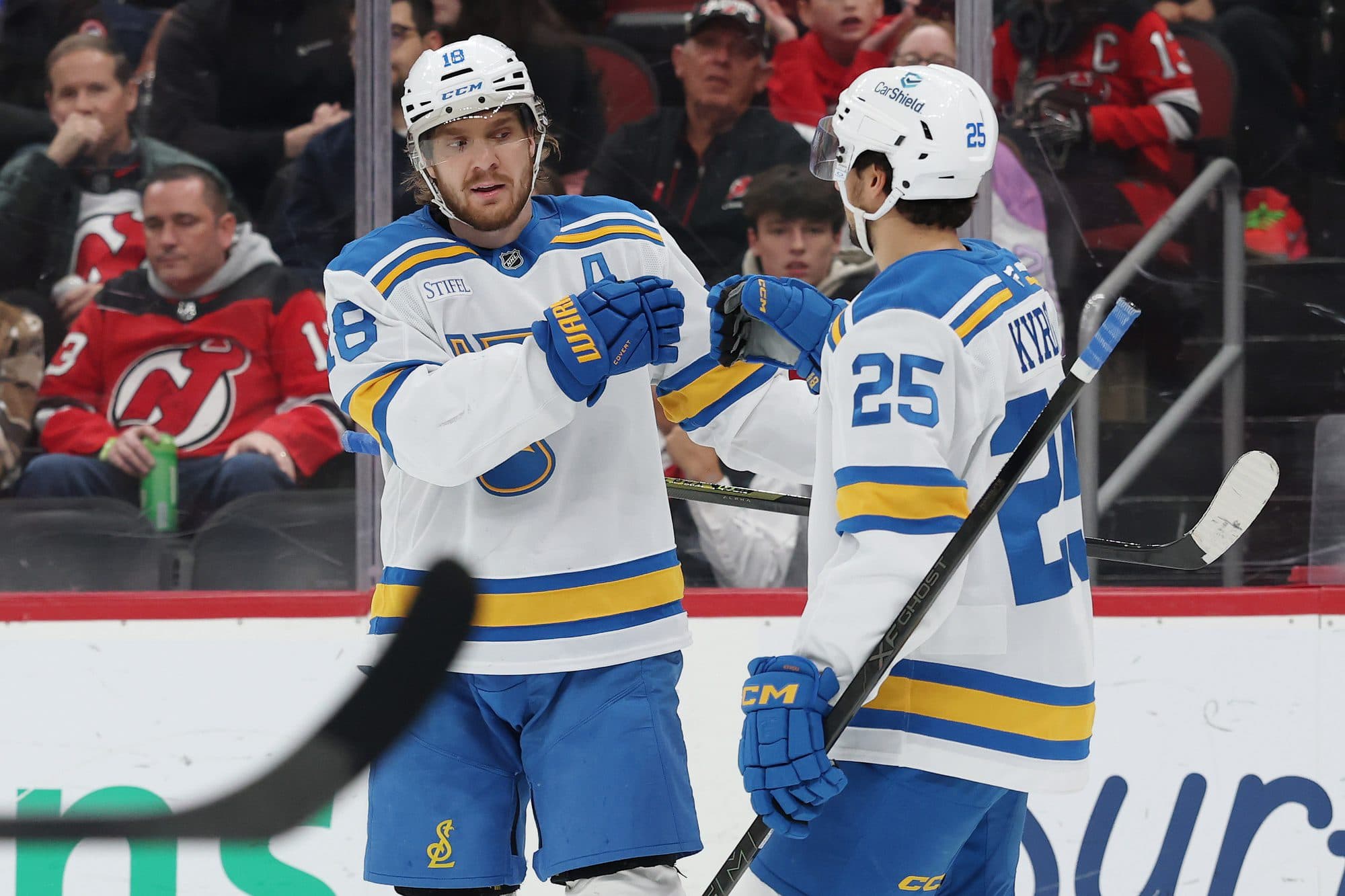
Potential Assets: Jordan Binnington (G), Justin Faulk (D), Mathieu Joseph (RW), Brayden Schenn (C), Oskar Sundqvist (C), Robert Thomas (C), Jordan Kyrou (RW).
With the second-worst record in the league, there’s almost no chance the Blues make the playoffs, so selling is the clear option here. The real question is how much do they want to sell? Moving on from pending UFAs (Joseph, Sundqvist), and veterans who won’t be here once the retool ends (Binnington, Faulk, Schenn) makes sense. But moving on from Kyrou and Thomas is where St. Louis needs to do some self-reflection and decide if they’re just retooling or committing to a full rebuild.
If St. Louis is leaning towards a rebuild, or they think they have the future assets in place to replace Kyrou and Thomas effectively, sell if the offer is right. But if the Blues want the retool to be quick, Kyrou and Thomas might be players they want to keep around. It all depends on what Doug Armstrong and Alex Steen have planned for the future or what other teams have in mind to get St. Louis’ attention.
Utah Mammoth
Deadline Status: Long-term buyer.
Positions of Need: Top-nine forward, depth, power play specialists, penalty killers.
Projected Budget: $6,532,643.
Potential Assets: All top picks, plus two extra 2026 seconds and a 2026 & 2027 third, strong but not deep prospect pool.
Best Target(s): Oliver Ekman-Larsson (D), Conor Garland (RW), Alex Laferriere (LW), Jared McCann (C), Mackenzie Weegar (D).
The Mammoth are in such a good spot right now. For my money, they’re a lot closer to Stanley Cup contention this season than many think, especially if they secure the first Wildcard spot in the Western Conference and can start off a playoff run against the Pacific Division. They also have a deep team which doesn’t have any significant flaws on the roster, and they have plenty of picks and prospects to deal if they do want to make some upgrades.
Considering the Mammoth are only at the start of their contention window, a long-term focus would also be smart. But as far as immediate upgrades go, adding another forward to push Lawson Crouse down the lineup would be the best option for Utah, and their special teams could use some improvement. Whether they look to address those special teams issues at forward (Garland, Laferriere, McCann) or on defense (Ekman-Larsson, Weegar), there are some options within their budget. Forward might be the smart route to go though, as Utah can kill two birds with one stone and also get the top-nine forward. The nice part about being a young team is those players may also come through their prospect pool at some point, so patience is another option here.
Winnipeg Jets
Deadline Status: Short-term seller.
Potential Assets: Brad Lambert (C), Gustav Nyquist (RW), Luke Schenn (D), Logan Stanley (D), Jonathan Toews (C).
The Jets are certainly not where they expected to be coming off last season’s Presidents’ Trophy win, as injuries to key players and horrendous on-ice play has led them to lottery contention. Considering the age of their core players, it’s tough to see how they ever fully climb back to Cup contention with this group, but for now, they’ll continue to be in win-now mode. Just not this season. Winnipeg’s UFA pool mostly consists of veterans well past their primes, so the lack of a long-term outlook for most of these players should make it easy for the Jets to move on from them.
The only younger option on is Stanley, but he should be sold for different reasons. The defenseman is having a career year, and the Jets will never get a better return for him than they will now. He’s not vital to their blueline, and the picks/prospects they get in return could be of some long-term value to draft and develop players or to flip for immediate help.
PRESENTED BY THE DAILY FACEOFF TRADE DEADLINE SPECIAL

The 2026 Trade Deadline Special is going LIVE March 6th. Join the Daily Faceoff crew on Friday, March 6th, from 11 AM-3:30 PM ET for wall-to-wall coverage of every single move as it happens. Get instant reaction, expert analysis, and exclusive insights from special guests throughout the day. Tune in LIVE on the Daily Faceoff YouTube channel and don’t miss a second of deadline day chaos.
Recently by Scott Maxwell
- 2026 NHL Trade Deadline preview: Atlantic Division
- Olympic hockey still misses Russia, even though its exclusion remains justified
- Sweden’s Olympic fate may be decided by their mismanagement of players
- Finland is in tough without Barkov, but it can’t be an excuse for a poor performance
- Casual hockey fan’s guide to the top 10 Olympic men’s hockey players