2026 NHL Draft: Top 30 players remaining heading into Day 2

BUFFALO – The first day of the 2026 NHL Draft is complete – and boy, it was slow.
A total of 32 NHL players heard their names called on Friday night in Buffalo, including 25 in Daily Faceoff’s top 32 draft rankings.
With Day 1 over, here’s a look at the best players still on the board, using the rankings from DFO’s final 120:
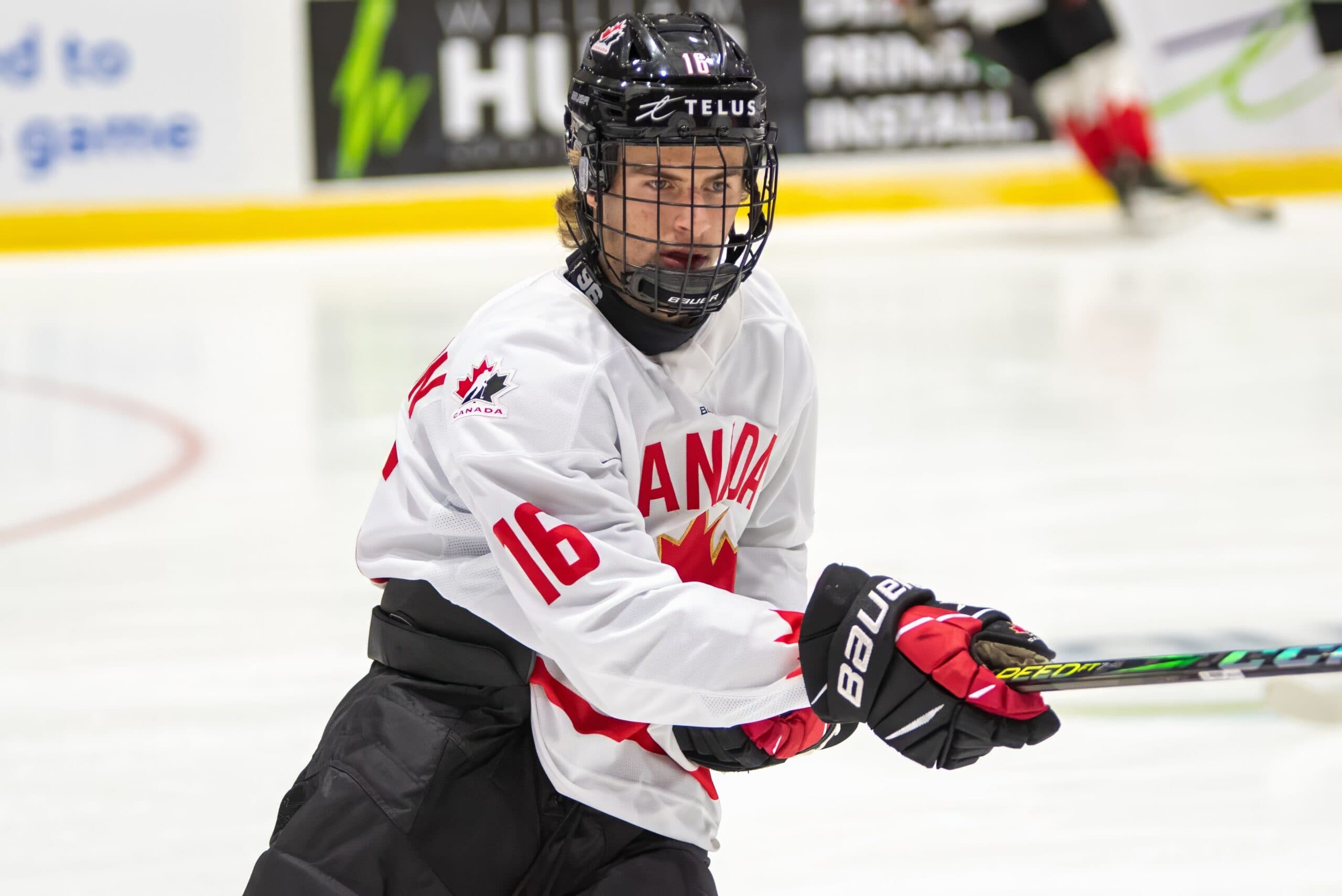
22. Mathis Preston, RW (Vancouver Giants, WHL)
Once viewed as a potential top-10 pick, Preston left scouts wanting more during the season. They fell in love again at the U-18s, where he was one of Canada’s top players every single game. He’s an undeniably talented player who could become a top-six threat down the line. Preston has a remarkable shot and often wastes no time firing in the back of the net from the slot. It’s NHL-ready right now – something very few 17/18-year-olds can claim. Preston consistently finds open space, but he can also create those opportunities with his skating. He’s fast, can start and stop on a dime and can often skate himself out of dangerous situations.
24. Markus Ruck, C (Medicine Hat Tigers, WHL)
Markus’ twin, Liam, was drafted by Pittsburgh thanks to his goal-scoring abilities. But Markus is a special playmaker – he works as hard as anyone you’ll find in junior hockey. He loves to do the dirty work to make plays happen, no matter who he’s looking for on the ice. Ruck has obvious chemistry with his brother but can also dazzle on his own. My biggest concern was how unimpactful he looked during the playoffs – he kept getting pushed around far too much for my liking, and he doesn’t have the top-end skating to burn guys.
25. Xavier Villeneuve, LHD (Blainville-Boisbriand Armada, QMJHL)
Just because Villeneuve will go lower due to his smaller 5-foot-11 frame doesn’t mean I dislike him. Villeneuve was one of the best defensemen at the 2025 U-18 World Championship, helping Canada win gold. He had 62 points last season in the Q and would have surpassed that this year if he hadn’t missed about 25 games due to injury. Villeneuve can drive the play from the point and is as good as anyone in this draft class on the man advantage. I loved him at the CHL USA Prospects Challenge in particular – it felt like he was playing with a boatload of confidence. Will he defend well enough at the next level? Lin is more rounded, as a smaller defender, and I know scouts are concerned about Villeneuve’s potential in his zone. But… man, he’s fun to watch.
26. Egor Shilov, C (Victoriaville Tigres, QMJHL)
Shilov was one of the QMJHL’s most proficient offensive generators this year. The Tigres finished second last in the West and were ultimately bounced in four games in the playoffs. But Shilov finished the season with 32 goals and 82 points while showing instant chemistry with fellow Russian draft prospect Alexei Vlasov (80 points). Nobody else came close to even reaching 50, so Shilov was exceptionally important. He dominates the puck game, and he’s as skilled as you’ll find in the CHL. There’s no lack of talent here – but he can get caught watching the puck far too often and simply lacks the pace to thrive at the next level. That’ll be a big sticking point for scouts this year.
29. Casey Mutryn, RW (USNTDP)
Mutryn was one of my favorite American-born prospects this season. I like his physicality and work ethic and think that could allow him to be a decent third-liner. He’s smart, battles hard and has the ability to find chemistry with just about everyone. Although I don’t think his ceiling is that high, I feel confident Mutryn will be an NHLer. Most likely as a third- or fourth-liner who can grind it out and win most of his battles, but he’ll be a good one at that. He’s the type of guy every team wants come playoff time. While the ceiling isn’t high, the floor definitely is.
31. Brooks Rogowski, C (Oshawa Generals, OHL)
I’ve really liked my viewings of Rogowski, one of the best “big dudes” in the draft this year. At 6-foot-7, he’s obviously got size. But I also appreciated how well he hustled at both ends, chasing pucks and breaking up plays. He’s a smart forward who uses his big frame to win battles, but he also has a good shot and isn’t afraid to launch it from anywhere in an attempt to surprise the goaltender. Rogowski won’t be a big-time offensive threat but, as a supporting player, he has a ton of tools to make himself useful. Players who move as well with his size profile are coveted around the NHL.
32. Nikita Shcherbakov, LHD (Toros Neftekamsk, VHL)
There’s bit a bit of variance in Shcherbakov’s ranking publicly. I think he’ll either go late first or early second. The 6-foot-5 defender started the year in the KHL but has primarily played in the second-tier Russian league since the end of September. He’s strong, but he moves well – which is important for a guy his size. Shcherbakov has definitely grown on me a bit over the past few months, especially after watching him play well against his own age group. His game lacks high-end thinking, and he’ll likely slot in as a third-pairing defender. But he should be a reliable one at that. If he can add some extra offensive juice, I’d be more excited about him, but not every defender needs to be a wizard with the puck – especially when they’re defensively sound like Shcherbakov.
34. Adam Goljer, RHD (Trencin, Slovakia)
Goljer is raw, but that’s fine because there’s some solid upside. At 6-foot-3, he has size. He also plays with a ton of confidence, allowing him to consistently attack and defend strongly against older competition in the top Slovak league. Playing close to 20 minutes a night against men is no small feat for a 17-year-old, no matter the league. I like his gap control, his proficiency as a passer, and the pure power he plays with. I think he can get a bit antsy and make mistakes with his defensive reads under pressure, and his foot speed needs work. Both were exposed at the U-18s, but he’d often make up for it by dominating at both ends of the ice when he was at full force. But there’s raw talent there.
35. Simas Ignatavicius, RW (Geneve-Servette, NL)
We don’t typically see many prospects coming out of the top league in Switzerland. But the Lithuanian-born winger has drawn a ton of attention from scouts this year. He’s a 6-foot-3 forward having a solid season in Switzerland’s top league and has been downright dominant internationally. Ignatavicius is so versatile, finding so many different ways to impact the play both with and without the puck. He’s good defensively, has a great shot release, has obvious muscle and is incredibly skilled, too. Is Ignatavicius notable because he’s a big dude playing pro hockey? Or is there something truly here? That’s the question.
37. William Håkansson, LHD (Lulea, SHL)
Håkansson didn’t get a ton of ice time at the World Juniors, but we saw exactly what he’s capable of – raw defensive energy. There’s absolutely no flash to his game. Instead, he uses his big 6-foot-4, 207-pound frame to flatten opponents while being a pain in the rear end defensively. He’s quite mobile for his frame, too. Håkansson’s lack of offensive awareness won’t help his draft stock, but I absolutely could see him becoming a solid shutdown defender in the NHL. I like his frame, but if he could learn to use that more effectively and consistently, he’d make it impossible to leave him off an NHL roster.
38. Ryder Cali, C (North Bay Battalion, OHL)
I liked Cali in Jr. A last year – putting up more than 50 points as a 16-year-old in the OJHL is no small feat, even if the competition has diminished over time. But I was hoping to see more from him offensively in North Bay this year. Cali is built like a tank, though, and he puts a ton of power into every shift, with and without the puck. I can see him becoming a solid bottom-six forward if he can improve his playmaking. I considered ranking him lower, but I know some scouts really like him as a long-term project. With an NHL frame and solid hockey sense, there’s something here.
41. Jakub Vaněček, LHD (Tri-City Americans, WHL)
Vaněček has hovered around this mark for most of the season for me. I like how he’s always moving thanks to a non-stop motor and good overall footwork. He beats opponents by taking their space away and forcing them to the perimeter. Vaněček isn’t too shabby with the puck, although his decision-making needs a bit of work. I like his two-way game and I think he’ll force his way into a bottom-pairing situation one day. Vaněček is more of a long-term project player, but I still think he’s going to be a decent, versatile blueliner.
42. Adam Valentini, C (University of Michigan, NCAA)
From a pure skill perspective, Valentini is tremendous. Valentini is so energetic that he can chase the whole game without losing much pace. He can be a bit of a pain in the ass around the net because you can almost never keep up with his footwork. I like how his game has progressed in college, but he needs to add more muscle. With the puck, though, Valentini brings so much to the table. I’m not worried about his ability to create damage with the puck on his stick. But is he versatile enough? Is he too small? Always bet high on skill.
43. Niklas Aaram-Olsen, LW (Orebro, Sweden U-20)
Aaram-Olsen always shines internationally, typically playing a big role for Norway across all age groups. He’s a pure goal scorer, and he often can be found dominating his own age group. I love him on the power play, where it feels like he does a good job of cycling the puck and then firing quick one-timers. Against men, though. Aaram-Olsen has left a lot to be desired, and scouts have knocked him for having a lack of high-end tools outside of his shot. If he can play with more pace and learn to dominate play through the middle, he could be a good snag. I like the upside, even if some scouts aren’t as convinced.
44. Tobias Trejbal, G (Youngstown Phantoms, USHL)
Trejbal is the near-consensus top goalie in this draft class. His numbers with the Phantoms have been excellent, and being 6-foot-4 doesn’t hurt, either. The stats don’t lie: the busier Trejbal is, the better he plays. His ability to stay calm and composed under pressure is impressive, and he has quick hands and quicker feet. Trejbal’s athleticism has gotten scouts talking, and his big frame makes him an easy project for a team willing to be patient with the UMass commit. I’ve been impressed with just about all of my viewings of his this year and feel confident he’ll be one of the first goalies off the board.
45. Dmitri Borichev, G (Lokomotiv, MHL)
Some consider Borchev to be the best goalie in the draft class. Teams love his 6-foot-3 frame and just how quick he is. He’s positionally sound, using his size to do the hard work. But he has quick enough hands and reflexes to get where he needs to be to make top stops. Notably, he played better when he faced more shots this year, and scouts love it. It’s always hard to judge MHL talent because the league can be a crapshoot at times, but many people love his technical abilities and play reads. Could Borchev go in the first round? Some scouts think so. I’m not convinced it’s wise to use a first-rounder on any goalie in this draft, though.
46. Chase Harrington, LW (Spokane Chiefs, WHL)
Harrington has been a bubble prospect for me for a while, but I do appreciate his game. He’s built like a rocket launcher – he wants to send you flying any time he can. Harrington is no slouch offensively, either, putting up 56 points in 61 games on a Spokane team that often struggled to generate consistent scoring chances. He’s very dangerous around the net, and he’s flashy, too. I think there’s a clear path for him as an energy forward in the NHL who could step up into a bigger role if needed.
47. Samu Alalauri, RHD (Pelicans, Finland U-20)
Alalauri played the most of any Finns at the U-18s, and it was easy to understand why. He had three points against the Slovaks and averaged more than 22 minutes a night (the 10:41 against Canada was an outlier). It felt like he played with significant confidence and thrived in the D zone, rarely making a bad pass. Alalauri still needs to improve his ability to make plays in transition because he can be a bit too timid at times. But I like his skating, puck work and general defensive play.
48. Rūdolfs Bērzkalns, C (Muskegon Lumberjacks, USHL)
Bērzkalns helped get Muskegon to the USHL playoffs, taking on an even more important role once Tynan Lawrence left for college. The Boston College commit is a big, 6-foot-4 center who played some good two-way hockey at the World Juniors. He isn’t flashy and likely won’t be a big-time producer in the NHL, but he plays with a ton of muscle and took over shifts in ways very few bigger forwards were capable of this year in the USHL. I like him as a fourth-line forward – I think he understands the defensive game well enough to be a solid player. He just… scares opponents in a way very few guys can at this age. I love him.
49. Ryan Roobroeck, LW (Niagara IceDogs, OHL)
Roobroeck’s combination of size (6-foot-4, 216 pounds) and goal-scoring prowess (99 goals in 176 regular season games over three years) makes him incredibly intriguing. And at one point, he felt like a safe bet to go in the top 10. You don’t find many forwards who can command a play like he can at his absolute best, especially after producing at a high level throughout most of his career. But for a guy his size, he often lacks the intensity required to be a true difference-maker. Few players with Roobroeck’s level of talent fall asleep as frequently on plays, and it’s a shame. At the very least, Roobroeck should be able to excel on the power play, and he’s good as a net-front presence. But scouts are worried about his work ethic on the ice, which is why he fell to this spot. Regardless, I think there’s still some significant upside here.
50. Blake Zielinski, RW (Des Moines Buccaneers, USHL)
When someone recently asked me who I think will become the next Ethan Wyttenbach – a guy who blows expectations out of the water after moving up to the NCAA from the USHL – Zielinski’s name came to mind. And that was before Zielinski took home the Gaudreau Award back in April. Zielinski put up 55 points in 53 games with Des Moines – fantastic numbers, no doubt. I also loved him at both the Hlinka Gretzky Cup and World Junior A Challenge with USA, where he won gold at both. It feels like his two-way game took big steps forward, as well. Zielinski isn’t tall, but he’s physically strong and can be annoying to play against. I think he needs to focus on becoming a better skater, but there’s a lot to like about his game as a potential depth scorer.
51. Giorgos Pantelas, RHD (Brandon Wheat Kings, WHL)
Pantelas was one of the WHL’s most electric defenders earlier in the season but ultimately quieted down with just two assists in his final 15 games between the regular season and the playoffs. At one point, a 50-point pace looked possible, but he only finished with 37. Still, there’s enough to like as a second-round pick. I like how Pantelas never stops moving, has incredible confidence with the puck and sacrifices his body for a play. Pantelas is the type of player who won’t let you down defensively and will continue to improve offensively. He’s a project, by all accounts, but one worth taking a chance on.
53. Tomas Chrenko, C (HK Nitra, Slovakia)
Chrenko’s international numbers have been excellent. Between his play at the U-18s last year and the World Juniors this season, no draft-eligible Slovak comes close to being as effective at blasting pucks past goaltenders. He also put up 31 points in 44 games in the top Slovak league this year, and while it’s a little lower on the totem pole among European leagues, he still played anywhere from 13 to 20 minutes a night against pros. He’s not big, and some scouts wonder if he’d be better on the wing in the NHL. But as a pure shooter, especially on the power play, there’s a lot to love. Chrenko needs to round his game out a bit more to convince me he’ll be an NHLer, but the talent is definitely there.
54. Ben Macbeath, LHD (Calgary Hitmen, WHL)
Macbeath came out of nowhere this year, registering 51 points in 67 games as a WHL rookie. The 6-foot-2 defender blends size, skill and mobility together to become an absolute force with the puck. Some scouts think the ceiling is high enough to take him in the first round. I’m not there yet because it feels like he can be a bit too passive with his decision-making at times. But as Calgary fought its way to make the playoffs, Macbeath was easily one of its most important players. I think he has a bright future with the potential to be an impact second-pairing defender.
55. Zac Olsen, RW (Saskatoon Blades, WHL)
Olsen was one of my favorite players during the WHL Top Prospects game earlier this year – and opponents cited him as one of the toughest players to go up against in the WHL. He’s smart, nimble and has a powerful wrister he loves to show often. Olsen is a hard-working forward who has really impressed scouts over the past few months with his attention to detail and improved hockey sense. Olsen makes smart decisions with the puck while playing at speed, and he’s a great skater, too. I could see a team molding him into an energy forward who can adapt to various roles.
56. Ethan MacKenzie, LHD (Edmonton Oil Kings, WHL)
MacKenzie was a surprise addition to Canada’s World Junior team, and he didn’t disappoint. It was a solid enough stretch that helped ensure he would be selected this year after being passed over twice. MacKenzie’s ability to win individual battles and shut guys down makes him intriguing. His maturity and hockey sense have really blossomed over time, and he can kill plays and log a lot of minutes if needed (as proven with the Oil Kings).
57. Timofei Runtso, LHD (Victoria Royals, WHL)
Runtso was passed over in 2025, but that won’t happen again in June. Runtso wasn’t on anyone’s radar a year ago while playing with the NAHL’s St. Cloud Norsemen. He played around 15-17 minutes a night early on in the season but ended up playing north of 20 routinely. Runtso recently had a strong showing at the WHL Prospects Game, which definitely helped his stock. The Royals defender has actually been one of the bigger risers in recent months, to the point where a second-round selection is looking much more likely. Runtso’s offensive game continues to improve, and I think it’s because he’s shown a greater willingness to be aggressive on the attack. He’s fearless, and you notice him (positively) nearly every time he hits the ice.
58. Victor Plante, LW (USNTDP)
Plante is a bit undersized at 5-foot-9, and he lacks the muscle to be reliable along the boards. But he processes the game at such a high level. His brothers were two of the best playmakers in the NCAA this year – and Victor is set to join the family party at the University of Minnesota-Duluth next year, too. The two-way winger makes up for his smaller frame by being consistently engaged in the offensive zone. He never stops moving and often forces opponents into giving the puck away by always applying pressure. Plante doesn’t have many glaring flaws, but he doesn’t truly excel anywhere, either, and that might be what pushes him down draft boards. I have liked the majority of my viewings of Plante the past two years, though.
59. Matias Vanhanen, LW (Everett Silvertips, WHL)
Vanhanen was one of the WHL’s premier setup guys this year, showing excellent heads-up hockey sense every time he hit the ice. If it wasn’t for him, Everett’s offense would be significantly less lethal – Vanhanen seemed to be the primary play producer. There’s no question he’ll get drafted in his second year of eligibility, but scouts aren’t completely sure what type of player he’ll be at the next level. He lacks any sort of physical play, and he’s not all too quick, either. But, man, his puck play is truly remarkable, and he showed it off at the Memorial Cup.
61. Alexander Bilecki, LHD (Kitchener Rangers, OHL)
Bilecki was a big reason why the Rangers went the distance in the OHL. The 6-foot-2 defender showed some decent offensive upside this year while showing a level of fearlessness that few defenders in the OHL displayed this year. He boasts impressive mobility and creative playmaking instincts. It feels like he has some room to grow as a puck-mover, but many scouts think he’s going to be a solid bottom-pairing defender.