
Daily Faceoff is a news site with no direct affiliation to the NHL, or NHLPA

NHL Scratches & Line Changes

“I just wanted a little bit more out of him,” Noel said. “I don’t equate an A game with only shots and only hits. I equate it with performance, like with everybody. So I would’ve liked his performance to be better, but I could’ve missed shifts with a lot of guys.

Kane contributed at both ends of the ice on Sunday but failed to show up on the box score. Last season he scored 19 goals and 43 points through 73 games with the now-defunct Atlanta Thrashers. Expect him to improve on last season's totals.

Evander Kane
"Those are the kinds of things out there that we're expecting," coach Dave Tippett said. "That's how we're going to have to play if we're going to win. We need everybody doing the little things, a little extra in a game.

Ekman-Larsson starts the season on the second defensive pairing, playing alongside Adrian Aucoin. Last season he scored a goal and 11 points through 48 games with the Coyotes. Expect the former 6th overall pick to continue developing in a tight, defensive system.

Oliver Ekman-Larsson
Based on similar players, it looks like Carlson might take a step back this season, which makes sense because he played against the toughest competition the team faced at even strength and dominated despite being a rookie. Performances like that are usually subject to some regression.

Carlson might be due for a regression before continuing his development into a very solid NHL defender. Last season he scored seven goals and 37 points through 80 games. He already holds one assist through two games but loses PP time to Dennis Wideman on the second unit.

John Carlson
Evander Kane was moved to the third line with Alex Burmistrov and Nik Antropov.

Kane should play much better on a scoring line after toiling on the 'second line' with rookie Mark Scheifele and Kyle Wellwood. Last season he scored 19 goals and 43 points through 73 games with the now-defunct Atlanta Thrashers. In his first game, he seemed somewhat out-of-place, getting held scoreless with a minus-1 rating.

Evander Kane
Energy-wise, conditioning-wise, he’s real good. Now there’s a team thing, where it’s (about) working on our system. He missed a big part of our camp because of the contract. So there’s a great review for him, to go through the fundamental part of it.

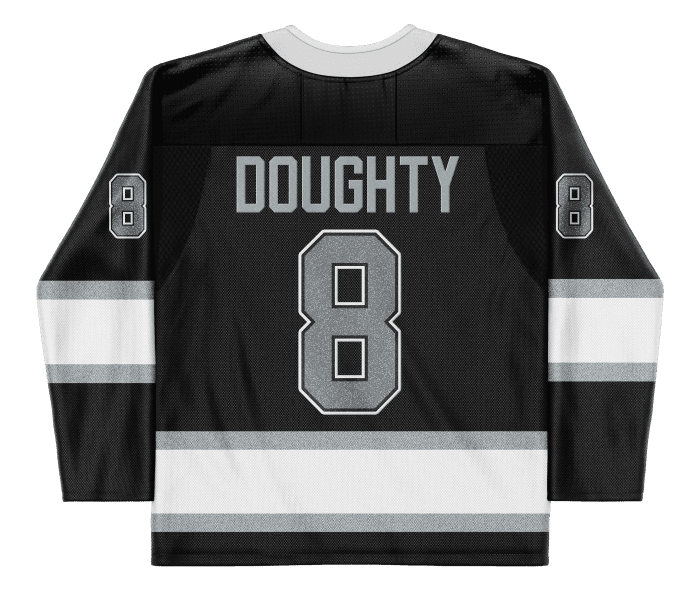
Doughty has acclimated to the Kings' system following holding out during the preseason. At this point the offensive isn't quite there -- one assist through two games -- but it should come back with time.
Drew Doughty
Maurice indicated there would be no lineup changes for the Bruins, but left the door slightly ajar. Jamie McBain, Derek Joslin and Ryan Murphy were the only defensemen who skated today and appear to again be set as healthy scratches for the Bruins, but Maurice said the coaches would "go through the video" and make a final decision tomorrow.

Murphy made the squad but does not yet have a full-time spot. Last season he scored 26 goals and 79 points through 63 games with the Kitchener Rangers of the AHL. He could be sent back to Juniors if he doesn't figure into the lineup soon enough.

Ryan Murphy
Maurice indicated there would be no lineup changes for the Bruins, but left the door slightly ajar. Jamie McBain, Derek Joslin and Ryan Murphy were the only defensemen who skated today and appear to again be set as healthy scratches for the Bruins, but Maurice said the coaches would "go through the video" and make a final decision tomorrow.

McBain could be scratched for the third consecutive game. Last season he scored seven goals and 30 points, primarily quarterbacking the top PP unit. If he continues getting scratched, he could eventually be trade bait.

Jamie McBain
Cody franson and clarke macarthur are both expected to play saturday.

Franson likely draws into the third pairing, taking the place of Mike Komisarek. Last season, he managed to score eight goals and 29 points with the Nashville Predators -- a playoff team. For some puzzling reason, he has yet to crack the Leafs' lineup.

Cody Franson
The NHL’s department of Player Safety has reviewed his third period hit on the Pittsburgh Penguin’s Chris Kunitz and decided there would be no further penalty.

Smyth avoids the 'Shanaban' following his elbow to the face of Chris Kunitz. Feel free to roll him out in any standard leagues, if you were planning on starting him.

The Ottawa Senators entered this season hoping young forwards Bobby Butler and Nikita Filatov would help revive a flagging offence. Butler will sit his second straight game as a healthy scratch, while Filatov will cede his roster spot to Peter Regin.

Butler is clearly not a favorite of coach MacLean. Last season he scored 10 goals and 21 points through 36 games. Don't expect too much from him until he gets out of the doghouse.

Bobby Butler
Brian Lee will also be a healthy scratch so that David Rundblad can get into his first NHL contest. Lee, who leads all Senators in hits with 10, appears to be caught in a numbers game. While he has been one of the Senators’ more physical and reliable defencemen, the team probably won’t be benching high-paid veterans like Sergei Gonchar and Filip Kuba any time soon.

Considering the Sens have younger, higher-potential options, Lee likely will find the press box more often than not. Unless your league counts hits and block, he holds very limited fantasy hockey value.

“The other guys have played better,” MacLean said Tuesday morning ahead of his team’s match-up against the Minnesota Wild. “Nikita is making some great strides in the organization in the way that he’s approached it.

Filatov added an assist through his first two games as a Sen but hasn't taken the leap as a reliable two-way player. Coach MacLean is hoping this benching will help him improve in his own end.

Today’s practice meant good news for Dustin Penner and not-so-good news for Scott Parse. That would put Parse in the fourth-line fold with Kyle Clifford, Trevor Lewis, Ethan Moreau and Kevin Westgarth.

Parse was recently called out by coach Terry Murray, so he likely stays in his doghouse. Until he can provide consistent scoring at the NHL level, he will continue to be a spare part.

NHL Line Changes

NHL line changes are essential in keeping a team’s players fresh on the ice over the course of a hard-fought 60-minute matchup. With shift changes occurring rapidly throughout any given game, we are here to provide you with everything you need to know regarding line changes.

Making sure a team is efficiently making line changes can be essential to their success within a matchup, as it ensures that the players needed on the ice to gain the upper hand are ready to spring into action at a moment’s notice. For NHL daily fantasy hockey players, knowing how to track line changes can be important as you look to keep tabs on the players you’ve drafted to your lineup and their production.

On The Fly

Unlike other sports where play must come to a stop in order to make a player substitution, in hockey, players can switch in-and-out of play on the fly. This helps in keeping the breakneck pace of the contest going, increasing the amount of action from whistle-to-whistle and avoiding any unnecessary stoppages.

On the fly changes are generally done when a team is in possession of the puck and are looking to make a transition play from their own end to their opponent’s side of the rink. Players must be aware of the action around them when making an on the fly substitution as a poorly timed switch could leave themselves vulnerable to an odd-man rush on the other end.

In order to make successful line changes on the fly it is up to the team coaching staff to keep players informed on when their line matchups are due to hit the ice. Generally, with both forwards and defensive pairings, line changes go from the first line trickling its way down to the fourth. Depending on the situation of the game, coaches may opt to give a particular line more playing time, increasing the amount of shifts they receive.

Play Stoppages

NHL line changes can also be made during stoppage of play, with both sides being given the chance to put fresh bodies on the ice ahead of the upcoming faceoff. Examples of a play stoppage that would allow teams to make line changes are after minor or major penalties, offsides, icing, and puck out of play calls. These line changes are often much more calculated as each coach has time to survey the other team and decide what would be the most advantageous line combination that will provide them with a competitive advantage.

Bench Configuration

It may seem like a confusing and unorganized area of the game, but in hockey there is a fair amount of strategy put into the bench configuration within a matchup. With both benches positioned in the neutral zone, making sure that players can quickly hop the boards and get into the game is key to making successful line changes. Benches are generally set so that players entering into the game on the fly are in the best possible position on the ice to fulfill their role.

Generally, a bench in hockey will have the forwards positioned closest to the attacking zone, whereas the defenceman will be situated closest to their defensive zone. This separates the forward lines and defence pairings from on another on each end of the bench so that groups can easily stay together. From here the rested forwards ready to enter into the game will be placed in the centre of the bench, positioned near the coaches so they can easily receive instruction before hitting the ice. This is also advantageous as players coming off the ice for a line change will often enter from the opposite side they came onto the ice from, preventing any unnecessary traffic or confusion when making a change. While each team may have their own preferences on how to configure their bench, these are the most common ways they are run.

Line Change Rules

Understanding the rules of NHL line changes in hockey is an understated part of the game and when used correctly can swing the tide of a matchup in your favour. Without in-depth understanding of line changes in hockey, this can cause costly mistakes that can result in minor penalties, lengthy shifts, or mismatches off a faceoff.

Last Line Change

The last line change rule exists so that the home team is able to make an adjustment to whatever lineup the visiting team decides to roll out after a stoppage in play. This rule was designed to make NHL line changes efficient, as well as provide both sides with the chance to strategically place their players based on the lines sent out by their opponents.

For example, after the whistle, the home team’s coach can elect to make a line change to the personnel on the ice. After that, the visiting coach will send out any new players into the game off of a line change. Thanks to the last line change rule, the home team coach is now granted the opportunity to make one last line change before play resumes to counter whatever line changes were made by the opposing team.

For daily fantasy sports bettors this is where having ample knowledge of each NHL team can come in handy. You can envision how each team may look to gain a competitive advantage over their opponent during a possession, drafting players who are set up for success within a matchup.

Penalties & Infractions

While NHL line changes are meant to be an efficient and simple way to keep the game being played at a fast-pace with minimal interruptions, there is still room for serious error during these substitutions. It’s not uncommon to see teams assessed for a penalty due to a botched line change, resulting in a power play opportunity for the opposing team.

A common penalty called as a result of a poorly executed line change is “too many men on the ice”. This penalty results when the offending team has six or more skaters (including the goaltender) on the ice at any given time and comes in physical contact with the puck. While players entering in the game during a shift change are eligible to hop the boards and get in on the action once their teammate is within five feet of the bench, they must time this correctly or they could be hit with a premature substitution infraction. When a bench minor penalty such as too many men on the ice is assessed, it is up to the team’s head coach to decide who serves the penalty based on the players currently on the ice at the time of the penalty.

Another line change infraction to be aware of is in the case of an icing call. Icing is called when a team plays a puck from their own side of the red centre line across the red goal line in their opponents end. When icing is called, a faceoff will be taken from the end of the team that committed the infraction. During an icing call the team that was called for icing is not able to make any line changes, meaning they are forced to keep all players who were on the ice at the time of the infraction in the contest. Their opponents however are allowed to make any line change they desire, making this an incredibly beneficial call if they can strategize correctly.

How Line Changes Impact Fantasy Hockey

NHL line changes can come fast and suddenly so it can be challenging to keep track of certain players over the course of a matchup. This can make it difficult for avid fantasy hockey managers and sports bettors to know when the players they’ve wagered on are on the ice. Some broadcasts now incorporate various display mechanics that allow for you to see who is on the ice at any given time, making shift change tracking much simpler than ever before. Be sure to stay up-to-date on the jersey numbers of any players on your fantasy roster or that you bet on as a failsafe so that you can find them quickly while watching the action unfold.

Knowing how long a typical shift for a player entering into a matchup is can be an advantageous piece of knowledge for fantasy managers and bettors alike. The longer a player’s shift lasts, the higher their chances of registering a point or other statistical milestone which can help you in winning your fantasy matchups and/or bets placed on a game.