2026 World Juniors: Scouting reports on 90+ NHL-drafted prospects

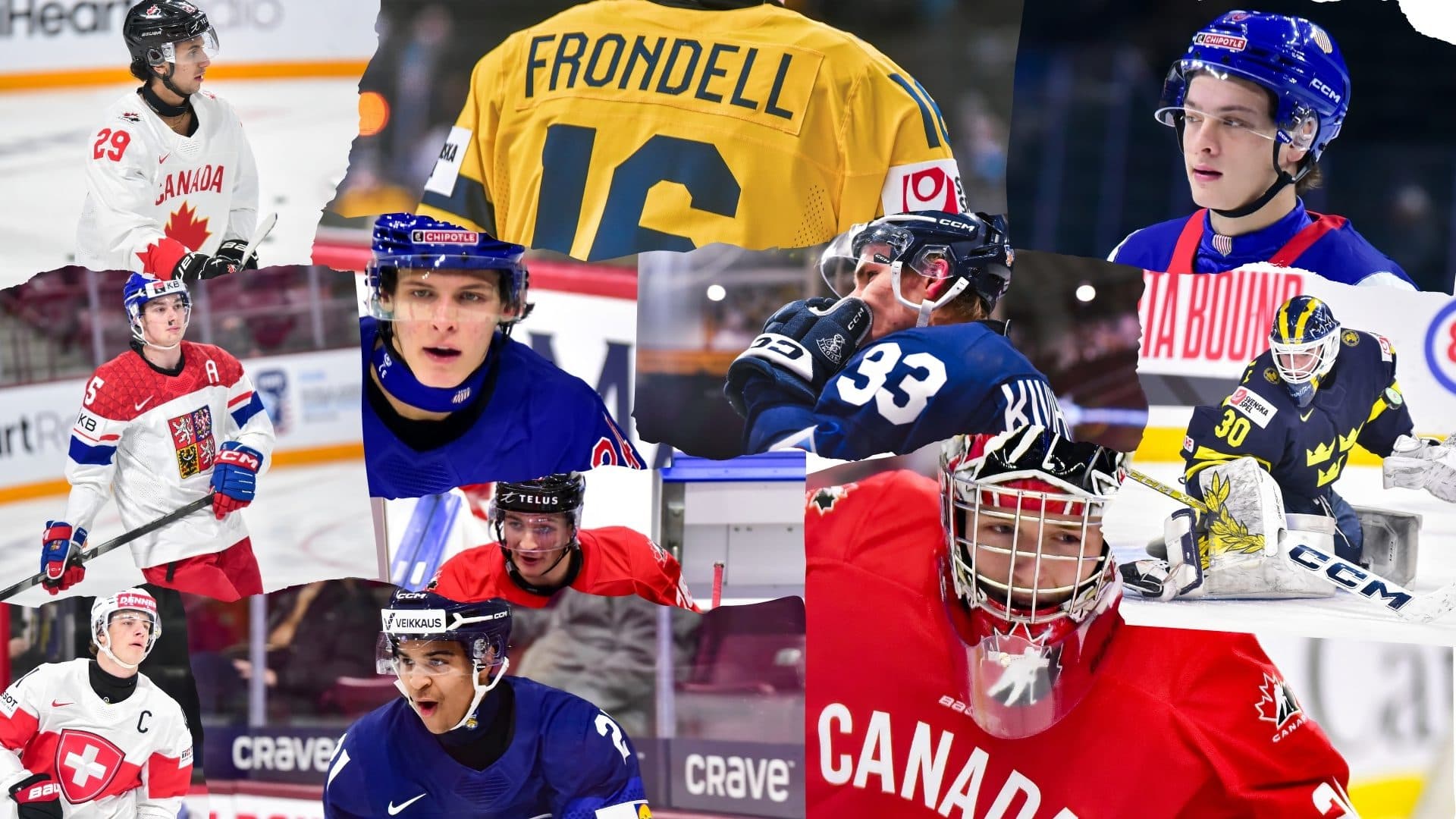
ST. PAUL and MINNEAPOLIS, Minn. – What a tournament.
The 2026 World Junior Championship came to a close on Monday, with Sweden finally ending a 14-year gold-medal drought with a 4-2 victory over Czechia. It was one heck of a way to close things out, with the emotion and excitement from the landmark win for the nation making it through the television sets of everyone back home watching past 4:00 AM.
Today, we’re going to wrap things up by looking at the NHL prospects who took part over the past 12 days. More than 90 NHL-affiliated players participated in the annual international showcase – the top junior tournament in the world. Players who were named to the roster but didn’t play significant minutes were not included in today’s write-up.
Here’s a breakdown, sorted by national team:
Canada
Carter George, G (Los Angeles Kings): After an excellent showing a year ago, it felt like George was never in complete control in Minneapolis. He started the pre-tournament with a huge effort against Sweden, but then allowed five goals to Czechia, a weak one against Denmark and then three goals on eight shots against the Finns. This didn’t feel like the calm, composed goalie we’ve been used to seeing. I still feel really high on him, though – and I’m glad he bounced back in the bronze medal game.
Jack Ivankovic, G (Nashville Predators): Ivankovic was the better of the two Canadian goalies. I do wonder if a few of the goals against Czechia in the semifinal could have been prevented if he were a bit bigger. But the reality was he was left hung out to dry way too consistently. Ivankovic will be Canada’s top goalie in 2027, and I think he’ll be capable of leading this team far. But he just didn’t get it done in Minnesota.
Kashawn Aitcheson, D (New York Islanders): This was a rough go for Aitcheson. I thought he was strong physically and made some good plays out of his zone. But I expected more from him on the shooting side, and that just never happened. He also struggled against quicker competition in his zone at times. I really like Aitcheson, but I was hoping for more.
Harrison Brunicke, D (Pittsburgh Penguins): I thought Brunicke had a great pre-tournament but then slid more into the background as the main event wore on. His best game was against Latvia (the only time he registered a point, interestingly enough), but he was mostly used to break up plays and bring a mature game to the lineup. Brunicke’s NHL experience was useful in the way he never bit too much when someone tried a high-skill move on him, and he often did a great job of taking space away.
Cameron Reid, D (Nashville Predators): I felt like this was a really, really rough showing for the Kitchener Rangers star. He’s usually stable defensively, but he kept trying to chase after pucks and just couldn’t seem to win most of his battles. It didn’t seem to matter who he played with, either – he just looked outmatched. I’ve seen him play a lot of good hockey, and I didn’t feel like we saw that from him in Minnesota.
Ben Danford, D (Toronto Maple Leafs): This was a mixed bag for Danford. He seemed a bit more offensively inclined than I expected, but he also had issues with giveaways and getting pressured into mistakes. What I did like was his skating – he was mobile, competitive and used that to close gaps and pressure others into errors. Danford isn’t overly creative and is best when he fades into the background, but he can also kill penalties and block shots, which is why Leafs fans like him as a future Chris Tanev. But it felt like he couldn’t keep up with the pace at this tournament.
Zayne Parekh, D (Calgary Flames): Parekh was Canada’s best defenseman. I still have concerns about some of his defensive breakdowns – he gave up the puck a lot, especially early. But he usually offset that with his high shot generation, his ability to outwork opponents and his good footwork. Parekh received some serious MVP love throughout the tournament, and while it didn’t end up panning out, he clearly was playing above the competition most nights. It’s just not ideal that he was the only Canadian defender who didn’t seem to struggle immensely.
Carter Bear, F (Detroit Red Wings): I thought Bear had an excellent game against Denmark, but he didn’t play much against the Finns and was then left out of the lineup for good after that. So while I usually won’t mention players with about nine minutes of total ice time, I thought he actually played a solid two-way game and generated some quality chances in his tournament debut. I wish we could have seen a bit more ice time from him, though.
Cole Beaudoin, F (Utah Mammoth): Beaudoin had a rough start, but he made up for it with a much better second half. He was better than Canada’s top line for a few games – it seemed like he really understood his assignment alongside Caleb Desnoyers and Sam O’Reilly – just create distractions, and something will happen. Overall, Beaudoin blocked a ton of shots, excelled on the penalty kill and was excellent in front of the opposition’s net. But his lack of speed got exposed quite consistently.
Braeden Cootes, F (Vancouver Canucks): Cootes’ game has usually been around being the most competitive player on the ice while bringing a level of physicality and hockey sense to the table. That made him a good fit for Canada’s fourth line, where he was tasked with chasing after pucks and getting in toward the net. Cootes is a good passer who is good on the forecheck and can help out defensively. But for the most part, his ice time was limited, especially in tight games, so it’s hard to take too much out of this.
Caleb Desnoyers, F (Utah Mammoth): Desnoyers was one of Canada’s forwards, which should give the fanbase some excitement heading into next year. Usually known as a play driver with Moncton, Desnoyers was thrust into more of an energy role and took the opportunity seriously. He was an outstanding supporting player, with Desnoyers doing a lot of the work to set up Beaudoin or Sam O’Reilly in front of the net. It felt like he found his groove against Denmark, and his play only improved from there.
Tij Iginla, F (Utah Mammoth): I have no real complaints about Iginla’s tournament. He had points in all but one game, scoring some timely goals down the stretch. Whenever it felt like the rest of his line was struggling, Iginla would skate through the middle and create a quality chance. He’s skilled, quick and plays with a boatload of pace. Iginla was one of Canada’s best players, all things considered.
Jett Luchanko, F (Philadelphia Flyers): A year ago, I thought Luchanko was much better than his one point would have suggested. This year, though? Absolutely invisible. His speed was there, but he did nothing with the puck, struggled defensively and, really didn’t do much more than skate around. It was truly baffling how quiet he was. I loved his play with Brantford before camp, and given his NHL experience, I just expected much, much more.
Michael Hage, F (Montreal Canadiens): Hage was Canada’s best forward throughout the round-robin, earning himself some MVP love. His ability to push past opponents with his strength, combined with his high-end release and quality playmaking, allowed him to thrive every time he entered the offensive zone. Hage caused a lot of damage on the power play, but he was also the second line’s top play driver at 5-on-5. Habs fans have to be thrilled with his game.
Brady Martin, F (Nashville Predators): Martin was one of the most impressive forwards at the 2026 World Junior Championship, registering four goals and eight points through five games. He was injured early in the rematch against Czechia, and it clearly sent a ripple effect through Canada’s lineup. Martin was Canada’s best net-front guy, and he was the one who seemed to wake up the rest of the bench when they needed it.
Porter Martone, F (Philadelphia Flyers): Was Martone as dominant as he should have been? No, especially physically. But he scored in the majority of the games and was definitely better than Michael Misa on Canada’s top line. It just never felt like Martone was playing at his full capacity. As one scout framed it, “He didn’t play bad, but he wasn’t the game-changer he needed to be.”
Michael Misa, F (San Jose Sharks): Misa needed to be much, much better. Simple as that. Most of his offense came in the two blowout games against Denmark and Slovakia. Beyond that, he was usually the third-best player on his own line, which isn’t ideal coming from the reigning CHL MVP and a guy with NHL experience this season. Missing time due to injury before the tournament likely didn’t help, but it rarely felt like he had his confidence.
Sam O’Reilly, F (Tampa Bay Lightning): O’Reilly’s inclusion felt like a nepotism pick, given his OHL coach is Dale Hunter. But it became clear quite quickly that O’Reilly deserved to be there. He was quiet to start the tournament with no points in his first two games. But as Canada needed more out of its bottom six, O’Reilly managed to register six points in his next three games. His three-point effort against the Finns was a big reason Canada won that game. O’Reilly was much better than expected, and Canada was better for it.
Cole Reschny, F (Calgary Flames): I liked his tournament, especially in the semifinal. He was a good support player and was easily the top forward on the fourth line. He’s known more as a playmaker, but his shot came in handy in games against Latvia and Slovakia. I love his work ethic and the details in his game, such as the simple chip passes to blow by a defender or the patience used to get passes where they needed to be.
Czechia
Jakub Fibigr, D (Seattle Kraken): Fibigr will never be flashy and he’ll never win the Norris Trophy. But he’s a good support option beside just about anyone he hits the ice with. I liked his game with Max Psenicka – it felt like they fed off each other quite well. I have always enjoyed his game because it feels like he’s stable defensively, even if there isn’t a ton of upside here.
Adam Jiříček, D (St. Louis Blues): I was shocked Jiříček didn’t take home MVP honors. He didn’t have explosive numbers, but as an actual defenseman, he broke up more plays than just about anyone else. He played a ton of minutes, scored a couple of goals and had one of my favorite overall performances by a defender in recent tournament history. Jiříček looked like an NHLer already – I fully expect him to force his way onto the Blues next fall.
Max Psenicka, D (Utah Mammoth): His play won’t earn all the glitz and glamour of someone like Jiříček, but I really liked Psenicka’s tournament. The best way to describe him: rock-solid. Most of Psenicka’s defensive reads were smart, calculated, and he was typically rewarded with possession throughout the tourney. Psenicka won’t beat you with flash, but he’ll often out-think you on the rush.
Radim Mrtka, D (Buffalo Sabres): Mrtka joined Czechia a little late after suffering an injury in the pre-tournament. I thought he was decent overall. The huge Sabres prospect was lean on the scoresheet and was ultimately overshadowed by Adam Jiricek and Tomas Galvas. Defensively, though, I thought Mrtka made a good first impact, and I liked how the Czechs relied on him late in tight games. No real complaints – I was just hoping to see a bit more with the puck, but he’ll be their No. 1 guy next year if he’s not already in the NHL.
Adam Benák, F (Minnesota Wild): Benák has always been a huge performer internationally. He started the tournament with a pair of assists in the opener and was instrumental in getting the attack going against Latvia and Switzerland. He didn’t score until the semifinal, but Benák is as good as it gets as a playmaker, especially on the power play. The 5-foot-8 forward plays with so much speed and is exceptionally creative with the puck. Look for Benák to be a difference-maker in Alberta next winter.
Stepan Hoch, F (Utah Mammoth): Hoch struggled heavily against Canada, but he bounced back with a much better showing against Denmark. From there, he was mostly used for his big 6-foot-4 frame and power forward tendencies. He was fine – he did what he was there to do, and not much else.
Tomáš Poletín, F (New York Islanders): It was a solid tournament for Poletín, who served as a good support player. He plays a heavy game and isn’t afraid to crash the net to make something happen. I thought he was one of Czechia’s top forwards early on – especially against Canada, where he scored twice. Poletín loves to tip shots, and he can make quick moves in tight spaces.
Vaclav Nestrasil, F (Chicago Blackhawks): I really, really Nestrašil. The 6-foot-6 forward is truly a menacing figure. He hits hard, plays hard and shoots even harder. He dominated Canada and Denmark physically and appeared quicker than the last time I saw him in person. Even away from the puck, I thought he did an outstanding job of breaking up plays and winning individual battles. I wrote earlier in the tournament that Blackhawks fans should absolutely believe the hype around Nestrašil – he’s a monster.
Petr Sikora, F (Washington Capitals): Sikora was one of Czechia’s best players throughout the tournament. His ice time kept increasing, and for good reason – he had a point in every round-robin game. He was a shot-generation machine in the first two games, taking 11 shots in that span. Sikora can play the power play, but he can also dangle in tight and help out defensively. Whenever the Czechs needed him to step up, he did.
Vojtěch Čihař, F (Los Angeles Kings): Čihař was a big reason for Czechia’s success in this tournament, and he took home the MVP honor to boot. The only time he didn’t get a point came in the final, but, otherwise, he was noticeable nearly every time he hit the ice. Čihař has been playing with so much confidence, which, after posting just eight points in 27 games against men in the top Czech league in the first half, has to feel good. The best part? He can return next December.
Denmark
Mads Kongsbak Klyvø, F (Florida Panthers): The Danes were outmatched in every single contest, but Klyvø was noticeable, at least. Unfortunately, he wasn’t the type of player who could take his team on his back, but he could hang on against quality competition. I’m not sure he’s an NHLer, but I like him as a forechecker who can work well as a support option alongside someone a bit more skilled.
Finland
Petteri Rimpinen, G (Los Angeles Kings): This was a step down compared to his tournament a year ago. Showtime was known for his game-saving performances last spring but he left a lot to be desired, especially against Denmark, Canada and Sweden. Fluky goals, bad rebounds and the odd brainfart just seemed to plague him. On the flipside, he was outstanding against Czechia and the United States and was the primary reason why his team battled for a medal in the first place. It just wasn’t the same effort we saw out of him in Ottawa.
Lasse Boelius, D (Anaheim Ducks): Boelius was my favorite Finnish defender – he was their most consistent blueliner. He helped his draft stock in a big way at the U-18s last year, and this tournament helped prove that wasn’t a fluke. There isn’t much flash to Boelius’ game, but it feels like he’s taking a more heads-up offensive approach by waiting for his teammates to break out of the zone into open space. Boelius is a high-end puck-mover who loves the disk on his stick, and while he isn’t big, he makes up for it with his puck possession.
Aron Kiviharju, D (Minnesota Wild): The Finns relied on him heavily to eat minutes and play all different situations, including the penalty kill. In terms of pure, natural skill, Kiviharju might have been the team’s most important player. I was hoping to see a bit more from him against Canada, but he couldn’t carry the team on his back. Kiviharju wasn’t able to secure a gold during his tournament tenure but he will go down as one of my favorite Finnish junior players I’ve watched thanks to some of the creativity he’d show with the puck.
Daniel Nieminen, D (Nashville Predators): Nieminen was the best-skating blueliner on this group. He uses that mobility to keep the puck on his stick and steal it from opponents on the backcheck. I didn’t love his game with the puck but I felt like he made up for it with his defensive game. I was a little surprised to see him so snakebitten on the scoresheet because you can see some true skill there, but it just didn’t pay off.
Veeti Väisänen, D (Utah Mammoth): Väisänen can play with a bit of an edge, and he proved that 27 seconds into Finland’s third game when he was ejected for a cross-check to the face of a Czech player. Beyond that, though, Väisänen wasn’t as noticeable as I hoped. He has had a decent season with the Medicine Hat Tigers, but his offensive game was nowhere to be found with the Finns. Väisänen deserves credit for keeping opponents to the perimeter but I was still hoping for more.
Emil Hemming, F (Dallas Stars): Hemming is a powerful shooter who gave the Finns tons of life early in the tournament. The second half wasn’t as pretty, though. It felt like his shot quality dipped heading into the first match against Canada and then he was quiet throughout the playoff round. That shootout miss – when he lost the puck before he even had a chance to get close to the net against Sweden – will likely haunt him for a while. I just wanted more from a guy who was leaned on to be a big-time shooter.
Atte Joki, F (Dallas Stars): Joki primarily played as the 13th forward, and, honestly, he was fine at it. He was mostly deployed when Finland’s top line needed a break or if the team needed someone to go throw a big hit. He’s good away from the puck, but he didn’t do much with it. It was interesting that they just had him sit on the bench for two games in this tournament.
Aatos Koivu, F (Montreal Canadiens): I thought Koivu’s possession game was solid to start the tournament. That all fell apart against Canada, though, where he was benched after a -2 start two shifts into the game, and then he was scratched throughout the playoffs. At his best, Koivu can be a game-changer, especially on the power play. I thought he played a solid possession game. But after being a leader at the World Junior Summer Showcase, this wasn’t a good tournament for him.
Julius Miettinen, F (Seattle Kraken): Miettinen started the tournament on the sidelines but gave the Finns a big boost up front when he joined the top line. He’s a big forward who showed tremendous chemistry with Everett Silvertips linemate Matias Vanhanen. He loves to play with power, with few Finnish players having a shot as powerful or quick as his. I do wish he took over a few more shifts like he does so frequently in the WHL, but I have to wonder if he was truly playing at 100 percent health.
Kasper Pikkarainen, F (New Jersey Devils): Points have been hard to come by for Pikkarainen this season and it didn’t change at this event. That being said, he was Finland’s most physical player, and he fit perfectly on the fourth line. He didn’t play a ton, but you often noticed how involved he was along the boards. If Pikkarinen is to make the NHL, he’ll need to keep being physically dominant.
Heikki Ruohonen, F (Philadelphia Flyers): Ruohonen was a two-way beast for the Finns. Like Czechia, the Finns lacked a true offensive game-changer, so they had to rely more on the group as a whole. Fortunately, that allowed someone like Ruohonen to shine. He never seemed to take a shift off – his footwork was great, and he broke up a lot of plays in the defensive zone. Between him and Koivu, it felt like the Finns were in control whenever one of them was on the ice. In Ruohonen’s case, he also had a few great passes that led to goals, and I think he was one of the better two-way players overall.
Joona Saarelainen, F (Tampa Bay Lightning): Saarelainen had a blazing hot start with three points in the opening two games. Then, the shots stopped coming, the offense dried up, and his defensive game was exposed – until the playoffs, where he came alive again. I have typically been a fan of Saarelainen’s game, and I’m glad he ended as strong as he did.
Max Westergård, F (Philadelphia Flyers): Westergård was one of Finland’s top players internationally heading into the tournament, and that didn’t stop in Minnesota. He started the tournament on the fourth line, but he made the most of his limited ice time by continuously forcing mistakes out of opponents. Westergård is a buzzsaw, with his quick footwork and tenacious play style allowing him to win so many battles. He hustles as hard as anyone, and I was happy to see him promoted up the lineup as a result.
Germany
Carlos Händel, D (Montreal Canadiens): Händel doesn’t need to drive the offense to be effective. He’s good as a play-breaker, and he seems more confident joining the rush when needed. The Germans didn’t have much going for them offensively, but I thought Händel did a decent job of getting the puck down the ice. Händel still has a long way to go to becoming an NHLer – he can struggle with pace at times. But at a level like this, his smooth skating and smart defensive-zone coverage make him intriguing.
David Lewandowski, F (Edmonton Oilers): Lewandowski was surprisingly quiet. Going over my notes from last year, I had much more to say about his impact with the puck. It just felt like he was a passenger quite often – which, to be fair, wasn’t hard to be on this German team. But given his playmaking abilities, I just expected more.
Maxim Schäfer, F (Washington Capitals): I was a little surprised not to see more out of Schäfer. I loved his performance a year ago and have liked his game with Chicoutimi. But Schäfer was just far too invisible for my liking. His ice time fluctuated, and he just never seemed engaged enough. I still like him as a future fourth-line player who can grind it out and still get shots on net, but Schäfer simply didn’t impress me.
Latvia
Mikus Vecvanags, G (Montreal Canadiens): Vecvanags got thrown to the wolves in his tournament debut, allowing eight goals against Finland. His team only had seven shots on net, but Vecvanagas simply didn’t move as he should have. It’s been a difficult season for Vecvanagas, and this tournament likely didn’t do much for his confidence. If he can have a strong second half with Newfoundland, he might be able to boost his stock.
Darels Uljanskis, D (Anaheim Ducks): Uljanskis was just fine. While many expected him to be the team’s No. 1 defender, Alberts Smits stole the job instead. I still like his mobility, and it felt like he was more defensively responsible in Minnesota compared to when he played in Ottawa. I just wanted to see him do a bit more with the puck, especially given how good he has been in Flint.
Slovakia
Michal Pradel, G (Detroit Red Wings): I thought Pradel was fine. The odds were stacked against him from the start, and while things ultimately fell apart against the Americans (when Slovakia nearly pulled off an upset), I thought he still did a good job dealing with post-to-post puck tracking. I like him as a goalie, but it felt like he’d need to have a near-miracle run to bring the Slovaks far.
Ján Chovan, F (Los Angeles Kings): I was hoping for a bit more out of Chovan, who, as one of the few NHL-drafted players on this team, should have been more of an offensive leader. Instead, I felt a bit underwhelmed – I thought he was better in his draft year instead. He’s having an OK-at-best season with Sudbury and I feel a little less convinced about him as a prospect, but he’s still solid at getting pucks out of his own zone, at least.
Michal Svrček, F (Detroit Red Wings): Svrček had a decent tournament. He played his best hockey against the United States, when he proved a handful to defend against. Offensively, I was hoping for more as one of two NHL-drafted forwards on the squad, but it just never seemed to happen. I think he’s best as a support player who allows the people around him to great chances while he chases guys to force them into mistakes.
Sweden
Love Härenstam, G (St. Louis Blues): Härenstam had struggled in major moments in the past, but I thought this was some of his most consistent hockey. He has been excellent back home this year and it feels like he’s doing a much better job of tracking pucks now. I felt like he was so much more in control. Härenstam was the best goalie throughout the tournament, without a doubt, and he’ll have a chance to prove that as the starter again next year.
Sascha Boumedienne, D (Winnipeg Jets): It was an overall mixed tournament for Boumedienne. I thought his size came in handy with his poke checks, but I also felt like he read plays a bit too slow at times. He was better when the games were less chaotic and he was able to slow things down. His mobility is impressive, and he’s a solid puck mover, but he needs to continue adding more consistency.
Victor Johansson, D (Toronto Maple Leafs): On one hand, Johansson was excellent at the World Junior Summer Showcase. On the other hand, that was half a year ago. He didn’t play much in this tournament, and I felt like he was actually overwhelmed in his own zone throughout the pre-tournament and round-robin.
Leo Sahlin Wallenius, D (San Jose Sharks): Sahlin Wallenius averaged more than 22 minutes a night, but he saved his best hockey for the end. I think in most other years, LSW would have done enough at this tournament to earn more top defenseman love. It was never going to happen with the level of talent, but Sahlin Wallenius’s ability to block shots, play all situations and get pucks where they needed to be with limited mistakes made him extremely valuable to this group. I thought he was Sweden’s best defender almost every night.
Alfons Freij, D (Winnipeg Jets): Freij was Sweden’s best defenseman throughout the round robin. His poise with the puck was highly noticeable, and he showed some excellent speed, too. It felt like LSW was going to be the go-to defender on the power play, but Freij did a fantastic job of getting the puck into scoring situations. I thought Freij was just fine in the pre-tournament, but I was happy to see him find another step with the puck as the tournament wore on.
Jack Berglund, F (Philadelphia Flyers): I remember watching Berglund play in front of about 30 people in Plymouth, Mich., once, watching him outwork just about everyone on the ice. He did that every night in St. Paul, but amplified by a million. His huge frame made him an absolute force on the rush, and he was unstoppable right in front of the net. In my personal opinion, I thought Berglund was just as instrumental to the gold as Frondell or Ivar Stenberg.
Wilson Björck, F (Vancouver Canucks): Björck didn’t play many games, but he wasn’t completely stapled to the bench when called upon. I thought he actually was noticeable in the semifinal against Finland, although he was scored on. I thought he made some decent passes and showed some speed, but there was just very little to show for it.
Victor Eklund, F (New York Islanders): I was hoping for more out of Eklund early on – and everything improved down the stretch. He showed lots of skill and continued to create chances on the rush. Eklund averaged a point per game, and the high-quality chances improved as the tournament wore on. He was more of a goal-scorer last season, but he has just one goal in the SHL and had just one in this tournament. This time, I loved him for his energy and for how he created opportunities for Anton Frondell.
Linus Eriksson, F (Florida Panthers): Nobody will confuse Eriksson with a playdriver. And it took him six games for his first goal. But he seemed to be the right fit alongside Anton Frondell. He was a playmaker, but he also played an excellent two-way game while battling hard along the boards. He made life easier for his linemates so they could continue firing chances on net. Despite the numbers being truly lackluster, he always felt noticeable, even when he was playing limited minutes early on.
Anton Frondell, F (Chicago Blackhawks): Frondell getting moved to the wing at the start of training camp really paid off here. Frondell is better when he’s focusing on generating offense, especially with his patented one-timer from the right dot. Sweden looked significantly worse when Frondell wasn’t able to get any pucks on net against Switzerland, but he made up for it with some huge showings the rest of the way. Frondell did most of his shot generation on the man advantage, but if it wasn’t for Frondell, the Swedes could have easily found themselves with a disappointing record in the round-robin. That’s how important he was.
Eddie Genborg, F (Detroit Red Wings): Genborg’s job was to get physical, create opportunities for his linemates and generate the odd point or two. He had a solid tournament overall, given the type of role he plays. We didn’t see him shoot a lot but he instead focused on playing with pure power and physicality. I think he’s a future third-line winger who makes life a bit easier for those around him.
Milton Gästrin, F (Washington Capitals): I’m usually a big Gästrin fan – I absolutely loved his draft season. And for the most part, he has been great in the Allsvenskan. I just didn’t love his tournament. He was thrust into more of a depth role and actually took a few untimely penalties in the opener against Slovakia (a game Sweden nearly lost). He played his best hockey in the blowout against Germany but was otherwise more in the background. I expect Gästrin to be more impactful next year.
Loke Krantz, F (Seattle Kraken): Krantz is a strong dude. His role was all about bringing size and power ot the bottom line, and that’s exactly what he did. Krantz didn’t play a lot, but I felt like he was noticeable enough physically when leaned upon.
Eric Nilson, F (Anaheim Ducks): Swedish fans didn’t love Nilson on the top line, and he was eventually demoted to the fourth line. I thought he did a good job at playing a two-way game in an attempt to let someone like Frondell thrive with the puck. I thought Nilson was better than the Swedish coaching staff thought he was, mostly because it felt like he did a good job of ensuring the puck made it into the offensive zone. Oh well.
Lucas Pettersson, F (Anaheim Ducks): The two things that stand out the most about Pettersson’s game are his hockey sense and his compete level. He’s not the world’s quickest skater, but he makes up for it with pure effort and a willingness to grind hard to win in a depth role. He had a couple solid showings for Sweden, playing a bit of center and the wing. He’s a versatile forward who should have a decent chance at becoming a bottom-six forward one day.
Switzerland
Christian Kirsch, G (San Jose Sharks): At his best, Kirsch can keep his team in games. He was great against the Americans in particular. But he’s still prone to too many poor goals, something that also became evident against the United States. Kirsch’s consistency needs to improve if he’s going to take the next step forward in his pro career, but I have been much more impressed with his play this year than with what we’ve seen in past international tournaments.
Elijah Neuenschwander, G (Anaheim Ducks): As a backup at this level, Neuenschwander is perfectly fine. His gave the Swiss a legit chance to beat Sweden, which is all you could ask for. He’s a tall goalie who covers the top of the net well and can have flashes of brilliance. Starts have been hard to come by for him this year (and he has typically struggled internationally) but I just wanted to see if he could pass through without costing his team a game, and he was fine.
Ludvig Johnson, D (Utah Mammoth): Johnson’s poise with the puck is solid. He can draw guys to him before getting the puck where he needs it to be. Johnson has a great shot – I wish he’d use it more. He has always been good with the puck, and he has been quite productive while playing against men in the NL. It just felt like he wasn’t as dominant on the puck as I was expecting.
Leon Muggli, D (Washington Capitals): Muggli is a wizard with the puck. He struggled during the pre-tournament after missing most of the season due to injury. But once he got comfortable in Minnesota, he started to really come together. Muggli played his best hockey in the latter stages, making high-end passes and launching his NHL-caliber shot from the point. I’m excited to see what he can do once he gets back to the AHL.
Basile Sansonnens, D (Vancouver Canucks): Sansonnens… the sniper? He entered the tournament having never scored in any previous IIHF event, but had a goal in the opening game against the United States. It was a bullet of a shot, too. He had a few other decent looks the rest of the way, but his bread and butter is still shutting guys down, and he did a solid job with that overall.
USA
Caleb Heil, G (Tampa Bay Lightning): Heil is the USA’s best goalie ever at the World Junior A Challenge with two gold medals, including one earlier in December. At this tournament, though, it felt like he was overmatched. His awful first half against Slovakia nearly sunk the Americans, and he struggled against Germany, too. The American crease was wide open heading into the tournament, but Heil struggled to track pucks effectively.
Nick Kempf, G (Washington Capitals): USA’s decisions in net were confusing, to say the least. Kempf played well against Switzerland and Sweden, but he fell apart in the third period against Finland in just his second start of the tournament. Kempf was probably the best option in net, so it was a bit surprising to see him not get the start against the Swedes. Overall, I thought Kempf was fine, and the defense in front of him didn’t do him many favors.
Asher Barnett, D (Edmonton Oilers): Barnett was primarily used in a shutdown role, and that’s precisely what he did. He was the most surprising inclusion for me on this roster, because while he did have an excellent U-18s back in the spring, it felt like he just didn’t have enough with the puck to warrant inclusion. Overall, I thought he was fine – he was one of the most physical blueliners USA had.
EJ Emery, D (New York Rangers): I was hoping USA would have used Emery a bit more. He played in only three of the relegation games and then just 4:01 in the quarterfinal, going minus-1 in that span. He’s a physical, shutdown defender who can be really difficult to beat, but USA didn’t use him a whole lot. And, honestly, I didn’t notice him too much. Still, I like his game and think he can be a good NHL defender.
Logan Hensler, D (Ottawa Senators): Hensler’s ice time was all over the place. He didn’t play a ton overall, and mainly was tasked with shutdown roles. His skating was a positive, his puck possession was decent, and I thought he did a solid job of confidently getting the puck out of danger. But beyond that, Hensler’s tournament was quieter than it was a year ago.
Cole Hutson, D (Washington Capitals): It was hard to really judge Hutson’s performance, given he only played two full games. Hutson blocked a shot off his head in the second game and only returned in time for the loss to Finland. But he was the USA’s top defenseman in the games he played, especially in the quarterfinal, where he was one of the only players able to get the puck into high-danger areas. Had he remained healthy the whole way, I think USA could have put up an even bigger fight.
Adam Kleber, D (Buffalo Sabres): Kleber is a big dude who gets in the way of pucks, hits hard and can shut down plays as well as anyone on this American team. He played his best hockey at the end of the tournament, especially when he was able to support Hutson on the top pairing. Kleber played a lot of minutes, blocked plenty of shots and did a good job of getting pucks out of the crease.
Luke Osburn, D (Buffalo Sabres): That was a difficult tournament for Osburn, who was one of USA’s top players at the World Junior Summer Showcase. He’s a puck-moving defenseman who didn’t seem to do much of it this tournament – he didn’t register a single point. I really liked his game against Slovakia, but he struggled against Sweden and Finland. This wasn’t a tournament worth remembering from Osburn.
Kamil Bednarik, F (New York Islanders): Bednarik had a lackluster tournament. He’s not a play driver, but he’s solid through the middle and does a good job of shutting plays down in the D zone. He’s a good skater who doesn’t give the puck away much, and that became evident quickly. Bednarik isn’t much of a shooter, though, and it feels like that limits him because he relies on his linemates a bit too much.
Cole Eiserman, F (New York Islanders): We were waiting for that explosive offensive game from Eiserman… and it never came. We’re so used to him unleashing high-quality shots from all over the ice, but it just didn’t happen, and his ice time started to drop as a result. It felt like he never played at 100 percent. Of all the international performances I’ve seen from Eiserman, this felt like the least impressive by a mile.
James Hagens, F (Boston Bruins): I don’t feel like Hagens had a bad tournament, because he didn’t. He finished with seven points and was one of the few American forwards who looked good, for the most part. Overall, I liked the way he skated, and his passes were still top-notch. He’s a dynamic forward who drives play and can spark his team when things go south. Hagens just couldn’t do it all himself this time.
Will Horcoff, F (Pittsburgh Penguins): Horcoff was one of USA’s top players during the pre-tournament and even had a good first game. But it looked like his lack of high-end speed caught up to him, and he had just one point in his final four games. He has been a strong shot generator at the University of Michigan, and after registering five shots against Germany, he had just five more in the following four contests. Overall, it was a highly disappointing tournament for a player most expected to be a leader.
Ryker Lee, F (Nashville Predators): Lee was excellent down the stretch for the Americans. I was surprised by how quiet he was against Germany and Switzerland, but he picked up the pace with goals against Slovakia and Sweden, and an assist against Sweden. It seemed like he found his confidence in that hectic game against the Slovaks and it boosted his offensive confidence the rest of the way. I love his ability to distribute pucks on the power play, and his hands are lightning quick.
Cole McKinney, F (San Jose Sharks): McKinney is great at pressuring opponents into mistakes and getting in tight to the crease. The USA tried him in various situations with mixed results, but I thought he was good at retrieving pucks and playing with energy. McKinney’s energetic nature makes him hard to contain at times, but it didn’t result in much offense.
Brendan McMorrow, F (Los Angeles Kings): McMorrow was brought to kill penalties – mission accomplished. He was primarily used to get to the net and clear lanes for someone like Will Zellers to shoot freely. He also blocked a boatload of shots and was great while down a man. McMorrow had a strong showing, all things considered – he’s a workhorse.
L.J. Mooney, F (Montreal Canadiens): Mooney had himself a tournament. He only finished with three points, coming in consecutive games. But I really thought he made a positive impact, giving the team some speed and hockey sense on the second line. He’s small, but his ice time wasn’t, as he continued to show the coaching staff that he could win puck battles and get the puck to the net. I expect him to challenge for a top-line role next December.
Max Plante, F (Detroit Red Wings): An injury limited Plante to just one point in three games, which was a shame. He had a strong opener against Germany but was quiet after that before suffering his injury against Slovakia. I thought he did a decent job of pushing the play forward and generating chances, even if he didn’t have much offense to show for. This feels like a true, “What could have been.”
A.J. Spellacy, F (Chicago Blackhawks): Spellacy was one of USA’s top players. Not only was he their best penalty killer, but he was also instrumental in the Americans’ comeback against Slovakia. Spellacy was given more opportunities in the latter stages of the tournament, where he turned out to be one of the top shot generators. His mix of speed and toughness made him an absolute force, and I really like his odds of becoming a solid fourth-liner in the NHL.
Teddy Stiga, F (Nashville Predators): Truthfully, I was hoping for much more out of Stiga. I’m not sure why they had him as USA’s No. 2 center and not playing alongside Hagens and Brodie Ziemer, both of whom he has plenty of experience with. Stiga is better as a winger than a forward, in my opinion – I prefer him chasing after loose pucks, hitting guys as hard as possible, and serving as a true support player. He ended up with some decent numbers, but I expected a greater overall impact.
Shane Vansaghi, F (Philadelphia Flyers): Vansaghi only played a handful of shifts and was on for four goals against in about 15 minutes of ice time. So it was a tough tournament for a guy whose job is to go out there and be a checking-line player. He’s a power forward whom I have generally enjoyed watching because I think he’s built to be an NHLer. But it almost felt like he didn’t have the footspeed to keep up with the pace at this tournament.
Will Zellers, F (Boston Bruins): Zellers barely made the team but immediately became a leader offensively. USA’s lineup, on paper, was far from the offensive powerhouse they’ve had in recent years. But Zellers gave the middle six a bit more speed and raw skill. He has an excellent shot, and his ability to find scoring lanes is second to none. Zellers was USA’s MVP, no question about it.
Brodie Ziemer, F (Buffalo Sabres): Ziemer was one of USA’s top playmakers. He had five assists and six points through five games, often finding his good friend Hagens around the net. I’ve always liked Ziemer because he’s a great supporting player. He’s a quick, smart, driven player who makes everyone around him better and has the non-stop motor that makes him a pain to deal with defensively. I’m happy with Ziemer’s tournament.
SPONSORED BY bet365