Daily Faceoff is a news site with no direct affiliation to the NHL, or NHLPA

NHL Scratches & Line Changes

Vaakanainen will be a healthy scratch on Monday.

With Drew Fortescue drawing back into New York's lineup on Monday in Florida, Urho Vaakanainen will be the odd-man out and a healthy scratch. The 27-year-old stay-at-home defensemen has appeared in 80 games with the Rangers in the last two seasons, but has only managed two goals and 21 points.

Urho Vaakanainen
Fortescue will draw back into the Rangers lineup on Monday.

Fortescue was a healthy scratch for New York's previous game but will draw back into the lineup for Urho Vaakanainen vs. Florida on Monday. Fortescue made his NHL debut on March 27th and has adapted well to the highest level of hockey, with two assists, four PIMs and a +5 plus/minus in seven games played.

Drew Fortescue
Zuccarello (rest) will remain out on Monday.

Zuccarello missed Minnesota's previous contest due to rest and will remain out on Monday in St. Louis. The 38-year-old has dipped into the Fountain of Youth yet again this season, with an impressive 15-goals, 54 points and 122 SOG in 59 games played while occupying Minnesota's top-six. He sits just 37 games shy of the 1000 game mark.

Mats Zuccarello
Faber (rest) will not play on Monday.

Despite appearing in every game this season for Minnesota and reaching the 80 game mark for the 2nd time in his career, Brock Faber will be a healthy scratch vs. St. Louis on Monday. The 23-year-old Olympian has posted career highs in nearly all statistical categories this season, including goals (15), points (51), plus/minus (+18), and SOG (173).

Brock Faber
Eriksson Ek (rest) will remain out on Monday.

With Minnesota locked into its first-round playoff matchup against the Dallas Stars, the team will rest several key players, including Eriksson Ek, on Monday. In his last two full seasons, Eriksson has scored at least 61 points, suggesting that 2025-26 was a poor season for him, as he scored only 51 points (19G / 32A) through 70 games. That said, he has been particularly effective in recent outings and heads into the playoffs with offensive momentum, scoring seven points (2G / 5A) in his last seven games.

Joel Eriksson Ek
Hartman (rest) will not play on Monday.

With Minnesota locked into its first-round playoff matchup against the Dallas Stars, the team will rest several key players, including Hartman, on Monday. The 31-year-old Hartman has 43 points (23G / 20A) in 76 games this season, and has been notably effective in recent weeks, scoring 15 points (8G / 7A) in his last 13 games. Ben Jones will draw into the lineup as Hartman's replacement.

Ryan Hartman
Foligno (rest) will not play on Monday.

With Minnesota locked into its first-round playoff matchup against the Dallas Stars, the team will rest several key players, including Marcus Foligno, on Monday. The 34-year-old Foligno has missed time due to injuries this season, but has settle into being an effective bottom-six checking forward for Minnesota, tallying two goals and 28 hits in his last eight games. Nicolas Aube-Kubel will draw into the lineup as Foligno's replacement.

Marcus Foligno
Boldy (rest) will not play on Monday.

With Minnesota locked into its first-round playoff matchup against the Dallas Stars, the team will rest several key players, including Boldy, on Monday. The 25-year-old Boldy has had a breakout 2025-26 campaign, earning superstar status with 85 points (42G / 43A) through 76 games, marking his first point-per-game season. Hunter Haight will draw into the lineup as Boldy's replacement.

Matt Boldy
Kaprizov (rest) will not play on Monday.

With Minnesota locked into its first-round playoff matchup against the Dallas Stars, the team will rest several key players on Monday, including Kaprizov. The 28-year-old Kaprizov missed some time last month to tend to an injury, so the extra rest on Monday should give him an extra boost heading into the postseason. Robby Fabbri will re-enter the lineup to serve as Kaprizov's replacement.

Kirill Kaprizov
Hughes (rest) will not play on Monday.

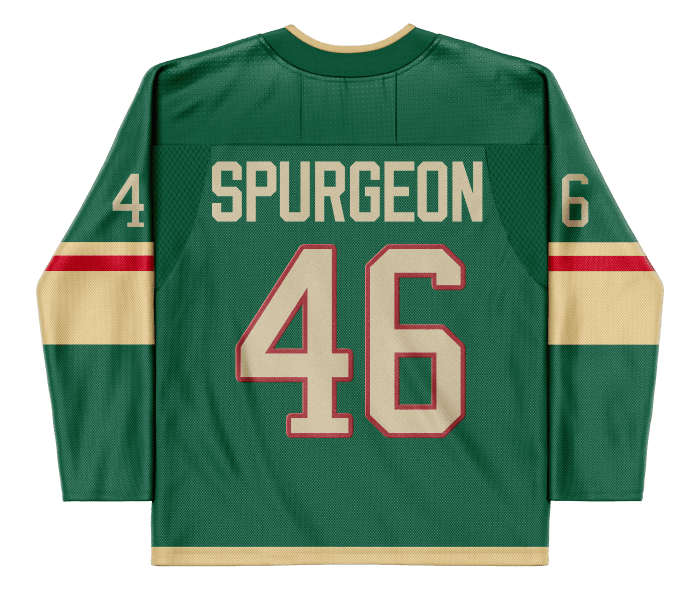
With Minnesota locked into its first-round playoff matchup against the Dallas Stars, the team will rest several key players on Monday, including Hughes. The 26-year-old Hughes has been tremendous since being acquired by Minnesota earlier this season, averaging a career-high 27:54 time-on-ice and scoring 53 points (5G / 48A) in 48 games. Jared Spurgeon will re-enter the lineup as Hughes' replacement.

Quinn Hughes
Del Mastro (undisclosed) is expected to play on Monday.

Del Mastro missed Chicago's previous game with an undisclosed injury and is expected to return vs. Buffalo on Monday. The 23-year-old shut down defensemen has yet to pick up a point in any of his 17 appearances this season, but has 18 PIMs and is a -11 plus/minus while averaging just 14:01 TOI.

Ethan Del Mastro
Bichsel will be a healthy scratch on Monday.

With Kyle Capobianco returning to Dallas' lineup from injury on Monday, Lian Bischel is the odd man out and will be a healthy scratch vs. Toronto. The 21-year-old towering defensemen has appeared in 49 games with Dallas this season, picking up four goals, eight points and a +6 plus/minus.

Lian Bichsel
Erne will be a healthy scratch on Monday.

Adam Erne finds himself the odd man out vs. Toronto on Monday after it was announced Radek Faksa was expected to return from a three-game absence. Erne has appeared in 44 games this season after a successful PTO at the beginning of the season, picking up six goals, eight points and a +1 plus/minus while occupying a botton-six role.

Adam Erne
Capobianco will draw into the Stars lineup on Monday.

Caponbianco has been a healthy scratch for Dallas' previous four games but will draw back in on Monday in Toronto as he replaces Lian Bischel. The 28-year-old has appeared in 32 games with the Stars this season, his most in the NHL since 2021-22 with the Arizona Coyotes.

Kyle Capobianco
Gostisbehere (rest) is not expected to play on Monday.

The Hurricanes will continue to rest players on Monday, and Gostisbehere will be one of six players who will sit vs. the Flyers. K'Andre Miller will draw back into the lineup to replace Gostisbehere. Gostisbehere has missed several lengthy stints this season due to injuries, but he has been one of the most productive offensive defensemen when healthy. The 32-year-old has 50 points (13G / 37A) in 54 games this season.

Shayne Gostisbehere
Slavin (rest) is not expected to play on Monday.

The Hurricanes will continue to rest players on Monday, and Slavin will be one of six players who will sit vs. the Flyers. Jalen Chatfield will draw back into the lineup to replace Slavin. The 31-year-old Slavin has battled injuries this season, playing a career-low 39 games, but the Hurricanes are thrilled that he should be entering the postseason without ailment.

Jaccob Slavin
Staal (rest) is not expected to play on Monday.

The Hurricanes will continue to rest players on Monday, and Staal will be one of six players who will sit vs. the Flyers. William Carrier will draw back into the lineup to replace Staal. At age 37, Staal has remained an effective leader and contributor for the Hurricanes. He has 36 points (20G / 16A) in 75 games this season, matching his highest offensive output in the last half-decade.

Jordan Staal
Svechnikov (rest) is not expected to play on Monday.

The Hurricanes will continue to rest players on Monday, and Svechnikov will be one of six players who will sit vs. the Flyers. Jackson Blake will draw back into the lineup to replace Svechnikov. After an abysmal start to the 2025-26 season, scoring zero points in his first eight games, Svechnikov hopes to carry his late-season momentum into the postseason. He has a career-high 70 points (31G / 39A) through 79 games.

Andrei Svechnikov
Jarvis (rest) is not expected to play on Monday.

The Hurricanes will continue to rest players on Monday, and Jarvis will be one of six players who will sit vs. the Flyers. Taylor Hall will draw back into the lineup to replace Jarvis. The 23-year-old Jarvis has finished the previous two seasons with 67 points and at least 32 goals, a trend that has continued in his most effective offensive season to date, scoring 66 points (32G / 34A) in only 71 games.

Seth Jarvis
Aho (rest) is not expected to play on Monday.

The Hurricanes will continue to rest players on Monday, and Aho will be one of six players who will sit vs. the Flyers. Logan Stankoven will draw back into the lineup to replace Aho. With 80 points (27G / 53A) in 79 games this season, Aho has locked up a point-per-game season for the fifth time in his 10-year career.

Sebastian Aho

NHL Line Changes

NHL line changes are essential in keeping a team’s players fresh on the ice over the course of a hard-fought 60-minute matchup. With shift changes occurring rapidly throughout any given game, we are here to provide you with everything you need to know regarding line changes.

Making sure a team is efficiently making line changes can be essential to their success within a matchup, as it ensures that the players needed on the ice to gain the upper hand are ready to spring into action at a moment’s notice. For NHL daily fantasy hockey players, knowing how to track line changes can be important as you look to keep tabs on the players you’ve drafted to your lineup and their production.

On The Fly

Unlike other sports where play must come to a stop in order to make a player substitution, in hockey, players can switch in-and-out of play on the fly. This helps in keeping the breakneck pace of the contest going, increasing the amount of action from whistle-to-whistle and avoiding any unnecessary stoppages.

On the fly changes are generally done when a team is in possession of the puck and are looking to make a transition play from their own end to their opponent’s side of the rink. Players must be aware of the action around them when making an on the fly substitution as a poorly timed switch could leave themselves vulnerable to an odd-man rush on the other end.

In order to make successful line changes on the fly it is up to the team coaching staff to keep players informed on when their line matchups are due to hit the ice. Generally, with both forwards and defensive pairings, line changes go from the first line trickling its way down to the fourth. Depending on the situation of the game, coaches may opt to give a particular line more playing time, increasing the amount of shifts they receive.

Play Stoppages

NHL line changes can also be made during stoppage of play, with both sides being given the chance to put fresh bodies on the ice ahead of the upcoming faceoff. Examples of a play stoppage that would allow teams to make line changes are after minor or major penalties, offsides, icing, and puck out of play calls. These line changes are often much more calculated as each coach has time to survey the other team and decide what would be the most advantageous line combination that will provide them with a competitive advantage.

Bench Configuration

It may seem like a confusing and unorganized area of the game, but in hockey there is a fair amount of strategy put into the bench configuration within a matchup. With both benches positioned in the neutral zone, making sure that players can quickly hop the boards and get into the game is key to making successful line changes. Benches are generally set so that players entering into the game on the fly are in the best possible position on the ice to fulfill their role.

Generally, a bench in hockey will have the forwards positioned closest to the attacking zone, whereas the defenceman will be situated closest to their defensive zone. This separates the forward lines and defence pairings from on another on each end of the bench so that groups can easily stay together. From here the rested forwards ready to enter into the game will be placed in the centre of the bench, positioned near the coaches so they can easily receive instruction before hitting the ice. This is also advantageous as players coming off the ice for a line change will often enter from the opposite side they came onto the ice from, preventing any unnecessary traffic or confusion when making a change. While each team may have their own preferences on how to configure their bench, these are the most common ways they are run.

Line Change Rules

Understanding the rules of NHL line changes in hockey is an understated part of the game and when used correctly can swing the tide of a matchup in your favour. Without in-depth understanding of line changes in hockey, this can cause costly mistakes that can result in minor penalties, lengthy shifts, or mismatches off a faceoff.

Last Line Change

The last line change rule exists so that the home team is able to make an adjustment to whatever lineup the visiting team decides to roll out after a stoppage in play. This rule was designed to make NHL line changes efficient, as well as provide both sides with the chance to strategically place their players based on the lines sent out by their opponents.

For example, after the whistle, the home team’s coach can elect to make a line change to the personnel on the ice. After that, the visiting coach will send out any new players into the game off of a line change. Thanks to the last line change rule, the home team coach is now granted the opportunity to make one last line change before play resumes to counter whatever line changes were made by the opposing team.

For daily fantasy sports bettors this is where having ample knowledge of each NHL team can come in handy. You can envision how each team may look to gain a competitive advantage over their opponent during a possession, drafting players who are set up for success within a matchup.

Penalties & Infractions

While NHL line changes are meant to be an efficient and simple way to keep the game being played at a fast-pace with minimal interruptions, there is still room for serious error during these substitutions. It’s not uncommon to see teams assessed for a penalty due to a botched line change, resulting in a power play opportunity for the opposing team.

A common penalty called as a result of a poorly executed line change is “too many men on the ice”. This penalty results when the offending team has six or more skaters (including the goaltender) on the ice at any given time and comes in physical contact with the puck. While players entering in the game during a shift change are eligible to hop the boards and get in on the action once their teammate is within five feet of the bench, they must time this correctly or they could be hit with a premature substitution infraction. When a bench minor penalty such as too many men on the ice is assessed, it is up to the team’s head coach to decide who serves the penalty based on the players currently on the ice at the time of the penalty.

Another line change infraction to be aware of is in the case of an icing call. Icing is called when a team plays a puck from their own side of the red centre line across the red goal line in their opponents end. When icing is called, a faceoff will be taken from the end of the team that committed the infraction. During an icing call the team that was called for icing is not able to make any line changes, meaning they are forced to keep all players who were on the ice at the time of the infraction in the contest. Their opponents however are allowed to make any line change they desire, making this an incredibly beneficial call if they can strategize correctly.

How Line Changes Impact Fantasy Hockey

NHL line changes can come fast and suddenly so it can be challenging to keep track of certain players over the course of a matchup. This can make it difficult for avid fantasy hockey managers and sports bettors to know when the players they’ve wagered on are on the ice. Some broadcasts now incorporate various display mechanics that allow for you to see who is on the ice at any given time, making shift change tracking much simpler than ever before. Be sure to stay up-to-date on the jersey numbers of any players on your fantasy roster or that you bet on as a failsafe so that you can find them quickly while watching the action unfold.

Knowing how long a typical shift for a player entering into a matchup is can be an advantageous piece of knowledge for fantasy managers and bettors alike. The longer a player’s shift lasts, the higher their chances of registering a point or other statistical milestone which can help you in winning your fantasy matchups and/or bets placed on a game.